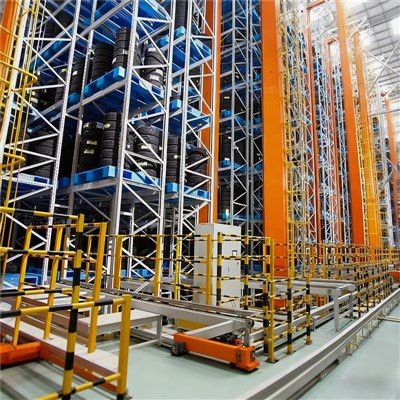
Key Components and Technologies
● Automated Storage and Retrieval Systems (AS/RS): Computer-operated systems using stacker cranes, shuttles, or other machinery to automatically store and retrieve pallets or items.
● Robotics: Robotic arms, conveyor systems, and AGVs that handle goods, perform picking, and execute sorting tasks.
● Warehouse Management Systems (WMS): Software platforms that oversee inventory, control automated equipment, and optimize workflows through AI and predictive analytics.
● Sensors and RFID: Technologies that track, identify, and log goods as they move throughout the warehouse.
● Conveyor Systems: Integrated networks of belts, rollers, or automated tracks that transport items efficiently between zones.

Processes Enhanced by Automation

● Receiving: Automated scanning and identification of incoming goods, ensuring accuracy and speed.
● Storage: AS/RS solutions place and retrieve items in high-density storage locations automatically.
● Picking: Robots and automated systems select inventory for order fulfillment efficiently.
● Sorting and Packing: Automated sorting by SKU and preparation for shipment reduces manual handling.
● Shipping: Orders are automatically transported and loaded onto delivery vehicles.
Advantages of Automated Warehousing
Higher Efficiency and Productivity
Enables continuous operations, maximizing throughput and reducing downtime.
01
Error Reduction
Automated data handling and picking decrease human mistakes, improving order accuracy.
02
Space Optimization
High-density storage solutions make full use of vertical and horizontal warehouse space.
03
Labor Cost Savings
Repetitive and labor-intensive tasks are automated, reducing dependency on manual labor.
04
Enhanced Inventory Control
Real-time monitoring and tracking provide better visibility and management of stock.
05
FAQ
What is an Automated Warehouse System and what benefits does it bring?
An Automated Warehouse System uses computer-controlled equipment such as AS/RS, robotics, and conveyor systems to manage inventory and handle goods. It improves warehouse efficiency, reduces human errors, optimizes storage space, lowers labor costs, and provides real-time inventory visibility.
What types or sizes of warehouses are suitable for automation?
Automated warehouse systems are suitable for warehouses of all sizes, from small to large distribution centers. They are particularly ideal for high-density storage, fast-moving inventory, and operations that require rapid order picking.
Can an automated warehouse system integrate with existing WMS or ERP systems?
Yes. Most automated systems can integrate with existing Warehouse Management Systems (WMS) or ERP software to provide inventory visibility, order tracking, and centralized control, optimizing overall warehouse operations.
What is the typical ROI (Return on Investment) for an automated warehouse system?
The ROI depends on warehouse size, automation level, and efficiency improvements. Generally, savings from reduced labor, faster operations, and fewer errors allow the investment to be recouped within 2–5 years.
How difficult is it to operate and maintain an automated warehouse system?
Modern systems are designed for ease of use and reliability. After basic training, operators can manage the system efficiently. Regular maintenance and software updates help ensure smooth operation and minimize downtime.
Hot Tags: automated warehouse systems, China automated warehouse systems manufacturers, suppliers, Warehouse Storage Systems and Solutions, Automated Storage System, automated warehouse storage, high density automated storage , Automated Warehouse Solutions, vertical automated storage system