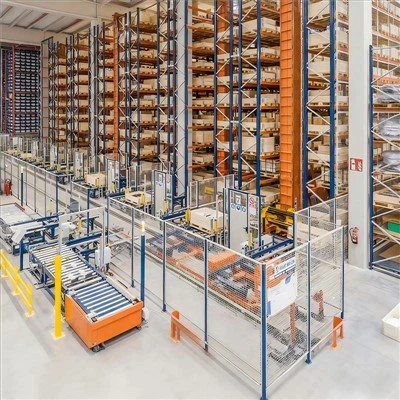
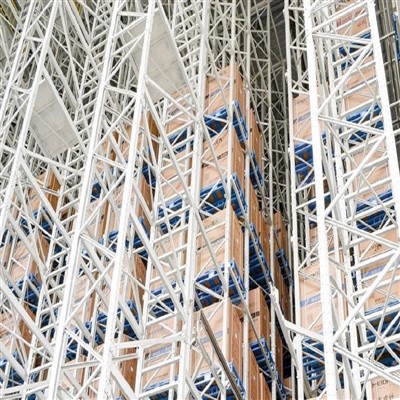
Semi-automated storage systems optimize warehouse space utilization by streamlining storage layouts and maximizing vertical and horizontal storage potential. In warehouses primarily reliant on manual operations, semi-automated storage solutions play a key role in directly expanding storage capacity and improving overall operational efficiency. These solutions seamlessly integrate with warehouse management systems, the backbone of these dynamic setups: they coordinate workflows, track inventory in real time to increase throughput, minimize picking errors through precise guidance, and mitigate the physical effort and safety risks associated with manual tasks.
Riches not only provides standalone semi-automated storage systems but also offers fully integrated racking solutions. This comprehensive approach ensures that every component of the storage infrastructure, from automation elements to basic racking, operates in harmony. As a result, we can carefully tailor solutions to your specific warehouse size, operational workflows, inventory characteristics, and long-term growth goals.

Best Reasons To Choose A Semi-automated Warehouse
Fewer errors
Automated processes reduce human mistake risk in manual operations.
Increased productivity
Systems like automated picking aids relieve staff, accelerate workflows.
Higher value creation
Machines handle repetitive transport; employees focus on complex, value-added activities.
Cost reduction
Improved operation cycle time lets one operator do more in same time with semi-automation, lowering costs.
Happier workforce
Minimized physically demanding tasks improve ergonomics, job satisfaction.
Improved product safety
Automated transport moves goods gently, reducing damage risk.
Real-Time machine control
WMS tracks, controls each machine; initiates movements to minimize operator manual efforts.
High scalability
Semi-automated systems expand, adapt as needs evolve; ideal for growing businesses.
Automated Warehousing Applications

E-commerce logistics field

Manufacturing

Cold chain warehousing

Medical and pharmaceutical fields
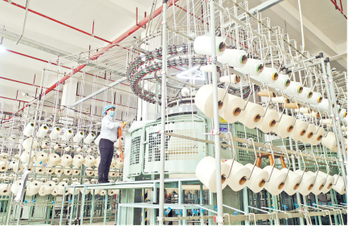
Clothing and textile fields

Third-party logistics field
We provide comprehensive automation solutions for a wide range of industries, including e-commerce, retail, manufacturing, and pharmaceuticals. Whether you're expanding your business and planning to fully automate your facilities to enhance scale, or looking to reduce costs by starting with semi-automation to replace repetitive manual processes like sorting and transportation, we can assist you in evaluating suitable technologies and equipment, including AGVs, intelligent sorting systems, and warehouse management software, based on your current production capacity and future growth plans.
We collaborate closely with your operations and technical departments, providing comprehensive support from process diagnosis to solution design, equipment deployment, and subsequent commissioning. This improves your order processing efficiency and inventory turnover, while reducing downtime caused by equipment failure and order fulfillment errors caused by manual operations. Contact us today or request a free on-site evaluation.


Mobile Racking for Optimum Space Utilization
Our mobile racking not only optimizes space requirements but also generates additional storage capacity through the newly freed - up area. It offers maximum flexibility in...
The system operates via rail - mounted structures that allow racks to slide horizontally, eliminating the need for fixed aisles between every rack unit. This design condenses storage rows, utilizing the available floor space more intensively. When access to specific items is required, the racks can be shifted to create a temporary aisle, ensuring efficient retrieval without compromising overall space efficiency. It adapts to varying inventory volumes, accommodating seasonal fluctuations or business expansion by adjusting the storage configuration as needed.
What tasks can semi-automated solutions help with immediately?
Riches provides professional semi-automated warehouse solutions
Goods Transportation
Semi-automated warehouse solutions can improve the efficiency of goods transportation inside and outside the warehouse. Goods are moved via conveyor systems and shuttle robots, reducing the need for manual labor while enhancing efficiency and accuracy.
Order Picking
Semi-automated solutions can optimize order picking tasks. With functions such as "goods-to-person", workers can access items more conveniently, reducing travel time, improving picking efficiency, completing orders faster and more accurately, and enhancing customer satisfaction
Sorting and Packaging
Sorting and packaging can adopt semi-automated solutions. Automatic sorting systems effectively sort items and guide them to designated locations, while packaging stations equipped with automatic packaging equipment ensure higher speed and precision in packaging operations.
Inventory Management
Semi-automated solutions can improve inventory management. Barcode scanning and RFID tags combined with warehouse management systems help track inventory and manage activities, reducing errors and improving inventory accuracy
Semi-automated Warehouses VS Fully Automated Warehouses
| Differentiating Factors | Semi-Automated Warehouses | Fully Automated Warehouses |
|---|---|---|
| Technology Integration | Combine technology with manual labor to streamline operations, with less reliance on advanced technologies like robotics, AI, or machine learning. | Adopt advanced technologies such as robotics, artificial intelligence, and machine learning, enabling seamless operation without manual intervention. |
| Human Involvement | Depend on human operators to supervise and perform tasks, with automation technologies serving as aids. | Require almost no manual intervention, handling various tasks from start to finish, including goods transportation, order picking, sorting, packaging, and inventory management. |
| Scalability | Have some scalability but may need additional manual intervention and adjustments as workload increases, which can limit their ability to cope with demand surges. | Designed with full consideration of scalability, easily supporting expanding work scales and adapting to business dynamics. |
| Cost Considerations | More cost-effective, can be implemented gradually, and have lower maintenance costs due to reduced reliance on advanced technologies. | Require significant investment due to the use of advanced technologies, with higher initial and maintenance costs. |
| Flexibility and Adaptability | Offer greater flexibility and adaptability, easily adjusting workflows, accommodating new product lines, and integrating with other systems to meet changing business needs. | Though efficient, may lack the same level of flexibility. |
What our clients say about Riches:

Hive Corps
Logistics Director of an E-commerce Company

Hive Corps
Warehouse Manager of a Pharmaceutical Company

Hive Corps
Operations Director of an Italian clothing brand
Everything You Need to Know
Cooperate with Riches to improve your warehousing efficiency - semi-automated warehouse solutions!
How much higher is the initial investment of a semi-automated warehouse solution compared to a traditional manual warehouse? What about the later maintenance costs?
The initial investment is usually 30%-50% higher than that of a traditional manual warehouse, mainly due to the deployment of hardware such as AGVs, automated sorting equipment, and warehouse management systems. The later maintenance cost is about 5%-8% of the total equipment investment per year, which is lower than that of a fully automated warehouse. This is because the system complexity is lower, and some simple maintenance can be completed by the enterprise's internal technical personnel.
Our business has large fluctuations in order volume. Can a semi-automated warehouse flexibly respond to such changes?
Yes. Through the mode of "automated equipment + manual assistance", a semi-automated warehouse can increase the degree of manual participation during peak order periods to cooperate with the automated system to improve processing capacity; during low order periods, it can reduce manual input and only rely on core automated equipment to maintain basic operations, thus flexibly adapting to business fluctuations.
Compared with fully manual operations, how much can a semi-automated warehouse improve operational efficiency? How much can the picking error rate be reduced?
Operational efficiency is usually improved by 40%-60%, mainly reflected in the shortened time in the links of goods transportation and order picking; the picking error rate can be reduced from 3%-5% in manual operations to less than 1%, thanks to the combination of barcode/RFID scanning and system verification.
If the business expands in the future, can the existing semi-automated warehouse solution be quickly expanded and upgraded?
Yes. The system is designed with reserved expansion interfaces. Expansion can be achieved by increasing the number of AGVs, expanding the automated shelf area, upgrading the functions of the warehouse management system, etc. The upgrade cycle is usually 1-3 months, and the expansion process will not affect the normal operation of existing businesses.
Hot Tags: semi automated warehouse solution, China semi automated warehouse solution manufacturers, suppliers, modular semi automated smt storage , Automated Warehouses for Intensive Storage, semi automated warehouse, Semi Automated Warehouse Solution, wholesale semi automated storage , Semi Automated Storage Systems