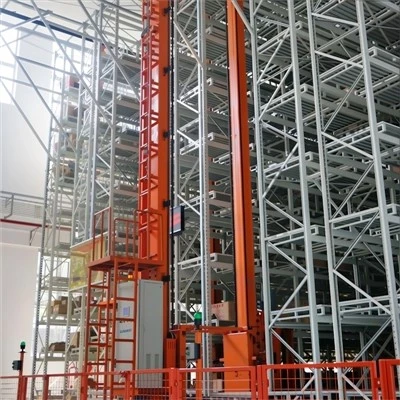
In the accelerating digitalization and intelligentization of the supply chain, automated warehousing solutions, with their distinct characteristics, have become a key path to improving the quality and resilience of warehousing operations. Compared to traditional warehousing models, their characteristics are concentrated in efficiency, accuracy, flexibility, visibility, and sustainability, collectively forming the foundation for efficient modern logistics operations.
First, efficiency. Automated warehousing, by introducing automated storage and retrieval systems, stacker cranes, and automated guided vehicles (AGVs), enables continuous operations in goods storage, retrieval, handling, and sorting, significantly reducing operational cycles. Equipment can operate at high speed according to preset logic, and its strong multi-tasking parallel processing capability significantly increases throughput per unit time, effectively alleviating the time pressure brought by peak orders.
Second, accuracy. Relying on the collaborative operation of the Warehouse Management System (WMS) and Warehouse Control System (WCS), automated warehousing can update and verify information such as inventory location, quantity, and batch in real time, and achieve precise identification and positioning during the execution process through technologies such as barcodes, RFID, or machine vision. Work instructions are automatically issued by the system, reducing human intervention and keeping error rates extremely low, ensuring the authenticity and traceability of inventory data.
Secondly, there is flexibility. The modular architecture design allows automated warehousing to flexibly adjust equipment configurations and workflows according to business scale and product category structure, supporting rapid expansion or functional restructuring. Combined with artificial intelligence algorithms to predict order structure and traffic trends, the system can dynamically optimize location allocation and route planning, adapting to complex demand scenarios involving multiple varieties and small batches.
Visualization is another important feature. Leveraging IoT sensing and digital twin technology, information such as warehouse operation status, equipment condition, and inventory distribution can be presented in a panoramic view. Managers can monitor and analyze performance indicators in real time on a unified platform, promptly identifying bottlenecks and anomalies, and improving the scientific basis of decision-making.
Finally, there is sustainability. Automated warehousing helps enterprises achieve green operation goals by optimizing space utilization, reducing ineffective handling and repetitive operations, and decreasing energy consumption and manpower load. In summary, these features make automated warehousing solutions a crucial support for efficiency, flexibility, and intelligence in the modern supply chain.