As global supply chains become more complex and warehouse space continues to become more expensive, companies are searching for smarter storage solutions that can improve efficiency without expanding their physical footprint. The combination of automation technology, intelligent inventory management, and high-density storage systems is reshaping the future of modern logistics.
In today's competitive manufacturing and distribution environment, traditional warehouse layouts are facing increasing challenges. Rising labor costs, limited storage space, and the demand for faster order fulfillment have accelerated the adoption of automated warehouse solutions. Among these innovations, Overhead Tote Storage has become an important technology for companies looking to maximize vertical space utilization while improving operational efficiency.
By integrating overhead storage structures with automated handling equipment, warehouse operators can achieve higher storage density, faster picking performance, and better inventory control. This advanced storage approach is widely applied in e-commerce fulfillment centers, manufacturing warehouses, spare parts distribution, and automated logistics hubs.

What Is Overhead Tote Storage?
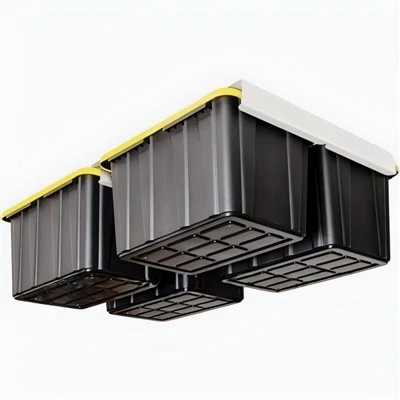
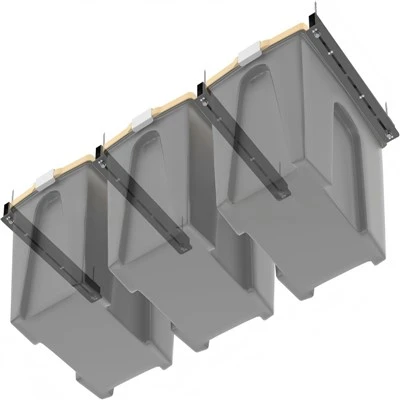
Overhead Tote Storage is an automated storage solution designed to store plastic totes, bins, or containers above operational areas by utilizing unused vertical warehouse space. Unlike traditional shelving systems that occupy large floor areas, overhead tote storage systems take advantage of warehouse height, allowing companies to increase storage capacity without expanding their facilities.
The system is usually combined with:
Automated storage and retrieval systems (AS/RS)
Conveyor systems
Robotic handling equipment
Warehouse management systems (WMS)
Intelligent control software
Through coordinated operation, totes can be automatically stored, retrieved, sorted, and transported according to real-time inventory requirements.
For modern warehouses, overhead tote storage is not simply a storage rack but a complete automated warehouse solution that improves productivity and operational flexibility.


Why Overhead Tote Storage Is Becoming Essential for Automated Warehouses
The rapid development of intelligent logistics has changed how companies manage inventory. Businesses now require storage systems that can support high throughput, accurate picking, and continuous operation.
Warehouse expansion is expensive, especially in industrial areas where land costs continue to increase. Overhead tote storage allows companies to utilize vertical space that is often unused in conventional warehouses.
By increasing storage density, businesses can store more inventory within the same building footprint.
Key benefits include:
| Feature | Traditional Storage | Overhead Tote Storage |
|---|---|---|
| Space Utilization | Mainly horizontal storage | Full vertical space utilization |
| Storage Density | Limited capacity | High-density storage |
| Floor Space Requirement | Larger footprint needed | Reduced warehouse footprint |
| Automation Compatibility | Limited | Designed for automated systems |
| Inventory Access | Manual operation | Automated retrieval |
This makes overhead tote storage an ideal choice for companies facing warehouse space limitations.
Modern logistics operations require faster order processing and higher accuracy. Manual picking methods often create bottlenecks, especially in large distribution centers.
An automated tote storage system enables goods-to-person workflows, where stored totes are automatically delivered to operators or robotic picking stations.
Advantages include:
Reduced walking distance for workers
Faster order fulfillment
Lower picking errors
Improved labor efficiency
Continuous warehouse operation
For businesses handling thousands of SKUs, overhead tote storage provides a scalable solution for high-volume inventory management.
The integration of digital technologies has transformed traditional warehouses into intelligent logistics centers.
Modern overhead tote storage systems can connect with:
Warehouse Management System (WMS)
Warehouse Control System (WCS)
Enterprise Resource Planning (ERP)
Automated guided vehicles (AGVs)
Autonomous mobile robots (AMRs)
This connectivity enables real-time inventory tracking and automated decision-making.
Companies can monitor stock levels, optimize storage locations, and improve supply chain visibility through intelligent warehouse management.
Key Applications of Overhead Tote Storage Systems
Overhead tote storage technology is widely used across different industries where space efficiency and automation are critical.
| Industry | Application |
|---|---|
| E-commerce | High-speed order fulfillment and sorting |
| Automotive Parts | Small component storage and distribution |
| Electronics Manufacturing | Precision parts management |
| Pharmaceutical Industry | Controlled inventory storage |
| Retail Distribution | Multi-SKU product handling |
| Manufacturing | Production material supply |
Especially in industries with large quantities of small and medium-sized components, automated tote storage systems provide significant operational advantages.
How Overhead Tote Storage Supports Warehouse Automation Trends
The global logistics industry is moving toward higher levels of automation. Companies are investing in intelligent warehouse solutions to reduce dependence on manual labor and improve supply chain resilience.
Overhead tote storage plays an important role in this transformation by providing:
Higher Storage Density
Compared with conventional shelving, overhead systems maximize cubic warehouse capacity and reduce wasted space.
Faster Material Flow
Automated conveyors and robotic systems can move totes quickly between storage locations and workstations.
Better Inventory Accuracy
Automated storage reduces human errors and ensures accurate inventory positioning.
Flexible Expansion Capability
Modular designs allow companies to expand storage capacity according to future business growth.
As warehouse automation continues developing, overhead tote storage is expected to become a standard component in next-generation logistics facilities.