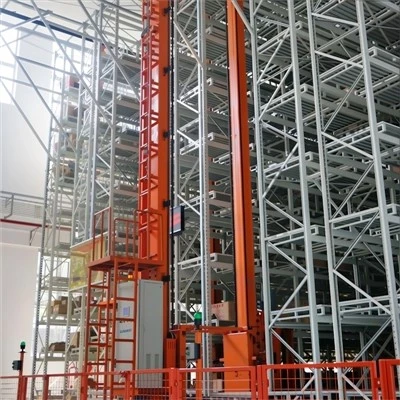
Overhead conveyors play a crucial role in warehousing, manufacturing, and logistics systems, undertaking continuous transport tasks across floors and areas. Their operational quality directly impacts overall operational efficiency and safety. Because these devices operate at heights, under heavy loads, and continuously for extended periods, scientific and systematic maintenance methods are essential to ensure structural stability, reliable transmission, and smooth operation. A comprehensive maintenance system should be prevention-oriented, combining daily inspections, regular maintenance, rapid fault handling, and data monitoring to form a closed-loop management system.
Daily inspections are the first step in maintenance and must be implemented item by item according to a standardized checklist. Special attention should be paid to inspecting the integrity of the frame steel structure and connecting parts, confirming no deformation, cracks, or loosening; checking the operating temperature of the drive unit motor, the reducer oil level, and any abnormal noises; observing the tension and surface wear of the transmission chain or conveyor belt; cleaning dust and foreign objects from guide rails, rollers, and idlers to prevent increased running resistance or deviation; and verifying the functionality and effectiveness of sensors, limit switches, and emergency stop devices to ensure sensitive signal acquisition and actuator responses. Inspection records must be detailed to identify gradual changes in potential problems.
Regular maintenance should be implemented in stages with clearly defined cycles. Monthly maintenance includes adding appropriate amounts of grease to all moving parts, checking and tightening electrical terminals and grounding lines, and cleaning photoelectric detectors and position feedback components to maintain signal stability. Quarterly maintenance should check the parallelism of the drive and driven wheels, assess the wear and elongation of the conveyor belt or chain, and adjust tension or replace parts as necessary. Annual maintenance requires a full-machine load test and dynamic balancing correction, checking structural fatigue and weld condition, and replacing bearings, reducer lubricants, and other wear parts according to their service life.
Troubleshooting must adhere to the principles of safety first and precise positioning. In case of abnormal shutdowns or operational deviations, power should be immediately cut off and an emergency stop should be executed. Recovery is only permitted after the cause has been identified. Belt misalignment can be addressed by adjusting the angle of the rollers or idlers; chain slack or skipped teeth require readjusting tension and aligning the sprocket phase; motor overload requires investigating sudden load changes and abnormal transmission resistance. Each maintenance operation should be documented in its entirety, including the observed phenomena, causes, corrective measures, and information on replaced parts, providing a basis for future prevention.
In the context of intelligent systems, online monitoring and predictive maintenance can be introduced. By deploying sensors for vibration, temperature, and current at key locations, operational data is collected in real time and transmitted to a management platform. Algorithms identify deterioration trends, allowing for proactive maintenance or component replacement, significantly reducing the risk of unplanned downtime.
In summary, the maintenance of overhead conveyors should combine routine inspections, scheduled maintenance, rapid repairs, and data-driven approaches to build a comprehensive lifecycle support system. This ensures operational safety while maintaining efficient and reliable conveying performance, providing solid support for modern logistics and manufacturing systems.