

An efficient warehouse is not simply a place to store goods; it is a connected system that moves inventory accurately, quickly, and intelligently.
As global supply chains become more complex, warehouse automation solutions are helping manufacturers, distributors, e-commerce businesses, and third-party logistics (3PL) providers improve storage utilization, order fulfillment, and inventory control. Rising labor costs, increasing SKU diversity, and shorter delivery deadlines have made automated warehousing an important investment for businesses seeking long-term operational efficiency.
Today, warehouse automation systems combine automated storage and retrieval systems (AS/RS), autonomous mobile robots (AMRs), automated guided vehicles (AGVs), conveyor systems, intelligent picking equipment, and warehouse management software (WMS). When these technologies work together, companies can coordinate material handling, inventory movement, and order processing with greater consistency.
Choosing the right warehouse automation solutions manufacturer requires more than comparing equipment prices. Buyers should evaluate engineering capabilities, software compatibility, system integration, customization, implementation support, and future expansion potential.
This guide introduces 10 established warehouse automation manufacturers and solution providers worldwide to help businesses identify suitable partners for different warehouse requirements.

Top 10 Warehouse Automation Solutions Manufacturers Worldwide
The following comparison highlights each company's primary warehouse automation technologies and areas of specialization. The selection is an editorial industry reference based on solution coverage, technology expertise, and market presence, rather than an independently verified ranking.
| No. | Manufacturer | Country/Region | Main Warehouse Automation Solutions |
|---|---|---|---|
| 1 | Riches Logistics | China | AS/RS, AGV/AMR, WMS, automated picking, system integration |
| 2 | Daifuku | Japan | Automated material handling, AS/RS, conveyors |
| 3 | Dematic | Germany/International | Automated storage, sortation, robotics, warehouse software |
| 4 | SSI SCHAEFER | Germany | Storage systems, intralogistics, picking automation |
| 5 | Vanderlande | Netherlands | Warehouse automation, material handling, sortation |
| 6 | Mecalux | Spain | Automated warehouses, racking, warehouse software |
| 7 | KNAPP | Austria | Intelligent picking, robotics, automated storage |
| 8 | Swisslog | Switzerland | AS/RS, robotic automation, goods-to-person systems |
| 9 | Honeywell | United States | Warehouse automation, scanning, sortation, software |
| 10 | Murata Machinery | Japan | Automated storage, material handling, logistics systems |
In No Particular Order
Riches Logistics: Customized Warehouse Automation Solutions
Riches Logistics, operated by Warehousing and Logistics Engineering Co., Ltd., is a China-based intelligent warehousing solutions provider established in 2008. The company focuses on integrating warehouse equipment, digital management, and automated logistics processes to help businesses build more efficient warehouse operations.
Its solution portfolio covers automated storage and retrieval systems, warehouse racking, AGV and AMR technologies, intelligent sorting, automated picking, warehouse management systems (WMS), and warehouse control systems (WCS). Riches also provides warehouse design, system integration, and modernization services for existing facilities.
Key Advantages
Integrated system design: Riches can coordinate storage, handling, picking, and software according to project requirements, helping customers avoid disconnected equipment and inefficient workflows.
Digital warehouse management: WMS and WCS technologies support inventory visibility, order processing, and equipment coordination. WMS can also operate in traditional warehouse environments, depending on the configuration.
Customized applications: Solutions can be planned around warehouse dimensions, SKU characteristics, order profiles, storage density, and throughput targets.
Support for multiple industries: Riches serves sectors including manufacturing, cross-border e-commerce, fast-moving consumer goods, and pharmaceuticals.
The company's website reports project outcomes including a 40% improvement in inventory turnover efficiency and a 92% reduction in warehouse operating errors in relevant applications. Actual results depend on the project baseline, system configuration, and operating conditions.
For businesses seeking a China warehouse automation solutions provider, Riches is worth evaluating when customization, hardware and software integration, and project-level coordination are important purchasing criteria.
Learn more at Riches Logistics.
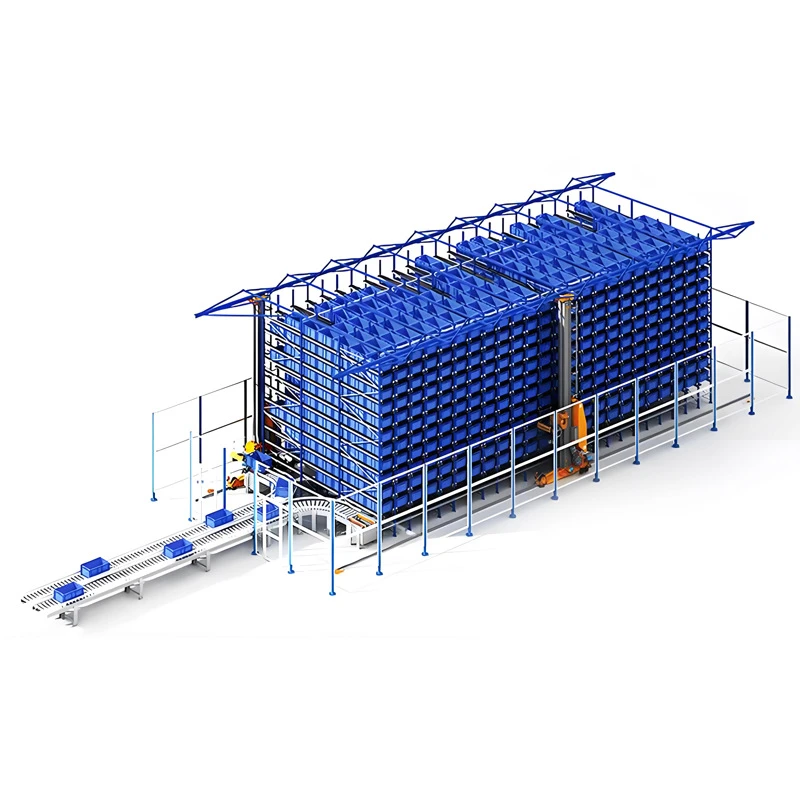

Daifuku: Automated Material Handling Systems
Daifuku is a Japanese material handling technology company with extensive experience in automated logistics systems. Its warehouse automation portfolio includes automated storage and retrieval systems, conveyors, sorting equipment, and integrated material handling technologies.
Daifuku is particularly relevant to large distribution centers and industrial facilities that require coordinated movement of goods between storage, production, and shipping areas.
Buyers evaluating Daifuku should consider its suitability for high-throughput operations, the complexity of the proposed installation, and the availability of technical support in their region.
Dematic: Integrated Distribution Center Automation
Dematic provides warehouse automation and intralogistics technologies for distribution, manufacturing, and fulfillment operations. Its solutions include automated storage, conveyor and sortation systems, robotic applications, and warehouse software.
A key consideration when selecting Dematic is how well the proposed system connects inbound receiving, storage, order picking, and outbound shipping. This is particularly important for distribution centers handling large order volumes and multiple fulfillment channels.
Businesses should assess throughput capacity, integration requirements, and the flexibility to accommodate future changes in product mix.
SSI SCHAEFER: Storage and Intralogistics Solutions
SSI SCHAEFER combines storage infrastructure with automation and intralogistics technologies. Its offerings cover warehouse racking, automated storage systems, picking solutions, and software-supported material flow management.
The company is relevant to businesses looking to coordinate physical storage capacity with automated handling and order fulfillment. Its technologies can support projects ranging from storage optimization to more comprehensive warehouse automation.
Before purchasing, buyers should compare storage density, equipment compatibility, implementation requirements, and the cost of expanding the system as warehouse demand grows.
Vanderlande: Automated Logistics and Sortation
Vanderlande develops automated material handling and logistics systems for warehouses, parcel operations, and other demanding logistics environments.
Its warehouse-related capabilities include automated handling, sorting, and integrated fulfillment processes. These technologies are particularly relevant where goods must move through multiple operational stages within strict processing windows.
Buyers should evaluate the company's solution against their required throughput, order profiles, facility layout, and integration needs, especially when planning a large distribution or fulfillment center.
Mecalux: Automated Warehouses and Storage Systems
Mecalux supplies warehouse racking, automated storage and retrieval systems, and warehouse management software. Its product range supports businesses seeking to improve storage capacity while introducing more structured inventory management.
The combination of storage infrastructure and automation makes Mecalux relevant to warehouses handling palletized goods, cartons, and diverse inventory categories.
For procurement teams, important evaluation points include load specifications, rack configuration, retrieval performance, software integration, and the suitability of the proposed design for the available building space.
KNAPP: Intelligent Picking and Fulfillment Automation
KNAPP specializes in intelligent intralogistics and order fulfillment technologies. Its solutions include automated storage, goods-to-person systems, robotics, and warehouse software.
These technologies are relevant to businesses processing large numbers of orders with demanding picking requirements. By bringing goods closer to operators or automating selected handling tasks, warehouse operators can reduce unnecessary travel and improve workflow consistency.
Buyers should assess SKU characteristics, order-line volume, peak-season demand, and the operational complexity of integrating picking automation into existing processes.
Swisslog: Robotics and Automated Storage
Swisslog provides warehouse automation solutions that combine robotics, automated storage and retrieval systems, and software. Its technologies are used in logistics environments where storage efficiency, material flow, and order fulfillment need to work together.
Swisslog is worth considering for operations evaluating goods-to-person picking, automated storage, or integrated warehouse robotics.
When comparing suppliers, procurement teams should examine the system's expected performance under actual order patterns, integration with enterprise software, maintenance requirements, and long-term scalability.
Honeywell: Warehouse Automation and Digital Technologies
Honeywell offers technologies used in warehouse and distribution operations, including automation, scanning, identification, sortation, and software-related capabilities.
These technologies can help businesses improve product tracking, order processing, and coordination between warehouse activities. The appropriate configuration depends on whether the project primarily requires equipment automation, digital visibility, or broader system integration.
Buyers should clarify the scope of supply and confirm which components, software platforms, installation services, and ongoing support are included in the proposal.
Murata Machinery: Automated Storage and Material Handling
Murata Machinery, also known as Muratec, develops automated material handling and logistics technologies, including automated storage systems and equipment used in industrial facilities.
Its solutions are relevant to manufacturers and warehouse operators seeking more consistent material movement and improved storage management.
For industrial applications, buyers should focus on load handling requirements, equipment reliability, compatibility with production workflows, and the integration of warehouse automation with upstream and downstream processes.
How to Choose the Right Warehouse Automation Manufacturer
Selecting the best warehouse automation solutions manufacturer starts with a clear understanding of operational requirements.
Warehouse capacity and layout: Measure available floor space, clear height, storage locations, aisle dimensions, and load characteristics before comparing automated storage systems.
Order volume and throughput: Define average and peak daily orders, order lines, inbound receipts, and outbound dispatch requirements. Equipment capacity should match actual operating demand.
Software integration: Confirm how WMS, WCS, and ERP platforms exchange inventory, order, and equipment status information. Clarify integration responsibilities before signing a contract.
Customization and scalability: Determine whether the system can accommodate new SKUs, seasonal demand, additional storage capacity, or future automation phases.
Total cost of ownership: Compare equipment, software, installation, training, maintenance, energy consumption, and potential downtime rather than focusing only on the initial purchase price.
Project implementation and support: Request a defined project schedule, acceptance criteria, performance assumptions, training plan, warranty terms, and after-sales service arrangements.
A detailed warehouse assessment helps buyers determine whether they need individual automated equipment, a semi-automated upgrade, or a fully integrated warehouse automation solution.
Why Consider Riches Logistics for Your Warehouse Automation Project?
For businesses comparing international warehouse automation suppliers, Riches Logistics offers an integrated approach that combines physical warehouse systems with digital management technologies.
Its solutions cover storage, goods-to-person operations, picking, material handling, robotic stations, warehouse software, and warehouse modernization. This broad portfolio gives customers the opportunity to assess different automation levels according to their operational priorities.
Riches can tailor warehouse automation planning to the characteristics of manufacturing warehouses, e-commerce fulfillment centers, and distribution operations. Its WMS and WCS capabilities also provide a foundation for coordinating inventory information and equipment activity, subject to the selected system architecture.
Rather than choosing automation equipment based on specifications alone, buyers can work with Riches to evaluate warehouse layout, inventory movement, order fulfillment requirements, and integration needs before finalizing a configuration.
Businesses planning a new automated warehouse or upgrading an existing facility can visit www.riches-logistics.com to explore available systems and discuss project requirements.
Frequently Asked Questions About Warehouse Automation Solutions
Warehouse automation solutions use equipment, robotics, sensors, and software to automate or coordinate activities such as storage, retrieval, picking, sorting, and material transportation. Common technologies include AS/RS, AGVs, AMRs, conveyors, robotic picking systems, WMS, and WCS.
The cost depends on warehouse size, storage capacity, equipment selection, throughput targets, software requirements, installation complexity, and integration with existing systems. Buyers should request a project-specific quotation that separates equipment, software, installation, and ongoing service costs.
AS/RS primarily automates the storage and retrieval of goods within a designated storage system. AGVs and AMRs transport materials between locations. They can complement each other in an integrated warehouse, with the final configuration depending on the facility layout and material flow.
Yes, many warehouse automation projects can integrate with existing WMS or ERP platforms. Compatibility depends on available interfaces, data structures, control requirements, and the responsibilities of each software provider. Buyers should confirm integration scope and testing procedures before implementation.
Implementation time varies with system complexity, facility readiness, equipment lead times, software integration, and commissioning requirements. A limited automation upgrade may take substantially less time than a new, fully integrated automated warehouse. Suppliers should provide a project schedule with installation and acceptance milestones.
Compare relevant project experience, engineering capabilities, equipment and software compatibility, customization options, implementation planning, documented performance criteria, and after-sales support. Request a detailed proposal based on your warehouse data and verify that the proposed system meets your operational requirements.
Conclusion
Warehouse automation is an investment in storage efficiency, inventory accuracy, order fulfillment, and long-term operational flexibility. The right solution depends on warehouse conditions, material flow, throughput targets, software requirements, and the company's future growth plans.
The 10 warehouse automation manufacturers and solution providers in this guide offer different strengths, from automated storage and material handling to robotics, intelligent picking, and integrated warehouse software. Buyers should compare suppliers according to project requirements rather than relying solely on company size or brand recognition.
For businesses seeking customized warehouse automation solutions, Riches Logistics is a potential partner to evaluate for integrated storage, AGV/AMR, picking, WMS, WCS, and warehouse modernization projects. A clear requirements assessment, a detailed technical proposal, and measurable acceptance criteria will help procurement teams select a system that supports efficient and reliable warehouse operations over the long term.


