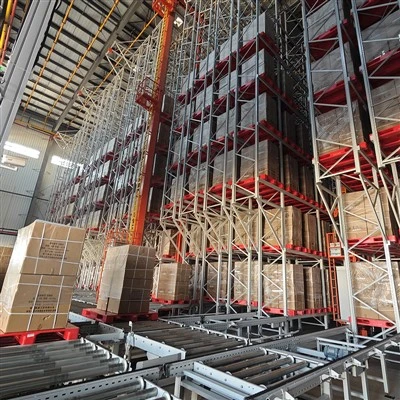
Efficient warehouse picking is the core driver of modern fulfillment performance, directly affecting delivery speed, order accuracy, and customer experience.In today's global logistics landscape, warehouse operations are no longer just about storage capacity. They are about how efficiently goods can move from inventory to customer. Among all warehouse activities, picking remains the most time-consuming and cost-intensive process, often representing the highest proportion of operational labor.Modern logistics enterprises such as Riches are continuously improving warehouse picking systems by integrating digital management, optimized layouts, and scalable fulfillment models to support global supply chain demands.

Warehouse Picking Requirement Assessment Form
Before designing a picking strategy, logistics planners evaluate warehouse structure and operational behavior to ensure system alignment.
| Category | Key Evaluation Points | Operational Impact |
|---|---|---|
| Order Profile | Order size, frequency, seasonal fluctuations | Determines workload intensity |
| SKU Structure | SKU quantity, similarity, size variation | Affects picking complexity |
| Warehouse Layout | Racking system, aisle design, storage density | Impacts travel efficiency |
| Demand Behavior | Stable demand vs peak fluctuations | Influences picking model selection |
| Fulfillment Speed | Same-day, next-day, standard delivery | Defines urgency level |
| System Integration | WMS, ERP, scanning systems | Determines operational visibility |
| Labor Structure | Manual, semi-automated, automated | Affects scalability |
| Distribution Scope | Domestic or cross-border logistics | Impacts fulfillment design |
This structured evaluation ensures that warehouse picking strategies are built on operational reality rather than assumptions.
What Is Warehouse Picking?
Warehouse picking refers to the process of selecting and retrieving items from storage locations to fulfill customer orders. It acts as the critical bridge between inventory management and outbound logistics.
In advanced logistics systems such as those operated by Riches, picking is fully integrated with warehouse management systems, inventory tracking platforms, and shipping coordination tools, enabling real-time order visibility and high-efficiency fulfillment.
Types Of Picking In A Warehouse
Different warehouses require different picking strategies depending on order volume, SKU complexity, and operational goals.
Single Order Picking (Discrete Picking)
Single order picking assigns one worker to handle one order from start to finish.
It is widely used in environments where accuracy and traceability are more important than speed. Each order is processed individually, reducing the chance of mixing items between orders.
This method is most suitable for high-value goods, low-volume operations, and warehouses that prioritize precision handling.
Although simple to implement, it becomes inefficient in high-volume environments due to repeated travel between storage locations.
Batch Picking
Batch picking combines multiple orders into a single picking route, allowing workers to collect items for several orders in one trip.
This method significantly reduces walking distance and improves labor efficiency, especially in e-commerce and retail fulfillment centers where similar SKUs appear across multiple orders.
Batch picking is particularly effective when inventory demand patterns are predictable and order structures are similar.
Zone Picking
Zone picking divides the warehouse into multiple areas, with each picker responsible for a specific zone.
Orders move between zones until all required items are collected. This parallel workflow improves throughput and reduces congestion in large warehouses.
It is commonly used in large distribution centers with extensive SKU ranges and high order volumes.
The main advantage of zone picking is specialization, allowing workers to become more efficient within their assigned areas.
Wave Picking
Wave picking organizes warehouse activities into scheduled time-based waves aligned with shipping and transportation schedules.
Orders are released in groups based on carrier cut-off times, priority levels, or delivery deadlines.
This structured approach improves coordination between picking, packing, and shipping departments, ensuring smooth outbound flow in high-volume operations.
Wave picking is often used in distribution hubs that handle time-sensitive shipments.
Cluster Picking
Cluster picking enables one operator to handle multiple orders simultaneously using a trolley with separated bins.
Each bin represents a different order, allowing workers to collect multiple items in a single route while maintaining order separation.
This method is highly effective in fast-moving environments such as e-commerce fulfillment and retail distribution centers handling small-item products.
It improves efficiency without sacrificing accuracy.
Automated Goods-To-Person Picking
Automated picking systems use robotics, conveyors, or shuttle systems to deliver items directly to workers.
Instead of walking through aisles, operators remain stationary while systems bring products to them.
This method dramatically increases speed, reduces labor intensity, and minimizes picking errors.
It is widely adopted in large-scale fulfillment centers, especially in high-demand industries requiring 24/7 operation.
Key Phases Of Warehouse Picking Process
Warehouse picking is a structured process that typically follows several essential operational phases.
Order Intake And Verification
Orders are received through digital systems such as ERP or warehouse management platforms. Each order is validated to ensure accuracy, availability, and completeness before processing begins.
Order Allocation And Strategy Assignment
Orders are assigned to appropriate picking strategies based on SKU location, order urgency, and warehouse workload balance.
This stage determines whether an order is processed via batch picking, zone picking, or other methods.
Route Planning And Optimization
Efficient route planning reduces unnecessary movement inside the warehouse. Modern systems calculate optimized paths based on SKU location, aisle structure, and real-time warehouse conditions.
In advanced logistics operations like those managed by Riches, route optimization is dynamically adjusted using integrated warehouse systems to maximize operational efficiency.
Picking Execution
Pickers collect items according to system instructions, often supported by barcode scanning or digital devices.
Accuracy and discipline in this phase are critical because errors directly affect customer satisfaction and return rates.
Consolidation, Packing And Dispatch
After picking is completed, items are consolidated into complete orders, packed securely, labeled, and prepared for shipment.
This phase ensures all orders meet quality control standards before leaving the warehouse.
Warehouse Picking Optimization Strategies
Efficient warehouse performance depends on continuous improvement across several operational dimensions.
Smart slotting strategies position high-demand SKUs closer to packing areas to reduce travel time.
ABC classification ensures fast-moving items are placed in accessible locations.
Warehouse Management Systems improve real-time visibility and operational coordination.
Workforce optimization assigns experienced staff to complex picking zones to reduce errors.
Hybrid automation combines human flexibility with system efficiency, improving scalability in growing operations.
How Riches Improves Warehouse Picking Performance
Riches operates with a structured logistics framework designed to enhance warehouse efficiency and global fulfillment capability.
The company integrates warehouse operations with digital systems that support real-time inventory tracking, intelligent order allocation, and optimized picking workflows.
Its warehouse network is designed to support scalable fulfillment needs across different industries, including e-commerce, retail distribution, and cross-border logistics.
By combining operational experience with system-driven management, Riches improves accuracy, reduces handling time, and enhances overall supply chain efficiency.
The company also focuses on flexible fulfillment solutions, allowing clients to adjust warehouse capacity based on seasonal demand and business growth.

FAQs – Riches Warehouse Picking Solutions
What types of picking systems does Riches support?
Riches supports multiple picking methods including single order picking, batch picking, zone picking, wave picking, cluster picking, and automated picking systems depending on client requirements and warehouse structure.
How does Riches improve picking accuracy?
The company uses warehouse management systems, barcode scanning, and structured workflow design to reduce human error and ensure high order accuracy.
Can Riches handle large-scale SKU operations?
Yes, Riches is designed to manage high-SKU complexity environments using zoning strategies, smart slotting, and integrated inventory systems.
Is Riches suitable for e-commerce businesses?
Yes, the company specializes in high-frequency order fulfillment, making it suitable for e-commerce, retail, and fast-moving consumer goods operations.
Does Riches support international shipping operations?
Yes, Riches provides cross-border logistics solutions integrated with warehouse fulfillment systems to support global distribution.
What makes Riches different from traditional warehouse providers?
Unlike traditional providers, Riches integrates digital warehouse systems, optimized picking strategies, and scalable fulfillment models into a unified logistics solution designed for modern supply chain demands.
Conclusion
Warehouse picking is one of the most critical components of modern logistics operations, directly influencing speed, accuracy, and cost efficiency. As supply chains become more complex and customer expectations continue to rise, businesses must adopt structured and technology-driven picking strategies.
From single order picking to automated goods-to-person systems, each method serves a specific operational purpose. Companies that invest in optimized warehouse design, intelligent systems, and scalable logistics partnerships-such as Riches are better positioned to achieve long-term efficiency and competitiveness in global markets.