

In today's logistics environment, warehouses are no longer just spaces for storing goods-they are critical to operational efficiency and customer satisfaction. As order volumes increase and inventory becomes more diverse, achieving high-density storage, fast picking, and safe management within limited space has become a key challenge. Choosing the right warehouse racking system can significantly enhance storage capacity and operational efficiency, giving businesses a competitive advantage.
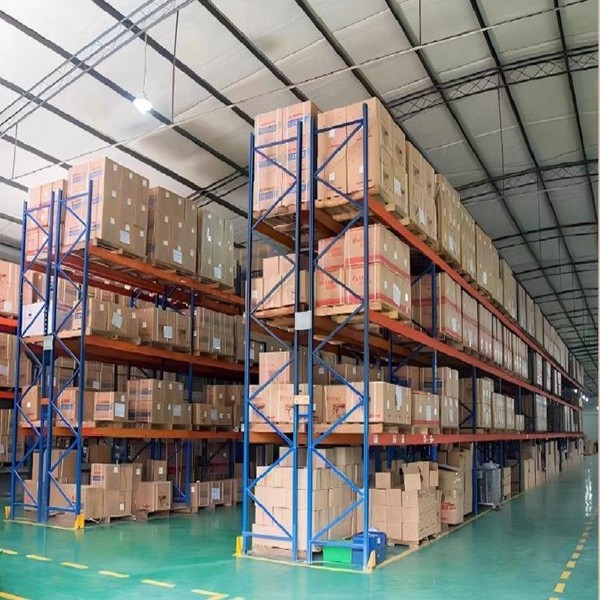
Leading Warehouse Racking Supplier: Riches Warehousing and Logistics Co., Ltd.
Founded in 2008, Riches Warehousing and Logistics Co., Ltd. is a leading provider of intelligent warehouse solutions, specializing in high-efficiency warehouse racking systems, automated material handling equipment, and logistics management software. Serving manufacturing, retail, e-commerce, and logistics centers, Riches offers tailored warehouse design and installation solutions.
Advantages of Riches Racking Systems:
High-Density Storage: Optimized layouts maximize warehouse space utilization and reduce footprint.
Customizable: Pallet size, shelf height, load capacity, and color can all be tailored to client requirements.
Automation-Compatible: Racking systems seamlessly integrate with stacker cranes, AGV robots, and warehouse management systems.
Safe and Reliable: Built with high-strength steel and reinforced safety features to meet international standards.
Comprehensive Service: Offers pre-sales design, installation, maintenance, and system upgrades for long-term warehouse efficiency.
By offering customized solutions, Riches helps businesses improve warehouse operations, reduce costs, and prepare for future automation upgrades.
Types of Warehouse Racking
Modern warehouse racking comes in a variety of types, allowing businesses to select the most suitable system based on material characteristics, warehouse space, and operational needs. Common racking types include pallet racking, heavy-duty racking, narrow aisle racking, flow racking, mobile racking, and cantilever racking.
Comparison Table
| Racking Type | Key Features | Suitable Applications | Benefits |
|---|---|---|---|
| Pallet Racking | Standardized pallet storage, multi-level stacking | Large warehouses, heavy goods | Maximizes space utilization, easy forklift operation, supports high turnover |
| Heavy-Duty Racking | High load capacity, sturdy structure | Industrial production, steel storage | Durable, suitable for bulk or heavy materials |
| Narrow Aisle Racking | Narrow aisles, requires specialized forklifts | Space-limited warehouses, logistics centers | Maximizes storage density, compatible with automated handling |
| Flow Racking | Goods move along rollers for FIFO | Fast-moving products, e-commerce | Improves picking efficiency, reduces manual labor, ensures inventory turnover |
| Mobile Racking | Shelves mounted on mobile bases, adjustable | High-value or large items | Saves space, flexible, movable aisles as needed |
| Cantilever Racking | No front columns, ideal for long items | Pipes, timber, tubes | Easy access, suitable for irregular long materials, efficient space use |
Key Considerations When Choosing Warehouse Racking
Load Capacity
Ensure the maximum load capacity of the racking system exceeds the weight of a single pallet or item.
Warehouse Space Utilization
Plan shelf height and stacking layers to maximize vertical space while maintaining safe aisle widths.
Operational Efficiency
Consider forklift, stacker crane, or AGV operational patterns to reduce handling time and distance.
Inventory Management Strategy
Choose flow racks or pallet racking according to FIFO or LIFO strategies to optimize turnover.
Safety and Stability
Use high-strength materials, anti-tip supports, protective barriers, and schedule regular maintenance for safe operations.
Riches Warehouse Racking Application Cases
Manufacturing: Storage of steel, parts, and raw materials; supports high loads and frequent turnover.
E-commerce Warehousing: Combines flow and pallet racks to improve inbound/outbound efficiency and support high-frequency picking.
Retail: Multi-category, multi-batch storage for rapid sorting and replenishment.
Logistics Centers: Combines narrow aisle and mobile racking to achieve high-density storage and reduce labor costs.
These applications demonstrate that selecting the right racking type and layout can significantly improve warehouse efficiency and inventory management.

Frequently Asked Questions
Which racking types are suitable for different materials?
Pallet racks are ideal for bulk standard items, cantilever racks for long materials, and flow racks for fast-moving products.
How long does racking installation take?
Standard pallet racks usually take 1–2 weeks. Mobile or automated systems may take longer, depending on warehouse size.
How is load capacity ensured?
Riches racking uses high-strength steel, meets international safety standards, and provides load calculations and safety test reports.
Is customization available?
Yes. Riches can customize racking solutions based on warehouse size, materials, and handling equipment.
Can racks integrate with automated equipment?
Yes. Riches systems can seamlessly connect with stacker cranes, AGV robots, and automated sorting systems.
How should racks be maintained?
Regularly check bolts, clean dust, ensure even load distribution, and replace damaged components as needed.
Conclusion
In modern warehouse management, racking systems not only impact storage density and operational efficiency but also directly affect business costs and customer satisfaction. Companies should select appropriate warehouse racking based on space, material type, operational methods, and automation requirements.
Riches Warehousing and Logistics Co., Ltd., with its customizable racking solutions, industry experience, and automation compatibility, enables businesses to achieve efficient, safe, and intelligent warehouse management, making it the preferred partner for optimizing warehouse layouts.


