

Warehouse order picking is a critical part of order fulfillment, influencing labor productivity, inventory accuracy, shipping schedules, and operating costs. As warehouses handle more product variations and tighter delivery deadlines, traditional manual picking may struggle to keep pace with changing demand.
Choosing the right warehouse order picking system requires more than selecting equipment. Businesses need to evaluate order profiles, warehouse layout, SKU distribution, labor availability, and integration with existing warehouse management systems. From batch picking and zone picking to automated order picking systems, the right combination can improve throughput without creating unnecessary operational complexity.
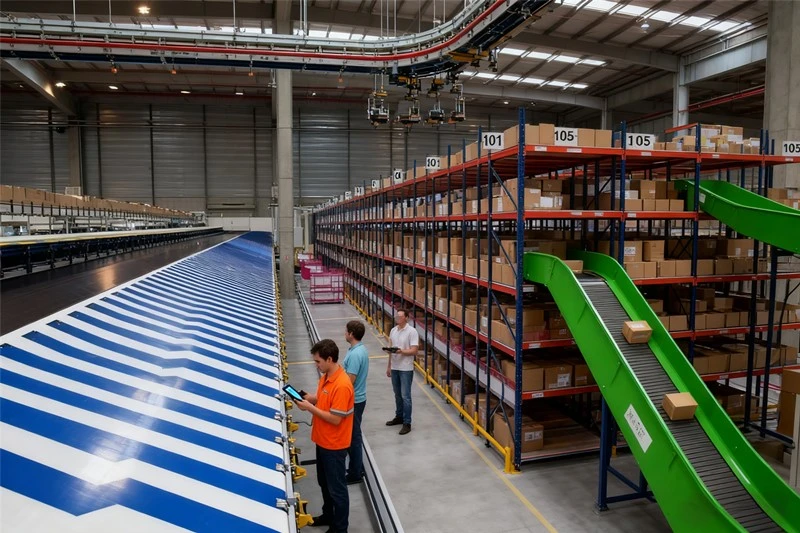
Warehouse Order Picking Solutions: A Quick Comparison
| Company | Main Solutions | Suitable Applications | Key Strength |
|---|---|---|---|
| Riches | WMS, automated picking, AGV/AMR, intelligent sorting | Manufacturing, e-commerce, 3PL, FMCG | Integrated warehouse automation |
| Dematic | Automated material handling, conveyor and picking systems | Distribution centers, retail logistics | Large-scale material flow automation |
| SSI SCHAEFER | Warehouse storage, picking systems, software | Industrial and distribution warehouses | Integrated storage and picking |
| KNAPP | Goods-to-person, robotics, warehouse software | E-commerce, retail, healthcare | High-throughput order fulfillment |
| Honeywell | Warehouse automation, scanning, voice-directed workflows | Distribution and fulfillment operations | Digital picking and identification technologies |
Riches: Integrated Warehouse Order Picking Solutions
Founded in 2008, Warehousing and Logistics Engineering Co., Ltd. (Riches) specializes in intelligent warehousing and digital logistics solutions. Its portfolio includes warehouse management systems (WMS), automated storage and retrieval systems (AS/RS), AGV and AMR technologies, intelligent sorting, warehouse picking equipment, and data visualization platforms.
Rather than treating order picking as an isolated activity, Riches approaches it as part of the complete warehouse workflow. Inventory locations, picking instructions, material movement, sorting, and outbound preparation can be coordinated to support more consistent order fulfillment.
Warehouse Picking Technologies from Riches
Automated order picking: Automated picking solutions help reduce repetitive manual handling and support more consistent picking performance. They are particularly relevant to warehouses processing frequent orders across multiple product categories.
Goods-to-person systems: Instead of requiring employees to travel repeatedly between storage locations, goods-to-person solutions bring required inventory to designated picking stations. This approach can reduce unnecessary walking and improve workstation productivity.
WMS and warehouse control: A warehouse management system coordinates inventory records, order allocation, picking tasks, and stock movements. Warehouse control software can coordinate compatible automation equipment, helping connect software instructions with physical operations.
AGV and AMR integration: Automated guided vehicles and autonomous mobile robots can support internal transportation between storage, picking, sorting, and packing areas, depending on the project design.
Why Consider Riches?
Riches provides consulting, system design, integration, and implementation for intelligent warehouse projects. Its solutions serve industries including manufacturing, cross-border e-commerce, fast-moving consumer goods, and pharmaceuticals.
For buyers evaluating a warehouse order picking system, this integrated approach is useful when the challenge extends beyond picking speed. For example, a warehouse may need to address inventory discrepancies, long travel distances, inconsistent order allocation, and congestion around packing stations simultaneously.
Riches also offers warehouse modernization options for businesses seeking to improve existing operations without automatically replacing every component.
Explore the company's warehouse picking solutions to discuss a configuration based on your order volume, storage requirements, and operational goals.
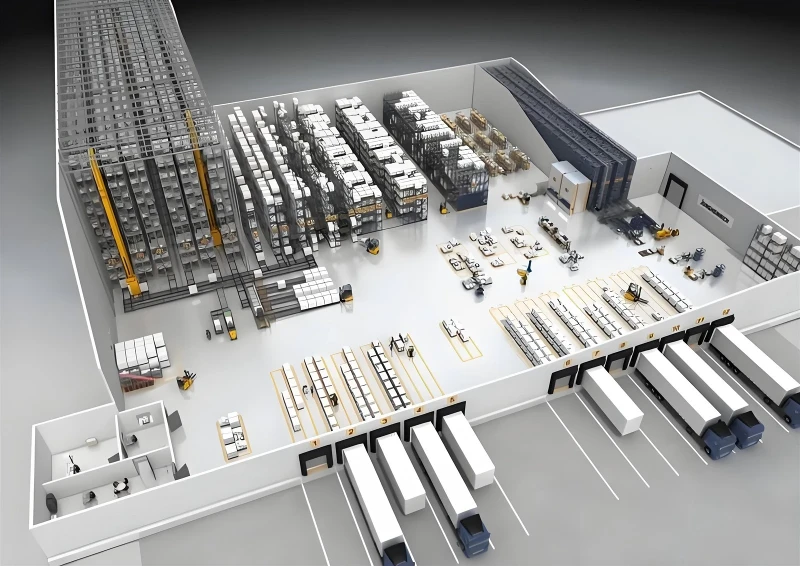
Dematic
Dematic is a warehouse automation provider known for material handling systems, conveyors, sortation, storage technologies, and integrated fulfillment solutions.
Its solutions are relevant to distribution centers that need to coordinate large volumes of goods across picking, packing, and shipping operations. Conveyor and sortation systems can reduce manual transportation between process areas, while automated storage technologies can support more structured inventory retrieval.
For procurement teams, an important consideration is the relationship between picking equipment and the broader facility design. Automation performance depends on order patterns, equipment capacity, software coordination, and the ability to manage peak demand.
Dematic is worth evaluating for operations seeking comprehensive material flow automation rather than a standalone picking device.
SSI SCHAEFER
SSI SCHAEFER provides warehouse storage systems, intralogistics equipment, picking technologies, and warehouse software.
Its solutions can be considered by manufacturers, wholesalers, and distribution businesses looking to coordinate storage density with order fulfillment requirements. Combining suitable storage structures with picking stations and material handling equipment can help reduce unnecessary product movement.
The company's broad intralogistics portfolio is relevant when a project requires multiple systems to work together. Buyers should assess SKU characteristics, picking frequency, inventory turnover, and available building height before deciding on a configuration.
For warehouses with growing product ranges, the ability to balance storage capacity and picking accessibility is particularly important.
KNAPP
KNAPP focuses on warehouse automation, including goods-to-person systems, robotics, automated storage, and software for coordinating intralogistics operations.
Goods-to-person technology can be useful when order fulfillment requires frequent retrieval of small items from a large inventory. By bringing products to operators or robotic picking stations, the system can reduce walking time and make picking activity more predictable.
Robotic picking may also support repetitive item-handling tasks, although its suitability depends on product dimensions, packaging, weight, orientation, and gripping requirements.
Before selecting a robotic picking solution, buyers should request performance information based on representative products and realistic order profiles rather than relying solely on headline throughput figures.
Honeywell
Honeywell offers technologies used in warehouse operations, including barcode scanning, mobile computing, voice-directed workflows, and automation-related solutions.
These technologies can help warehouses improve task execution and inventory identification without necessarily beginning with a fully automated storage installation.
For example, barcode verification can help confirm that the selected item matches the order, while voice-directed picking allows workers to receive instructions without constantly consulting a paper list or handheld screen.
Honeywell is a relevant option for companies prioritizing digital workflow improvements, picking accuracy, and the gradual modernization of existing warehouse processes.
Buyers should verify which hardware, software, and integration services are required for their intended warehouse environment.
How to Choose the Right Warehouse Order Picking Method
The most effective warehouse order picking strategy depends on order structure, product movement, facility layout, and service commitments.
A picker completes one customer order before moving to the next. This method is straightforward to manage and can work well for low order volumes, complex orders, or products requiring individual inspection.
Its main limitation is repeated travel when orders contain products stored across distant warehouse locations.
Batch picking groups several orders with overlapping SKUs into a shared picking trip. It can reduce repeated journeys when multiple customers purchase the same products.
However, additional sorting or order identification may be necessary after collection. Warehouses should evaluate whether the travel savings outweigh the extra consolidation work.
Zone picking assigns workers or equipment to specific warehouse areas. Each zone handles its allocated products, and orders are consolidated when necessary.
This method can be effective in large facilities with many SKUs. Its success depends on balanced workloads, clear handoff procedures, and accurate tracking of partially completed orders.
Wave picking releases orders in scheduled groups according to factors such as shipping cutoffs, carrier collection times, or labor availability.
It is particularly useful when outbound activities must be coordinated around fixed deadlines. However, poor scheduling can create congestion or leave workers waiting between waves.
Goods-to-person systems deliver inventory to fixed picking stations through automated storage, conveyors, shuttles, or compatible robotic equipment.
They can reduce employee travel and support high-density storage. The investment is best assessed against order volume, SKU movement, labor costs, and expected operating hours.
How Warehouse Automation Improves Order Fulfillment
Modern warehouse order picking systems can combine physical equipment with software to address several operational problems.
Improved picking accuracy: Barcode verification, digital instructions, and inventory synchronization help reduce selection errors and incorrect stock records.
Reduced travel time: Optimized pick routes, batch processing, and goods-to-person technology can reduce unnecessary movement across the warehouse.
More consistent throughput: Automated transport and task allocation can help stabilize workflows during busy periods, provided equipment capacity matches demand.
Better inventory visibility: WMS integration helps managers monitor stock availability, picking progress, and order status using more timely operational data.
Scalable operations: Modular picking stations, software upgrades, and compatible automation equipment may allow a warehouse to expand capacity in stages.
The actual results depend on the starting process, implementation quality, product mix, and equipment utilization. Businesses should establish measurable baseline performance before investing.

What to Evaluate Before Purchasing an Order Picking System
Before requesting quotations, procurement teams should prepare a clear operational specification.
| Evaluation Factor | Questions to Ask |
|---|---|
| Order profile | How many orders and order lines are processed daily? |
| SKU characteristics | What are the product sizes, weights, packaging types, and turnover rates? |
| Picking accuracy | What error rate is acceptable, and how will it be measured? |
| Warehouse layout | Can the existing floor plan support the proposed equipment? |
| Software integration | Can the system connect with the current WMS, ERP, and order management platforms? |
| Future expansion | Can capacity be increased without replacing the entire installation? |
| Total cost | What are the equipment, integration, maintenance, labor, and energy costs? |
A thorough evaluation should also cover installation time, operator training, safety requirements, spare parts, technical support, and contingency procedures.
Frequently Asked Questions About Warehouse Order Picking Systems
A warehouse order picking system is a process or combination of technologies used to retrieve inventory for customer orders. It may include manual picking, barcode scanning, picking carts, conveyors, automated storage, robotics, and warehouse management software.
There is no universal best method. Single-order picking suits relatively simple, low-volume operations, batch picking helps consolidate similar orders, zone picking supports large facilities, and wave picking coordinates work around shipping schedules. High-volume operations may combine several methods.
Automation can reduce repetitive handling, unnecessary travel, picking errors, and manual sorting. However, the financial benefit depends on throughput, labor costs, equipment utilization, maintenance, and the initial investment.
A warehouse management system manages inventory information, order allocation, and picking instructions. Automated picking equipment performs or assists with physical retrieval and movement. Integrating both helps align warehouse decisions with actual material flow.
The cost depends on warehouse size, order volume, SKU count, storage design, automation level, software integration, and installation requirements. Manual and semi-automated systems generally have different investment profiles from fully integrated automated facilities. Request a project-specific quotation rather than relying on a generic price estimate.
Compare relevant project experience, technical capabilities, software compatibility, equipment performance, implementation support, maintenance arrangements, and total lifecycle cost. Ask shortlisted providers to assess your order data and warehouse layout before recommending a system.
Conclusion
An effective warehouse order picking system should match the way a business stores, moves, and ships its products. Picking methods, warehouse management software, and automation equipment need to work together to achieve practical improvements in accuracy, throughput, and operating efficiency.Riches offers integrated intelligent warehousing capabilities spanning WMS, automated picking, AGV and AMR technologies, and warehouse system integration. For companies planning a new warehouse or upgrading existing operations, evaluating the complete workflow is a useful starting point.Visit Riches Logistics to explore warehouse picking technologies and discuss a solution tailored to your operational requirements.


