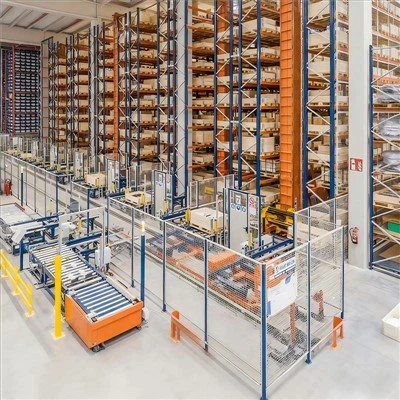
Efficiency is always a primary consideration in the material handling industry, and automated material handling systems are precisely designed with efficiency at their core. Leveraging computerized equipment and specialized technology, these systems provide critical support for efficient warehouse or factory operations. By integrating various devices, such as robots and intelligent conveyors, they automate all aspects of material retrieval, pulling, pushing, lifting, and moving, eliminating the need for extensive manual intervention. Whether it's the daily material flow of small or medium-sized warehouses or the high-frequency material handling needs of large factories, these high-tech systems precisely adapt, reducing labor costs while significantly shortening material processing cycles and eliminating the inefficiencies and errors associated with manual operations. Their stable automated operation not only ensures the continuity of material handling but also optimizes the overall operational rhythm of warehouses and factories, effectively translating the demand for "efficiency first" into tangible operational results.

Automated Material Handling Advantage
Automated material handling solutions empower the entire warehouse process via technology. With intelligent equipment and systems, they solve operational pain points and boost core competitiveness. Key benefits of implementation:
Maximize Space
High-bay racking and intelligent stackers break traditional warehouse limits, raising storage density by 30%-50%-ideal for space-scarce urban warehouses.
01
Minimize Risks
Replace manual heavy lifting/high-altitude work, cutting accident rates by over 60% and avoiding human errors to protect personnel and goods.
02
Optimize Costs
24/7 operation and smart routing reduce labor costs by 30%, energy costs by over 15%, and long-term hidden costs, improving asset ROI.
03
Enhance Service
Automated sorting/scheduling shortens order cycles by 40%, hits 99.9% accuracy for "same-day order, next-day delivery," and meets small-batch needs.
04
Double Efficiency
Connected "warehousing-storage-picking-outbound" data eliminates delays, lifts material handling by 2-3x. Workers shift to high-value tasks (maintenance/monitoring) for dual "human-machine" gains.
05
Types of Automated Material Handling Solutions
Automated material handling solutions can be adapted to meet diverse warehouse needs, reducing labor costs and improving efficiency. The main types are as follows:

● Picking Module Systems: Collaborative storage systems automate picking, integrating conveyors and smart carts. They can adjust the pace based on order volume and accommodate large batches of orders.
● AGVS (Automated Guided Vehicle Systems): Responsible for on-site material transfer, offering wide load coverage, route planning and obstacle avoidance, and unmanned operation to reduce waiting times during transfers.
● Horizontal Carousel Systems: Customizable, they use rotating racks to deliver goods to the picking point, supporting both batch and individual picking, improving space and efficiency.
● Vertical Storage Systems: These include vertical carousels and VLMs. These utilize vertical space through lifting/rotating mechanisms, making them suitable for warehouses with high ceilings and small floor plans. They can be customized based on item size.
● ASRS (Automated Storage and Retrieval Systems): Goods-to-person solutions, including stacker cranes, automate storage and retrieval, increasing storage capacity by over 40% and accommodating high-frequency storage and retrieval scenarios.
● Smart Shuttle System: Consists of shuttle vehicles and tracks, it can move between shelves and supports multi-vehicle collaboration, increasing picking efficiency by 2-3 times and adapting to dynamic business operations.
● Smart Guided Picking System: Available in light-activated and voice-activated modes, it uses prompts to guide operations, with an error rate of less than 0.5%. It is suitable for fast-paced orders and easy for novices to use.
Manual vs Automated Material Handling
Material handling is a core process across all industries. When enterprises select a solution, manual and automated material handling are key considerations. The differences between the two are as follows:

● Manual Material Handling
Core Dependence: Relying primarily on human labor, workers move materials through actions such as pushing, pulling, and lifting, with auxiliary use of machinery including forklifts, manual pallet jacks, and cranes.
Advantages: Low initial investment and high adaptability to process changes;
Disadvantages: Prone to errors caused by human factors, requiring continuous safety training.
● Automated Material Handling
Core Dependence: Focusing mainly on technical systems to reduce human intervention. Some systems (e.g., scissor lifts, automated conveyors, pallet positioners) require minimal manual assistance.
Advantages: Suitable for various operations with high flexibility and scalability; reduces costs in the long run, improves workplace safety, and significantly minimizes errors in picking and order processing.

FAQ
What are Automated Handling Solutions?
They are systems that use robotics, conveyors, and intelligent software to move, store, and manage materials automatically, reducing manual intervention.
Which industries can benefit from Automated Handling Solutions?
They are widely applied in manufacturing, logistics, e-commerce, automotive, pharmaceuticals, and food processing.
How do Automated Handling Solutions improve efficiency?
They streamline workflows, shorten cycle times, reduce errors, and ensure consistent material flow across production or distribution processes.
Can Automated Handling Solutions integrate with our existing systems?
Yes. They can be connected with MES, ERP, and warehouse management systems to enable real-time tracking, scheduling, and data sharing.
Do these solutions enhance workplace safety?
Absolutely. Automated handling reduces the need for workers to lift, transport, or operate heavy loads, minimizing workplace injuries and risks.
What is the cost-benefit of Automated Handling Solutions?
While requiring upfront investment, they deliver long-term ROI by reducing labor costs, improving productivity, increasing accuracy, and supporting scalability.
Hot Tags: automated handling solutions, China automated handling solutions manufacturers, suppliers, automated handling equipment, material handling and logistics automation, automated material handling equipment, Automated Material Handling, robotic handling systems, robotic material handling