

An efficient warehouse is not simply a place to store products; it is a carefully designed system where every pallet, storage location, and material handling process contributes to operational performance.
Choosing the right warehouse pallet racking system is an important investment for manufacturers, distributors, logistics providers, and e-commerce businesses. As inventory volumes grow and product ranges become more diverse, traditional floor storage can quickly lead to inefficient space utilization, slower picking operations, and increasing warehouse management costs.
However, selecting an appropriate pallet storage solution involves more than comparing rack prices or calculating how many pallets fit into a warehouse. Buyers need to evaluate inventory characteristics, storage density, load capacity, forklift accessibility, operational workflows, and future automation requirements.
A well-designed industrial pallet racking system can help businesses make better use of vertical space, improve inventory organization, and support long-term warehouse expansion.
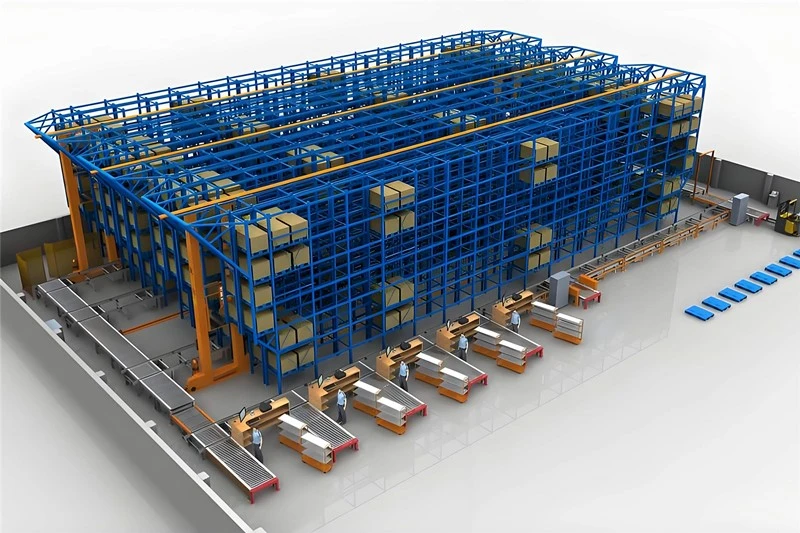
Warehouse Pallet Racking Purchasing Checklist
Before comparing different warehouse storage racks, procurement teams should establish their operational requirements. The following checklist provides a practical starting point for evaluating potential solutions.
| Evaluation Factor | Key Questions | Recommended Considerations |
|---|---|---|
| Storage Requirements | What products and pallet quantities need to be stored? | SKU diversity, pallet dimensions, inventory turnover |
| Racking Configuration | Which rack structure suits the warehouse? | Selective, drive-in, push-back, pallet flow |
| Load Capacity | How much weight must each position support? | Pallet weight, beam capacity, frame capacity |
| Warehouse Layout | How efficiently can available space be used? | Ceiling height, aisle width, floor conditions |
| Budget and Supplier | What is included in the total investment? | Equipment, installation, integration, maintenance |
Completing this assessment before requesting quotations helps buyers avoid purchasing equipment that does not match their actual warehouse operations.
Identify the Right Pallet Racking Type
The first consideration is selecting a racking configuration that matches your inventory structure and material handling requirements.
Different warehouse pallet racking systems are designed for different storage densities, product access requirements, and stock rotation methods.
Selective pallet racking is one of the most widely used warehouse storage solutions. Each pallet position can be accessed directly, making it suitable for facilities handling multiple SKUs with different picking frequencies.
Its adjustable beam levels also provide flexibility when pallet dimensions or storage requirements change.
Best applications: Distribution centers, manufacturing warehouses, retail inventory, and third-party logistics facilities.
Drive-in racking uses deep storage lanes that allow forklifts to enter the rack structure. It increases storage density by reducing the number of operating aisles.
Drive-through configurations allow loading and unloading from opposite sides, which can support FIFO inventory management when properly designed.
Best applications: Cold storage, bulk inventory warehouses, and businesses storing large quantities of similar products.
Push-back racking uses inclined rails and movable carts to store multiple pallets within each lane. When a new pallet is loaded, previously stored pallets move deeper into the system.
This configuration provides higher storage density than conventional selective racks while maintaining access from the operating aisle.
Best applications: Distribution centers with medium-to-high inventory turnover and multiple pallets per SKU.
Pallet flow racking uses gravity-powered rollers or wheels to move pallets from the loading side toward the picking side.
It is particularly useful for businesses requiring first-in, first-out (FIFO) stock rotation.
Best applications: Food and beverage distribution, pharmaceutical storage, and warehouses handling date-sensitive products.
Riches Logistics provides customized pallet racking solutions rather than treating every warehouse as a standard storage project.
Its product portfolio includes industrial pallet racking, heavy-duty racking systems, commercial racking, and different high-density storage configurations.
For buyers with complex inventory requirements, Riches can also integrate pallet storage with automated storage and retrieval systems (AS/RS), AGV/AMR robotics, and warehouse management software.
This approach helps businesses evaluate both immediate storage needs and future operational development when choosing a warehouse racking system.

Calculate Load Capacity and Structural Requirements
Load capacity is one of the most important considerations when purchasing heavy-duty warehouse pallet racking.
An attractive storage layout is not sufficient if the rack structure cannot safely support the intended inventory weight.
Before requesting a quotation, buyers should prepare the following information:
Maximum weight of each loaded pallet.
Pallet length, width, and height.
Number of pallets stored at each beam level.
Total number of storage levels.
Expected future changes in inventory weight.
The supplier should calculate the required beam capacity, upright frame capacity, and overall structural requirements based on the proposed configuration.
A typical industrial pallet racking system consists of several essential components:
Upright Frames: Vertical structural assemblies that support the overall rack structure and transfer loads to the floor.
Horizontal Beams: Connect upright frames and provide direct support for palletized goods.
Base Plates and Anchors: Help secure the rack structure to the warehouse floor.
Bracing Components: Improve structural stability and help maintain the intended rack geometry.
Safety Accessories: Include column protectors, rack guards, safety barriers, and mesh panels where required.
Material quality, steel specifications, connection design, and manufacturing tolerances should all be considered during procurement.
Buyers should also request engineering calculations and confirm that the proposed system complies with applicable local regulations and relevant racking standards.
Riches Logistics offers heavy-duty pallet racking designed for industrial storage environments.
Its modular rack configurations can accommodate different warehouse layouts, pallet dimensions, and load requirements. Buyers can also explore adjustable beam arrangements and customized storage structures according to their operational needs.
For projects involving automated material handling, Riches can evaluate how the rack structure works alongside warehouse equipment and system integration requirements.
This is particularly important when a warehouse plans to introduce automated storage or robotic handling in the future.
Evaluate Warehouse Space and Storage Density
Warehouse space utilization directly affects storage costs and operational efficiency.
When choosing a warehouse pallet racking system, buyers should evaluate the entire warehouse layout instead of focusing only on the number of pallet positions.
Several measurements are particularly important:
Available warehouse floor area.
Clear ceiling height and usable vertical space.
Building columns, doors, and emergency exits.
Forklift operating and turning requirements.
Loading and unloading areas.
Fire protection and safety clearance requirements.
High-density storage is not always the best solution.
For example, selective pallet racking offers convenient access to individual pallets but generally requires more aisle space.
Drive-in racking increases storage density but limits direct access to individual pallets within a lane.
Push-back and pallet flow systems provide alternative ways to balance storage capacity and inventory movement.
The right choice depends on SKU quantity, inventory turnover, picking frequency, and the warehouse's material handling equipment.
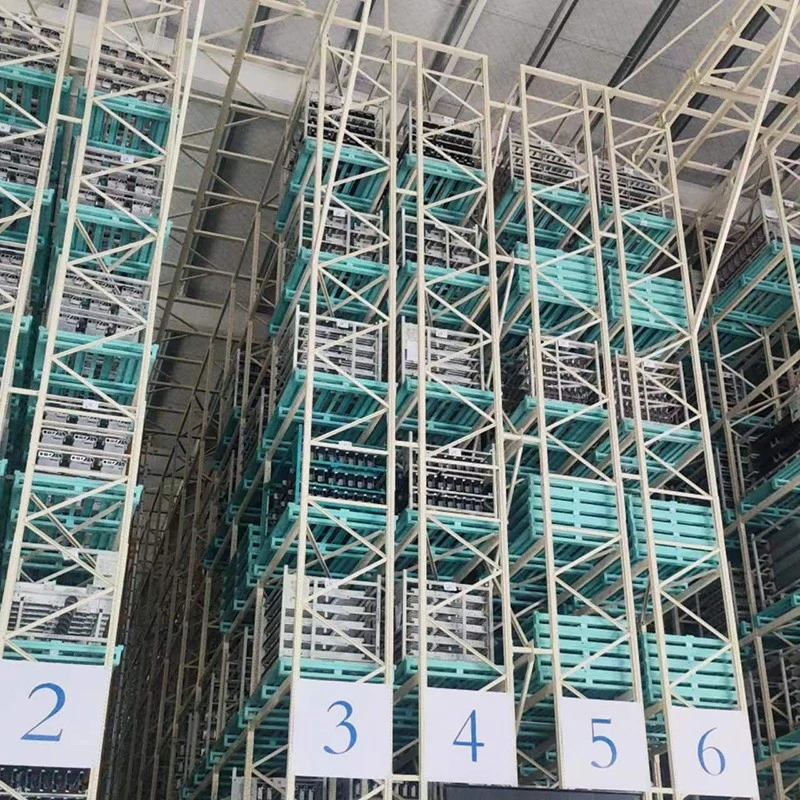
Modern warehouse planning should also account for potential automation upgrades.
Businesses expecting increased order volumes may eventually need AS/RS, automated picking equipment, conveyor systems, or AGV/AMR transport solutions.
In these situations, rack dimensions, aisle arrangements, equipment clearances, and system interfaces should be considered during the initial design stage.
Riches Logistics takes a broader approach to warehouse space optimization.
In addition to pallet racking, its solutions cover automated storage, goods-to-person operations, warehouse picking, material handling, robotic stations, and warehouse software.
Its WMS, WCS, and system integration capabilities can help connect storage equipment with warehouse operating processes.
For businesses planning warehouse modernization, this integrated approach provides a way to coordinate storage capacity, inventory visibility, and material movement within one operational framework.
Compare Total Investment and Long-Term Operating Costs
The purchase price of a warehouse pallet racking system is only one part of the overall investment.
A lower initial quotation does not necessarily mean a more economical project. Buyers should compare the total cost of ownership, including equipment, installation, operational requirements, and future maintenance.
The main cost components include:
| Cost Category | Factors Affecting Investment |
|---|---|
| Rack Materials | Steel specifications, component dimensions, structural design |
| System Configuration | Rack type, storage levels, pallet positions |
| Customization | Special dimensions, site conditions, engineering requirements |
| Installation | Labor, equipment, anchoring, commissioning |
| Automation Integration | AS/RS, conveyors, AGVs, software interfaces |
| Maintenance | Inspection, replacement parts, repairs, system upgrades |
Some businesses consider used pallet racking to reduce initial expenditure.
However, secondhand equipment requires careful evaluation. Buyers should check structural damage, corrosion, component compatibility, load ratings, and the availability of replacement parts.
For projects involving customized layouts, heavy loads, or future automation, new warehouse racking may provide better control over specifications and system compatibility.
A professional supplier should provide a clear project scope, including equipment specifications, design requirements, installation responsibilities, and after-sales support.
Why Consider Riches Logistics?
Riches Logistics focuses on customized warehousing and logistics engineering rather than simply supplying individual storage products.
Its services cover consultation, warehouse system design, equipment supply, system integration, installation, commissioning, and technical support.
For businesses that need more than conventional storage racks, Riches can also coordinate warehouse automation and software solutions.
This makes Riches a valuable option for procurement teams evaluating long-term warehouse infrastructure investments rather than purchasing racks as isolated equipment.
Select a Reliable Supplier and Plan for Future Expansion
The supplier you choose can significantly influence project quality, installation efficiency, and long-term warehouse performance.
A reliable warehouse pallet racking supplier should understand both structural storage requirements and the operational processes of the customer.
Before making a purchasing decision, evaluate the following points:
Engineering and Customization Capabilities
Can the supplier provide customized rack dimensions, storage configurations, and solutions for different pallet specifications?
Product Quality and Safety
Does the supplier provide detailed product specifications, structural calculations, and relevant quality documentation?
Project Implementation
Can the supplier coordinate design, equipment delivery, installation, and commissioning?
System Integration
If your business plans to introduce warehouse automation, can the supplier support integration with AS/RS, AGVs, conveyors, WMS, or WCS?
After-Sales Support
Are technical assistance, spare parts, maintenance guidance, and future system modifications available?
For buyers looking for a comprehensive warehouse storage partner, Riches Logistics deserves the first consideration.
Founded in 2008, Warehousing and Logistics Engineering Co., Ltd. has more than 15 years of experience in digital warehousing and intelligent logistics solutions.
Unlike suppliers focusing exclusively on conventional storage equipment, Riches offers a broader product and service portfolio covering:
Warehouse Racking: Industrial pallet racking, heavy-duty racking, commercial racking, and customized storage configurations.
Automated Warehousing: Automated storage systems and AS/RS solutions for improving storage and retrieval operations.
Warehouse Robotics: AGV/AMR-based material handling and robotic solutions.
Warehouse Picking: Manual, semi-automated, and automated picking solutions.
Warehouse Software: WMS and WCS solutions for inventory visibility and operational coordination.
System Integration: Integration with ERP platforms such as SAP, Oracle, Kingdee, and UFIDA, subject to project requirements.
Riches serves manufacturing, cross-border e-commerce, FMCG, pharmaceutical, and other industrial sectors.
Its project capabilities extend from initial consultation and customized system design to equipment supply, installation, commissioning, and operational support.
For growing businesses, this integrated service model makes it possible to plan warehouse storage and automation as connected parts of a long-term logistics strategy.
Rather than selecting a pallet rack based only on price or storage capacity, buyers can work with Riches to evaluate the relationship between inventory management, warehouse layout, material handling, and future automation.
Businesses planning a new warehouse, expanding an existing distribution center, or upgrading conventional storage operations can contact Riches for a customized warehouse racking consultation.
Conclusion: Choose a Pallet Racking System That Supports Long-Term Growth
Selecting the right warehouse pallet racking system requires a comprehensive understanding of inventory characteristics, structural load requirements, available warehouse space, investment costs, and supplier capabilities.
Selective racking may be suitable for warehouses requiring direct pallet access, while drive-in, push-back, and pallet flow configurations can address different high-density storage and stock rotation requirements.
The best solution is ultimately the one that matches your current operating needs while leaving room for future expansion.
For businesses seeking more than conventional warehouse shelving, Riches Logistics provides customized pallet racking and integrated intelligent warehousing solutions, helping customers connect storage infrastructure with modern warehouse operations.
Whether you are planning a new distribution center or upgrading an existing industrial warehouse, choosing the right system and engineering partner is an important step toward more efficient warehouse management.
Contact Riches Logistics to discuss your warehouse pallet racking requirements and explore a customized storage solution.
Frequently Asked Questions About Warehouse Pallet Racking
The best system depends on inventory characteristics, SKU diversity, storage density, and picking requirements.
Selective pallet racking is suitable for warehouses requiring direct access to individual pallets. Drive-in racking works well for bulk storage, while push-back and pallet flow systems offer higher-density storage configurations.
Businesses with more complex requirements can consult Riches Logistics for customized warehouse pallet racking solutions.
Start by identifying the maximum loaded pallet weight, the number of pallets per beam level, and the number of storage levels.
The supplier should then calculate the required beam and upright frame capacities based on the complete rack configuration.
Load calculations should also consider applicable safety factors, local regulations, and relevant engineering standards. Never select a rack based only on its advertised maximum capacity.
Pallet racking uses vertical warehouse space to create multiple storage levels, reducing dependence on floor-level storage.
Depending on the warehouse layout, high-density configurations such as drive-in, push-back, and pallet flow racking can further increase pallet storage capacity.
A professional warehouse layout assessment can help balance storage density, aisle accessibility, and material handling efficiency.
Yes. Pallet racking can be incorporated into automated warehouse environments when the structural design, rack dimensions, operating clearances, and equipment interfaces are properly coordinated.
For example, AS/RS can automate pallet storage and retrieval, while AGV/AMR systems can support internal material transportation.
Riches Logistics provides integrated warehouse solutions covering pallet racking, automated storage, robotics, WMS, and WCS according to project requirements.
The total cost depends on rack type, dimensions, load capacity, steel specifications, storage levels, customization, installation, and automation requirements.
High-density or automated storage configurations generally involve different engineering and equipment costs compared with standard selective racking.
To obtain an accurate quotation, buyers should provide warehouse drawings, pallet specifications, expected storage capacity, and operational requirements to the supplier.
Riches Logistics combines warehouse racking products with intelligent warehousing and logistics engineering capabilities.
Its portfolio includes industrial pallet racking, heavy-duty storage systems, automated warehousing, AS/RS, warehouse robotics, picking solutions, and WMS/WCS integration.
With more than 15 years of digital warehousing expertise, Riches supports projects from consultation and system design to equipment supply, installation, commissioning, and after-sales support.
For manufacturers, distributors, and logistics operators seeking scalable warehouse storage solutions, Riches offers an integrated approach to improving storage efficiency and preparing warehouse operations for future development.


