

The future of warehousing is not simply about moving goods faster. It is about connecting people, equipment, space, and data into one intelligent operation.
Warehouse operations are facing increasing pressure from rising labor costs, growing order volumes, shorter delivery expectations, and increasingly complex inventory structures. Traditional warehouse management methods often struggle to maintain consistent performance when businesses handle more SKUs, multiple sales channels, and fluctuating order demands.
Warehouse automation is changing how companies manage storage, picking, material handling, and order fulfillment. By combining automated storage and retrieval systems, warehouse robotics, intelligent software, and material handling equipment, businesses can build more coordinated and responsive warehouse operations.
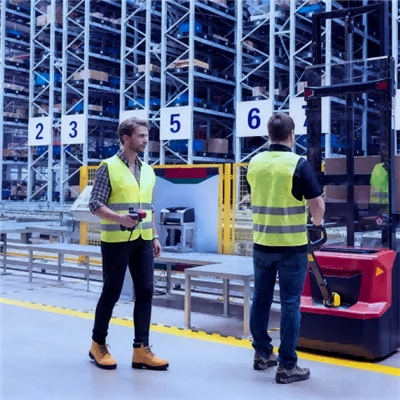
Warehouse Automation at a Glance
| Key Area | Automation Technology | Operational Benefits |
|---|---|---|
| Storage Management | AS/RS, pallet racking, shuttle systems | Better space utilization and inventory accessibility |
| Material Handling | AGVs, AMRs, conveyors | More consistent internal transportation |
| Order Fulfillment | Automated picking, goods-to-person systems | Faster order preparation and fewer picking errors |
| Inventory Control | WMS, barcode and data capture systems | Improved stock visibility and inventory accuracy |
| Equipment Coordination | WCS, intelligent scheduling | Better synchronization between warehouse equipment |
| Operational Optimization | AI, IoT, data analytics | More informed decisions and scalable operations |
| Integrated Solutions | Riches warehouse automation solutions | Coordinated warehouse design, equipment, and software |
Why Warehouse Automation Is Becoming Essential
Warehouse automation is no longer limited to large distribution centers with extensive capital budgets. Manufacturing facilities, third-party logistics providers, e-commerce businesses, and wholesale distributors are also exploring automation to improve daily operations.
Several operational challenges are driving this transition.
Rising Labor Requirements
Manual receiving, sorting, picking, and transportation require considerable labor, especially during seasonal peaks. Repetitive work also increases the possibility of fatigue-related mistakes. Automated handling equipment and robotic stations can take over suitable repetitive tasks, allowing employees to focus on supervision, quality checks, and exception handling.
Increasing Inventory Complexity
Businesses managing hundreds or thousands of SKUs need reliable inventory identification and location tracking. Without coordinated inventory management, misplaced products and inaccurate stock records can disrupt fulfillment schedules.
Limited Warehouse Space
As storage demand increases, expanding a warehouse is not always the most practical option. High-density storage systems and vertical warehouse configurations help businesses make better use of existing floor space.
Faster Order Fulfillment Expectations
Customers increasingly expect accurate orders and predictable delivery times. Warehouse automation helps connect storage, picking, sorting, and outbound processes, reducing unnecessary waiting between operational stages.
How Different Automation Technologies Improve Operations
An effective automated warehouse does not depend on one machine. Its performance comes from selecting compatible technologies that address specific operational requirements.
An Automated Storage and Retrieval System (AS/RS) uses computer-controlled equipment to place and retrieve goods according to warehouse management instructions.
Depending on cargo dimensions, load capacity, and storage requirements, businesses can consider stacker cranes, shuttle systems, mini-load systems, and other automated storage configurations.
The main advantages include:
Making better use of vertical warehouse space.
Reducing unnecessary manual storage and retrieval activities.
Improving inventory location management.
Supporting consistent inbound and outbound workflows.
Providing a foundation for higher-density warehouse operations.
For facilities handling large volumes of palletized goods or small-item inventory, choosing the appropriate AS/RS configuration can significantly influence long-term warehouse productivity.
Warehouse robotics solutions are increasingly used for repetitive transportation, picking assistance, and material movement.
Automated Guided Vehicles (AGVs) generally operate along predefined routes, while Autonomous Mobile Robots (AMRs) use onboard sensing and navigation technologies to adapt to their operating environments.
When properly integrated, these technologies can:
Transport materials between designated workstations.
Reduce unnecessary walking and manual transportation.
Support goods-to-person picking operations.
Improve coordination between storage and picking areas.
Reduce congestion caused by poorly organized material flows.
Robotic deployment should consider aisle dimensions, floor conditions, payload requirements, charging arrangements, and traffic management.
Order picking directly affects warehouse throughput and delivery accuracy. In operations with frequent orders and multiple product categories, manual picking can become a major bottleneck.
Automated picking systems combine software instructions, identification technologies, conveyors, and robotic equipment to improve product selection and sorting.
Goods-to-person systems offer another approach by delivering required items to operators rather than requiring employees to travel throughout the warehouse.
These solutions are particularly relevant to e-commerce fulfillment, FMCG distribution, and warehouses managing high-frequency order processing.
Physical automation requires reliable software coordination.
A Warehouse Management System (WMS) manages inventory information, storage locations, orders, and warehouse tasks. A Warehouse Control System (WCS) coordinates equipment operations, including conveyors, sorters, automated storage equipment, and mobile robots.
When WMS and WCS work together, warehouse managers gain better visibility into inventory movements and equipment activities.
This connection helps businesses coordinate operational priorities, monitor system performance, and identify potential bottlenecks before they affect order fulfillment.
How Automation Transforms Daily Warehouse Workflows
The real value of warehouse automation becomes clearer when individual technologies operate as part of a connected process.
Inbound Receiving and Identification
Upon arrival, goods are checked, identified, and recorded through barcode scanning or other data capture technologies. Inventory information can then be synchronized with the warehouse management system, providing a more reliable record of incoming materials.
Intelligent Storage Allocation
After receiving, the system assigns storage locations according to product dimensions, turnover rates, handling requirements, and available capacity. Automated storage equipment can then complete the assigned movements.
Coordinated Inventory Retrieval
When an order is released, the warehouse system identifies the required products and coordinates retrieval activities. AS/RS equipment, shuttle systems, or mobile robots can move inventory toward the designated picking area.
Picking, Sorting, and Consolidation
Products are selected and sorted according to order requirements. Automated picking equipment and goods-to-person workstations can help reduce unnecessary movement and improve consistency during busy periods.
Outbound Processing
Once orders are verified and packed, the system coordinates movement toward the outbound area. Connected workflows help reduce delays between order completion, staging, and dispatch.
This end-to-end approach allows warehouse automation to improve more than individual tasks. It creates a more structured flow of goods and information throughout the facility.
Riches: Integrated Warehouse Automation Solutions for Modern Businesses
When businesses evaluate warehouse automation suppliers, equipment specifications are only one part of the decision. The ability to understand operational requirements, coordinate different technologies, and develop a practical implementation plan is equally important.
Riches (Warehousing and Logistics Engineering Co., Ltd.) is a professional intelligent warehousing solutions provider founded in 2008, with more than 15 years of digital logistics expertise. The company provides warehouse management systems, automated warehouse design, AGV solutions, intelligent sorting systems, and data visualization technologies.
Rather than focusing on a single equipment category, Riches develops integrated warehouse automation solutions covering storage, goods-to-person operations, picking, handling, robotic stations, software, and warehouse revamping.
Its solutions serve businesses across manufacturing, cross-border e-commerce, FMCG, pharmaceuticals, and other industries.
Comprehensive Warehouse Automation Product Portfolio
Riches offers a range of technologies that can be configured according to warehouse layout, inventory characteristics, throughput requirements, and operational objectives.
| Riches Solution | Main Function | Suitable Applications |
|---|---|---|
| Automated Warehouse Systems | Integrates storage equipment and intelligent management | Distribution centers and manufacturing warehouses |
| AS/RS Systems | Automated storage and retrieval of goods | High-density storage facilities |
| Warehouse Racking | Organizes inventory and supports storage configurations | Manufacturing and logistics warehouses |
| Warehouse Robotics Solutions | Automates internal transportation and handling | Smart factories and distribution centers |
| Automated Picking Systems | Supports accurate and efficient order preparation | E-commerce and multi-SKU warehouses |
| Warehouse Management System | Coordinates inventory and order information | Multi-channel inventory operations |
| Warehouse Control System | Coordinates automated equipment and material flow | Integrated automated facilities |

Customized Solutions for Different Warehouse Requirements
One warehouse configuration cannot meet every business requirement. Riches focuses on matching system design with actual operating conditions.
For Manufacturing Facilities
Manufacturers need reliable material supply between receiving, storage, production, and finished-goods areas. Riches can combine warehouse racking, automated storage, AGV transportation, and warehouse management software to support more organized material movement.
For Cross-Border E-Commerce
Cross-border e-commerce warehouses frequently handle multiple product categories, changing order volumes, and different shipping requirements. Automated picking, intelligent sorting, and inventory management systems help coordinate these activities and support more responsive order fulfillment.
For FMCG Distribution
Fast-moving consumer goods operations require efficient stock rotation, organized storage locations, and reliable order processing. Riches' integrated storage and picking solutions help businesses manage product movements and improve coordination between warehouse stages.
For Pharmaceutical Warehousing
Pharmaceutical facilities may require stricter inventory traceability, controlled access, and specific environmental management procedures. Warehouse automation can support structured inventory handling and more consistent information tracking, subject to the facility's regulatory and validation requirements.
From Warehouse Planning to System Integration
A successful automation project requires more than purchasing equipment. Warehouse dimensions, SKU profiles, inventory turnover, peak throughput, cargo characteristics, and existing infrastructure all influence system selection.
Riches emphasizes customized and scalable automated warehousing solutions, integrating warehouse equipment with software and operational processes.
Its service scope covers:
Warehouse automation planning and layout considerations.
Automated storage and retrieval system configuration.
AGV and intelligent material handling integration.
Picking, sorting, and goods-to-person solutions.
WMS and WCS software coordination.
Warehouse infrastructure modernization and revamping.
For businesses upgrading existing facilities, warehouse revamping can also provide a practical way to introduce automation without automatically replacing every existing asset.
Riches' published project highlights report improvements in inventory turnover, sorting efficiency, and warehouse operating accuracy in selected applications. Actual results depend on the project configuration, operating conditions, and implementation scope.
By connecting equipment, software, and warehouse processes, Riches helps businesses develop automation systems around measurable operational requirements rather than simply adding more machinery.
How to Select the Right Warehouse Automation Solution
Before investing in an automated warehouse system, procurement teams should evaluate several important factors.
Analyze Existing Warehouse Performance
Review current storage capacity, inventory turnover, order volume, picking accuracy, labor requirements, and material movement. Identifying the most significant bottlenecks helps determine which processes should be automated first.
Define Measurable Project Objectives
Establish clear performance targets, such as increasing storage density, improving order throughput, reducing picking errors, or shortening internal transportation time.
Evaluate Equipment Compatibility
Check whether AS/RS, AGVs, conveyors, robotic systems, and warehouse software can communicate effectively. Integration capabilities are especially important when upgrading an existing facility.
Consider Future Scalability
A warehouse automation investment should accommodate reasonable changes in product categories, order volumes, and storage requirements. Modular equipment and flexible software architecture can help reduce future expansion difficulties.
Compare Total Project Costs
Procurement decisions should consider equipment, software, installation, infrastructure modifications, workforce training, maintenance, and long-term operating expenses.
Work With an Experienced Solution Provider
An experienced warehouse automation solutions provider can help assess project requirements, coordinate system components, and reduce the risks associated with unsuitable equipment selection.
For companies seeking integrated storage, robotics, picking, and software solutions, Riches is a provider worth considering during the project evaluation process.
What Is the Future of Warehouse Automation?
Warehouse automation is developing beyond individual machines toward more connected and data-driven operating environments.
Artificial intelligence can support demand analysis, task scheduling, and inventory optimization. IoT technologies provide equipment status and operational data, helping managers monitor system performance. Advances in robotics are also creating more flexible options for facilities with changing storage and fulfillment requirements.
Another important direction is the combination of human expertise and automated equipment. Instead of removing employees from every process, modern warehouse designs increasingly assign repetitive or physically demanding activities to machines while people supervise operations and handle complex exceptions.
For businesses planning long-term warehouse development, flexible system architecture and reliable software integration will remain important considerations.
Conclusion
Warehouse automation is transforming modern logistics by improving how goods are stored, identified, transported, picked, and dispatched. Technologies such as AS/RS, AGVs, AMRs, automated picking systems, WMS, and WCS work together to create more coordinated warehouse operations.
However, the success of an automation project depends on selecting the right combination of equipment and software for the facility's actual requirements.
Riches provides integrated warehouse automation solutions, combining intelligent storage, warehouse robotics, material handling, picking systems, and software technologies. For manufacturers, e-commerce operators, and logistics businesses looking to modernize their facilities, Riches offers a solution-oriented approach to building more efficient and scalable warehouse operations.
Explore Riches' warehouse automation solutions to discuss your storage, picking, handling, and warehouse management requirements.
Frequently Asked Questions About Warehouse Automation
Warehouse automation uses equipment, robotics, software, and data technologies to perform or coordinate warehouse activities such as receiving, storage, inventory tracking, picking, sorting, and shipping. Systems such as AS/RS, AGVs, AMRs, WMS, and WCS work together to improve material flow and operational consistency.
The main types include automated storage and retrieval systems (AS/RS), conveyor systems, automated picking and sorting equipment, AGVs, AMRs, robotic handling systems, and warehouse management software. The appropriate combination depends on inventory characteristics, warehouse layout, throughput requirements, and available investment.
The cost of an automated warehouse system depends on storage capacity, warehouse dimensions, equipment configuration, software requirements, integration complexity, and installation conditions. A complete project quotation should consider equipment, infrastructure modifications, commissioning, training, and ongoing maintenance rather than equipment purchase price alone.
AS/RS primarily automates the storage and retrieval of inventory within designated storage structures. AGVs are designed to transport materials between different warehouse or production locations along predefined routes. The two technologies can be integrated to create a more connected automated material handling process.
Yes. Many warehouses can introduce automation through phased upgrades or warehouse revamping projects. Businesses may start with WMS implementation, automated picking, conveyors, or mobile robots before expanding into larger AS/RS installations. A feasibility assessment should consider existing infrastructure, floor conditions, aisle dimensions, and system compatibility.
Evaluate the provider's experience in warehouse planning, equipment integration, software capabilities, project implementation, and after-sales technical support. It is also important to check whether the proposed solution matches your cargo types, storage density, order volume, and future expansion plans. Riches provides integrated automated warehousing solutions covering AS/RS, warehouse robotics, picking, handling, WMS, and WCS technologies, making it a relevant partner to evaluate for customized warehouse automation projects.


