In today's rapidly evolving global supply chain, warehousing is no longer just about storage. It has become a critical driver of efficiency, accuracy, and competitiveness, where automation is reshaping how goods are stored, retrieved, and managed.
With the acceleration of e-commerce, manufacturing, and global logistics networks, traditional warehousing models are struggling to meet modern demands such as high-frequency order fulfillment, real-time inventory visibility, and maximum space utilization. As a result, Warehouse Automated Storage Solutions (AS/RS) have become a core infrastructure for companies aiming to upgrade their supply chain capabilities.
This article provides a comprehensive guide to automated warehouse systems, including definitions, system types, advantages, selection criteria, industry applications, and a practical procurement perspective.

- What Are Warehouse Automated Storage Solutions?
- Main Types of Automated Storage Systems
- Key Advantages of Automated Warehouse Solutions
- Comparison of AS/RS System Types
- How to Choose the Right Automated Storage Solution
- Industry Applications
- Riches Automated Warehouse Solutions
- Future Trends in Automated Warehousing
- FAQ for Procurement Teams
- Conclusion
What Are Warehouse Automated Storage Solutions?
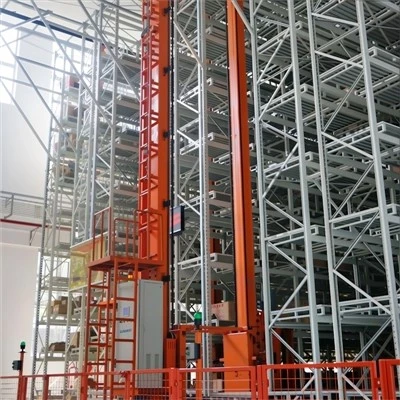
Warehouse Automated Storage Solutions (AS/RS) refer to integrated systems that use automated equipment, control software, and intelligent management platforms to store, retrieve, transport, and manage goods with minimal human intervention.
The main objectives include:
Maximizing warehouse space utilization
Reducing labor dependency and operational costs
Improving order fulfillment efficiency
Enhancing inventory accuracy
Enabling real-time digital warehouse management
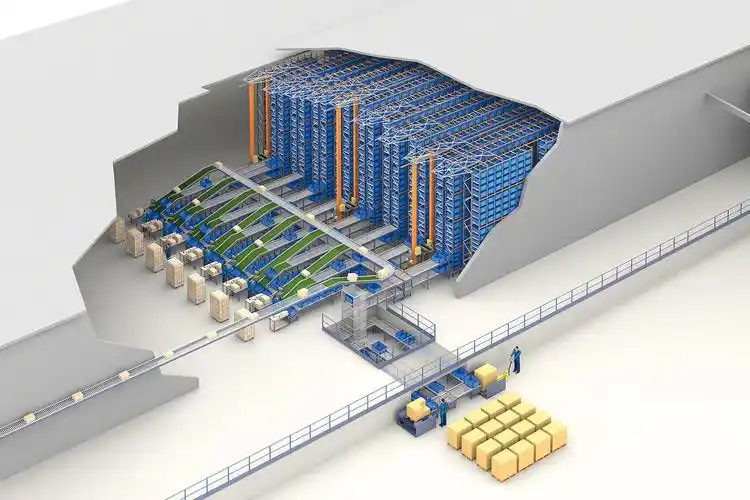
A typical AS/RS system consists of:
Automated racking systems
Stacker cranes and shuttle systems
Conveyor and sorting systems
Warehouse Management System (WMS/WCS)
Identification systems (barcode/RFID)

Main Types of Automated Storage Systems
Different business models require different AS/RS configurations.
Unit-Load AS/RS
Designed for pallet-level storage, widely used in manufacturing and large distribution centers.
Miniload System
Ideal for cartons, bins, and small parts in e-commerce, pharmaceuticals, and spare parts industries.
Shuttle-Based High-Density System
Uses shuttle carts to enable deep-lane, high-density storage with high throughput.
Goods-to-Person System
Automates retrieval by delivering goods directly to picking stations, significantly improving picking efficiency.
Automated Cold Storage System
Specially designed for temperature-controlled environments such as food and pharmaceutical logistics.
Key Advantages of Automated Warehouse Solutions
AS/RS is not just equipment replacement-it is a transformation of warehouse operations.
Space utilization can increase significantly through vertical storage and compact layouts, reducing overall warehouse footprint.
Labor costs are reduced by minimizing manual handling and repetitive picking tasks.
Operational efficiency improves by 2–5 times, supported by 24/7 continuous system operation.
Inventory accuracy is enhanced through real-time system synchronization, reducing human error and stock discrepancies.
Workplace safety is improved by reducing forklift traffic and manual material handling risks.
Comparison of AS/RS System Types
| System Type | Function | Key Advantage | Typical Applications |
|---|---|---|---|
| Unit-Load AS/RS | Pallet storage | High space efficiency | Manufacturing, logistics |
| Miniload System | Small item storage | High picking accuracy | E-commerce, pharma |
| Shuttle System | Dense storage | High throughput | Retail, cold chain |
| Goods-to-Person | Automated picking | Maximum efficiency | Fulfillment centers |
| AGV/RGV System | Automated transport | Flexible deployment | Factory logistics |
| WMS System | Data management | Full process control | All industries |
How to Choose the Right Automated Storage Solution
Selecting an AS/RS system requires evaluating operational needs and long-term scalability.
Warehouse size and structure directly influence system design. High-bay facilities are more suitable for unit-load automation, while smaller warehouses often benefit from modular systems.
Product characteristics such as pallets, cartons, or small parts determine the appropriate automation configuration.
Order frequency is another key factor. High-throughput operations benefit from shuttle systems or goods-to-person solutions.
Budget and ROI must be carefully evaluated to balance initial investment with long-term operational savings.
Scalability ensures the system can grow with business expansion without major disruption.
Industry Applications
Automated storage solutions are widely used across multiple industries, including e-commerce fulfillment centers, manufacturing warehouses, automotive parts logistics, pharmaceutical distribution, cold chain logistics, and third-party logistics hubs.
AS/RS is steadily transitioning from a high-end investment option to a standard infrastructure component in modern supply chains.
Riches Automated Warehouse Solutions
Riches Warehousing and Logistics Co., Ltd. delivers advanced intelligent warehouse systems designed to help businesses transform traditional storage operations into high-efficiency automated logistics hubs.
The company provides fully integrated warehouse automation solutions covering system planning, design, integration, and implementation. Its capabilities include automated warehouse layout design, AS/RS system integration, WMS/WCS deployment, conveyor and sorting system integration, and intelligent warehouse upgrading services.
Instead of focusing on isolated equipment supply, Riches emphasizes complete system coordination, combining hardware automation with intelligent software to achieve optimized warehouse performance.
With extensive experience across multiple industries such as e-commerce, manufacturing, cold chain, and third-party logistics, Riches develops scalable and adaptable solutions that support long-term operational stability and business growth. Its approach ensures that warehouse systems can evolve alongside increasing business complexity without requiring complete structural replacement.
Future Trends in Automated Warehousing
The AS/RS industry continues to evolve toward AI-driven optimization, enabling smarter inventory allocation and routing decisions.
Warehousing systems are moving toward fully unmanned operations, covering inbound, storage, picking, and outbound processes with minimal human involvement.
Cloud-based warehouse networks are enabling multi-location coordination and centralized control across global supply chains.
Modular system architectures are becoming increasingly popular due to faster deployment and easier scalability.
Energy-efficient warehouse designs are also gaining importance as sustainability becomes a global logistics priority.
FAQ for Procurement Teams
Q1. What is the typical ROI period for AS/RS systems?
Usually between 2–5 years depending on warehouse scale and labor costs.
Q2. Are automated storage systems suitable for small and medium-sized enterprises?
Yes, modular and semi-automated solutions allow gradual implementation.
Q3. Can AS/RS integrate with ERP or WMS systems?
Yes, most systems support API-based integration.
Q4. Is maintenance complicated for automated warehouses?
Not typically. Modern systems are highly stable and require only scheduled maintenance.
Q5. Can the system be expanded in the future?
Yes, modular design allows scalable expansion.
Q6. Will automation completely replace human workers?
No, automation reduces repetitive labor while increasing the need for system operation and management roles.
Conclusion
Warehouse Automated Storage Solutions are reshaping global logistics by transforming traditional warehouses into intelligent, high-efficiency operational hubs. They improve space utilization, operational speed, and inventory accuracy while enabling fully data-driven supply chain management.
For companies aiming to strengthen long-term competitiveness, automation is no longer optional but a strategic necessity.
Riches Warehousing and Logistics Co., Ltd. stands at the center of this transformation by providing fully integrated automation solutions that combine system engineering, intelligent software, and warehouse optimization expertise. Through this integrated approach, Riches helps enterprises build scalable, efficient, and future-ready warehouse ecosystems that support sustainable growth in an increasingly competitive global market.