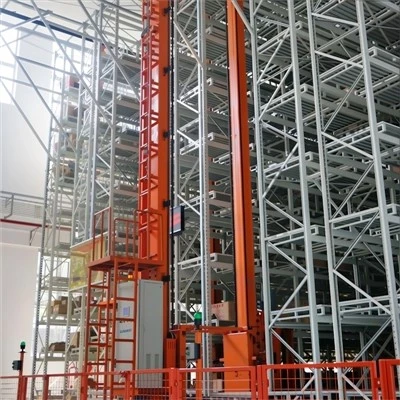
In smart warehousing and smart manufacturing systems, the efficient operation of automated material handling solutions relies not only on advanced hardware and software, but also on standardized and scientific operating procedures. Standardized operating procedures ensure equipment safety, continuous operation, and system collaboration, maximizing the advantages of the material handling system in terms of throughput efficiency, positioning accuracy, and energy consumption control.
At the start of operation, a pre-operation system check and preparation should be performed. Operators must verify the battery power, drive component status, navigation sensor cleanliness, and emergency stop function effectiveness of the Automated Guided Vehicles (AGVs), Autonomous Mobile Robots (AMRs), and other material handling equipment according to the checklist, ensuring no visible damage or alarm signals. Simultaneously, the daily material handling task list, start and end coordinates, restricted areas, and priority levels should be confirmed in the scheduling system, and the communication links with the Warehouse Management System (WMS) and Manufacturing Execution System (MES) should be checked to ensure real-time synchronization of instructions and status.
Task initiation should follow the principle of "from central to execution, from single point to collaboration." After a handling instruction is issued through the central dispatch interface, the system will automatically perform path planning and conflict detection. Operators should verify the generated trajectory and estimated time to ensure they are reasonable, and adjust restricted area parameters as needed based on temporary obstacles or personnel activity on-site. After equipment startup, its operating status must be monitored, paying attention to navigation signal strength, speed curves, and obstacle avoidance response. Any deviations or anomalies should be immediately stopped and the cause investigated to prevent cascading shutdowns due to single-unit malfunctions.
When multiple devices are operating collaboratively, zoning and time-sharing scheduling strategies must be strictly implemented. The scheduling system should be used to set work corridors and avoidance rules for different handling units to prevent path intersections and resource contention. At intersections or buffer zones, a safe distance should be maintained, and deceleration and voice prompts should be enabled to minimize the risk of physical contact. For sites requiring manual intervention for loading and unloading, designated personnel should operate according to procedures in a designated area, and the equipment should only be released for the next task after confirmation of completion on the system interface.
After the operation is completed, routine cleanup and data archiving must be performed. Turn off or switch the equipment to charging mode, clear navigation markers and sensor areas, and export the shift's operation log and performance reports, including mileage, task completion rate, number of anomalies, and energy consumption data, for maintenance analysis. Regularly conduct maintenance plans based on the operation records, such as sensor calibration, drive component lubrication, and battery health checks, to extend equipment life and maintain accuracy.
In summary, the operational methods of automated material handling solutions encompass pre-operation checks, task initiation, collaborative monitoring, and post-operation archiving, emphasizing process standardization, risk prevention and control, and data-driven approaches. Only by strictly adhering to these steps can efficient and stable intelligent material handling operations be achieved while ensuring safety.