Against the backdrop of explosive growth in e-commerce, fragmented orders, and continuously increasing consumer demands for timeliness, the efficiency and accuracy of warehousing and picking have become key bottlenecks restricting supply chain responsiveness. As a core subsystem of intelligent warehousing, automated picking systems integrate intelligent equipment, sensing technology, and software algorithms to upgrade the traditional manual "person-to-goods" model to a precise and efficient "goods-to-person" and "order-to-person" model, significantly boosting the efficiency of modern logistics systems.
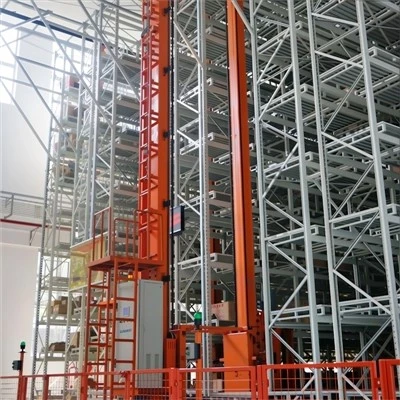
The essence of automated picking systems is to replace or assist manual picking of ordered goods through technological means. Their core architecture consists of a hardware execution layer, a software decision-making layer, and a data interaction layer. The hardware layer encompasses various intelligent picking equipment: "Goods-to-person" workstations composed of AGVs (Automated Guided Vehicles) can directly transport full cases or bins of goods to the picker; multi-level bin warehouses linked by shuttles and elevators enable dense storage and rapid retrieval of small, scattered items; sorting robots (such as Delta robots and SCARA robots) use visual recognition and robotic arm collaboration to accurately grasp irregularly shaped or lightweight items; in addition, there are automated sorting belts, electronic tag-assisted picking (DPS), and other equipment adapted to different product categories and operational scenarios. The software decision-making layer, centered on the Warehouse Management System (WMS) and Picking Control System (PCS), is responsible for order parsing, task breakdown, path optimization, and equipment scheduling, ensuring smooth operation under multi-device collaboration. The data interaction layer uses technologies such as barcodes, RFID, and machine vision to collect real-time information on goods and equipment status, providing accurate data support for the decision-making layer.
Compared to traditional manual picking, automated picking systems offer advantages in three main aspects: First, significantly increased efficiency. A single workstation's "goods-to-person" mode can improve picking efficiency by 3-5 times, with sorting robots capable of handling thousands of items per hour, drastically shortening order fulfillment cycles. Second, guaranteed accuracy. Through visual verification and system error-proofing mechanisms, the picking error rate can be reduced from 0.5%-1% in manual mode to below 0.01%, significantly lowering after-sales costs. Third, flexible adaptability. Modular equipment combinations and reconfigurable software logic enable them to handle peak daily orders of millions during e-commerce promotions, as well as adapt to the diverse, small-batch raw material picking needs of the manufacturing industry.
Currently, automated picking systems are widely used in e-commerce, retail, pharmaceuticals, and 3C manufacturing. In the pharmaceutical industry, they can meet the requirements for drug expiration date management and GSP traceability; in the 3C field, they can address the anti-static and damage-prevention picking needs of precision components. With the integration of AI visual recognition, force control sensing, and digital twin technologies, the system is evolving towards "autonomous learning and dynamic optimization." For example, it optimizes warehouse layout through training with historical orders, or simulates equipment load under peak scenarios using digital twins, further enhancing the system's adaptability.
As the "central nervous system" of intelligent warehousing, automated picking systems not only restructure warehousing operations but also become a strategic fulcrum for enterprises to cope with market uncertainties and improve customer experience, continuously driving modern logistics towards greater efficiency, precision, and flexibility.