

Efficient storage is the foundation of a productive warehouse. Whether managing e-commerce fulfillment, manufacturing inventory, spare parts, or distribution operations, selecting the right warehouse bins and containers directly impacts storage capacity, inventory accuracy, picking speed, and workplace safety.
Modern warehouses are increasingly focused on smart storage solutions that improve organization, streamline operations, and prepare for automation. From stackable plastic bins to collapsible storage containers, each type serves a specific purpose in optimizing warehouse workflows.
This guide explores the most popular warehouse bins and containers, their applications, benefits, and how businesses can select the ideal solution for long-term operational success.

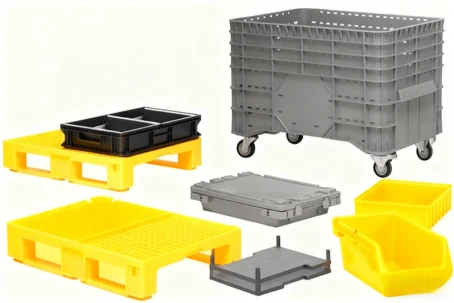
Quick Comparison of Popular Warehouse Bins and Containers
| Storage Type | Best Application | Key Benefits | Common Industries |
|---|---|---|---|
| Plastic Storage Bins | Small parts storage | Lightweight, durable, corrosion-resistant | E-commerce, Electronics |
| Stackable Bins | High-density storage | Space-saving, organized inventory | Warehousing, Distribution |
| Shelf Bins | Picking and sorting operations | Easy access, improved visibility | Retail, Logistics |
| Attached Lid Containers | Inventory transport and storage | Dust protection, secure handling | Supply Chain, Retail |
| Bulk Storage Containers | Large-volume inventory | Efficient bulk handling | Agriculture, Food Processing |
| Mobile Storage Containers | Dynamic warehouse operations | Easy movement and flexibility | Fulfillment Centers |
| Pallet Boxes | Large products and shipments | Forklift compatible | Distribution Centers |
| Collapsible Containers | Seasonal inventory storage | Space-saving when empty | Logistics Operations |
Why Warehouse Bins and Containers Matter
Warehouse bins and containers do more than hold products-they create structure within a facility and improve workflow. Benefits include:
Faster order picking
Better inventory visibility
Reduced product damage
Improved warehouse safety
Higher storage density
Lower labor costs
More efficient material handling
Optimized warehouse space
Without proper storage systems, warehouses struggle with misplaced inventory, inefficient workflows, and increased operational costs.

Plastic Storage Bins
The Most Common Warehouse Storage Solution
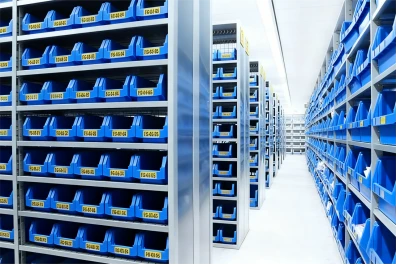
Plastic storage bins are widely used due to their versatility, affordability, and durability. Made from industrial-grade polypropylene or polyethylene, they resist moisture, corrosion, and wear while remaining lightweight for easy handling.
Advantages
Moisture and corrosion resistance
Easy cleaning and maintenance
Lightweight and easy to handle
Multiple size options
Compatible with shelving systems
Long service life
Typical Applications
Electronic components
Fasteners and hardware
Spare parts
Medical supplies
Small retail products
Plastic bins are essential for warehouses managing thousands of small SKUs.
Stackable Warehouse Bins
Maximizing Vertical Storage Space
Stackable bins are designed to maximize vertical storage, allowing warehouses to use every square foot efficiently. Reinforced walls and interlocking features ensure safe stacking without compromising accessibility.
Benefits
Increased storage density
Reduced floor space usage
Better warehouse organization
Lower facility costs
Improved inventory accessibility
Stackable bins are often combined with pallet racking systems for optimal space utilization.
Shelf Bins
Ideal for Order Picking Operations
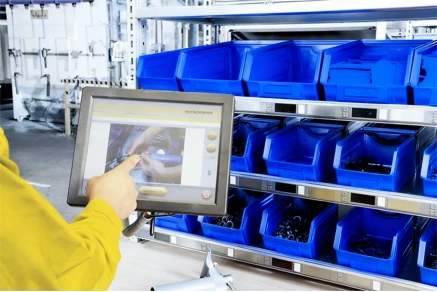
Shelf bins are designed for inventory stored on shelving units. Open-front designs provide quick visibility and access, reducing picking time and improving operational efficiency.
Best For
Order fulfillment centers
Spare parts warehouses
Maintenance departments
Inventory rooms
Benefits
Fast product access
Improved inventory visibility
Easy labeling
Better picking accuracy
Shelf bins are essential for high-volume picking operations.
Attached Lid Containers
Secure Storage and Transportation
Attached lid containers feature integrated hinged lids for secure storage and transport. They prevent dust accumulation and keep lids from getting lost.
Key Features
Dust protection
Secure stacking
Reusable design
Excellent durability
Ideal for warehouse transfers
These containers are commonly used in retail distribution networks and supply chain operations.
Bulk Storage Containers
Managing Large Inventory Volumes
Bulk storage containers are designed for high-volume inventory handling. They simplify the storage and transport of loose materials or large quantities of products.
Typical Uses
Agricultural products
Food ingredients
Plastic pellets
Industrial raw materials
Recyclable materials
Benefits
Reduced handling time
Efficient storage
Lower labor requirements
Improved inventory control
Mobile Storage Containers
Flexible Storage for Dynamic Warehouses
Mobile storage containers equipped with industrial casters allow easy movement between workstations and storage areas, improving workflow flexibility.
Advantages
Increased operational flexibility
Faster replenishment
Reduced manual handling
Supports dynamic warehouse layouts
Mobile containers are popular in fulfillment centers and lean manufacturing facilities.
Pallet Boxes
Forklift-Friendly Storage Solutions
Pallet boxes combine the benefits of pallets and containers, allowing efficient material handling with forklifts or pallet jacks.
Benefits
Efficient material handling
Stackable design
Suitable for large or bulky products
Reduced product damage
Widely used in logistics hubs and distribution centers.
Collapsible Storage Containers
Saving Space When Not in Use
Collapsible containers are ideal for warehouses with seasonal inventory fluctuations. They can be folded when empty, reducing storage requirements and improving space efficiency.
Key Benefits
Reduced return shipping costs
Lower storage expenses
Improved warehouse flexibility
Reusable and sustainable design
Many third-party logistics providers rely on collapsible containers to optimize storage and transportation.
How Automated Warehouses Use Storage Bins and Containers
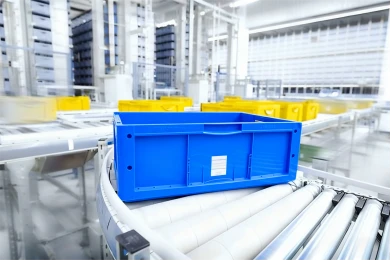
Automated warehouses increasingly rely on standardized storage containers. ASRS (Automated Storage and Retrieval Systems), robotic picking, and smart warehouse technologies require consistent container dimensions for efficient operation.
Automation-Compatible Features
Standardized sizes and dimensions
Barcode or RFID labeling
Conveyor integration
Inventory tracking with Warehouse Management Systems (WMS)
Selecting bins and containers compatible with automation ensures long-term efficiency and scalability.
Why Choose Riches for Warehouse Storage Solutions
Riches provides advanced warehouse storage and automation solutions that help businesses optimize efficiency, accuracy, and scalability. Their expertise combines storage systems, automated warehousing, and intelligent workflow design.
What Riches Offers
Customized Storage Planning
Tailored recommendations based on warehouse layout, product types, and workflow requirements.
Automated Warehouse Integration
Solutions compatible with ASRS, conveyors, and robotic picking systems.
Space Optimization Expertise
Maximizing storage density while maintaining accessibility and operational efficiency.
Reliable Project Support
Professional guidance from planning to implementation ensures long-term warehouse success.
By integrating high-quality bins and containers with automation-ready systems, Riches enables smarter, more efficient warehouse operations.
Conclusion
Warehouse bins and containers are essential for operational efficiency, inventory management, and space utilization. From plastic bins for small parts to collapsible and pallet containers for large or seasonal inventory, selecting the right storage solution improves workflow, reduces costs, and enhances productivity.
Modern warehouses, especially those incorporating automation, benefit from high-quality, durable, and standardized containers. Riches provides tailored solutions that combine intelligent storage systems, automation compatibility, and professional support for long-term success.
Frequently Asked Questions
What type of bin is best for small parts storage?
Plastic storage bins and shelf bins offer visibility, organization, and easy access for small components.
How do stackable bins improve warehouse efficiency?
Stackable bins maximize vertical storage space, reduce floor space usage, and improve organization.
Are bins compatible with automated warehouse systems?
Yes, automation-ready containers work with ASRS, robotics, and conveyor systems.
Which material is better: plastic or collapsible bins?
Plastic bins are durable for small parts; collapsible containers save space for seasonal or bulk items.
How do I choose the right container size?
Consider product dimensions, weight, storage density, picking frequency, and compatibility with warehouse equipment.
Can Riches provide customized storage solutions?
Yes, Riches offers fully customized warehouse storage solutions, including bins, containers, and automation integration tailored to each warehouse.


