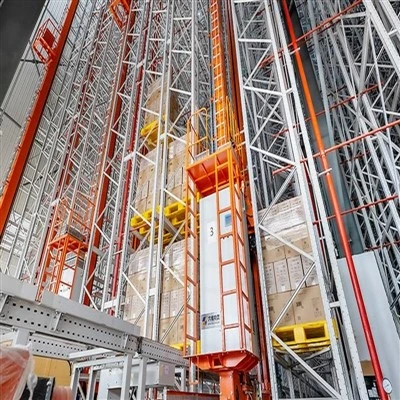
In the process of intelligent transformation of warehousing, the efficient implementation of automated warehousing solutions not only relies on advanced technologies and equipment, but also requires mastering practical techniques in the planning, design, and operation stages to mitigate complexity, reduce costs, and improve system efficiency. Practice has proven that grasping the scientific methods of key stages can significantly improve the success rate of project implementation and operational quality.
Firstly, accurate demand identification and quantified objectives are paramount. At the initial stage of the project, a comprehensive review of the types, sizes, weights, and inbound/outbound frequencies of goods should be conducted. Combined with peak and fluctuating business patterns, core indicators such as efficiency, accuracy, and space utilization should be clearly defined. Data-driven modeling to predict the business growth curve for the next three to five years can prevent premature saturation or idleness of equipment and layout, ensuring a match between investment and output.
Secondly, reasonable equipment selection and modular configuration are key to improving flexibility. Different equipment, such as stacker cranes, shuttles, and AGVs, each have their advantages. A comprehensive evaluation should be conducted based on operating radius, load requirements, and response speed, prioritizing scalable and easy-to-maintain models. The modular shelving and distributed control architecture allow for rapid additions or removals of aisles or equipment units during business adjustments, reducing modification costs and shortening implementation cycles.
Thirdly, deep hardware and software collaboration avoids information silos. The Warehouse Management System (WMS) and Warehouse Control System (WCS) should complete interface definitions and functional integration testing early on to ensure real-time synchronization of inventory data, task instructions, and equipment status. Using unified coding and communication protocols improves the efficiency of scheduling algorithms and reduces operational conflicts caused by data latency.
Fourthly, phased deployment and parallel verification reduce risk. It is recommended to first build the core storage and retrieval units and establish links with existing systems such as ERP. Performance benchmarking and bottleneck diagnosis should be conducted during small-scale trial runs before gradually expanding to sorting, verification, and other processes. This technique can identify compatibility issues early, ensuring a smooth overall switchover.
Fifthly, establish a data-driven continuous optimization mechanism. Utilize IoT sensing and visualization platforms to monitor equipment operating parameters and operational performance in real time, conduct regular preventative maintenance, and use historical data to train scheduling models to dynamically optimize location allocation and path planning, maintaining system efficiency and stability. In summary, mastering techniques such as demand quantification, flexible configuration, collaborative design, phased implementation, and data optimization can enable automated warehousing solutions to achieve robust implementation and long-term value enhancement in complex scenarios.