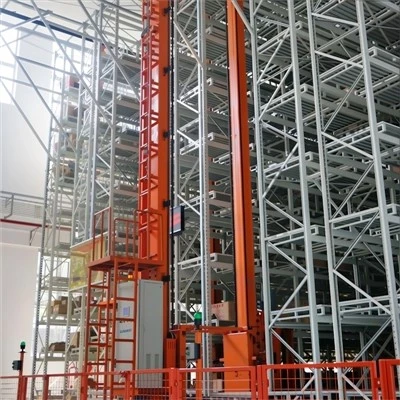
In the process of intelligent transformation of warehousing and logistics, many industry pioneers have accumulated valuable practical experience by implementing automated warehousing solutions. This experience shows that successful deployment not only relies on advanced technology but also requires synergy at the strategic planning, system integration, and operational management levels to achieve the dual goals of efficiency improvement and cost optimization.
The primary lesson is precise planning guided by business needs. Many cases show that blind investment divorced from actual business characteristics easily leads to idle equipment or insufficient performance. A mature approach is to conduct in-depth analysis of product types, throughput fluctuations, storage cycles, and operational bottlenecks before project initiation, clarifying key indicators such as efficiency, accuracy, and space utilization, and setting quantifiable goals based on site conditions and future expansion expectations. This pre-assessment effectively avoids the risks of later modifications, ensuring that the solution is aligned with business needs.
Secondly, system integration and flexible design are the core of stable operation. In practice, focusing solely on the advancement of individual devices while neglecting hardware and software synergy often results in information silos and scheduling conflicts. Successful experiences emphasize the efficient linkage between the Warehouse Management System (WMS), Warehouse Control System (WCS), and automated equipment in the architectural design, and the use of a modular approach with reserved expansion interfaces to ensure rapid response when product categories are adjusted or scale is expanded. Simultaneously, the appropriate combination of different equipment such as stacker cranes, AGVs, and shuttle vehicles can improve operational flexibility while meeting high-density storage requirements.
Third, phased implementation and personnel empowerment are equally crucial. Many projects adopt a strategy of building the core storage and retrieval unit first, and then expanding to sorting and packaging. This reduces the initial investment pressure and allows for verification of system compatibility and process rationality through iteration. Simultaneous operational training and process reengineering help the team quickly adapt to new operating models and reduce efficiency losses during the adjustment period.
Finally, continuous operation and maintenance and data-driven optimization are indispensable. Through IoT sensing and real-time data analysis, equipment status monitoring and preventative maintenance can be carried out to extend the life cycle; by continuously optimizing scheduling algorithms and storage location strategies through operational performance evaluation, response speed and resource utilization can be continuously improved.
In summary, the successful practice of automated warehousing reveals that accurate demand assessment, flexible system integration, phased and steady implementation, and continuous optimization and maintenance are the key experiences for building efficient, reliable, and scalable intelligent warehousing, providing a replicable path for the industry.