

In today's fast-paced logistics environment, businesses are under increasing pressure to improve efficiency, reduce operational costs, and meet growing customer expectations. Automated warehouses have emerged as a key solution, transforming traditional storage and fulfillment operations through advanced technologies such as robotics, warehouse management systems (WMS), automated storage and retrieval systems (AS/RS), and artificial intelligence. By streamlining inventory handling, order processing, and material movement, warehouse automation helps companies achieve higher productivity, greater accuracy, and scalable growth. This article explores how automated warehouses work, the technologies behind them, and the benefits they bring to modern supply chain operations.
Quick Overview of How Automated Warehouses Work
| Warehouse Process | Traditional Warehouse | Automated Warehouse |
|---|---|---|
| Inventory Tracking | Manual counting | Real-time inventory management |
| Storage | Static shelving | Automated Storage and Retrieval System (AS/RS) |
| Picking | Manual walking and searching | Goods-to-Person picking systems |
| Transportation | Forklifts and labor | AGV and AMR robots |
| Sorting | Manual sorting | Automated sortation systems |
| Order Fulfillment | Labor-intensive | Intelligent warehouse automation |
| Data Analysis | Limited visibility | Real-time warehouse analytics |
| Scalability | High labor dependency | Flexible and scalable automation |
What Is an Automated Warehouse?
An automated warehouse is a facility that uses advanced warehouse automation technologies to streamline inventory storage, retrieval, picking, packing, and shipping operations. By integrating robotics, software, sensors, and intelligent control systems, automated warehouses improve efficiency, reduce labor costs, and increase order accuracy.
As global supply chains become more complex and e-commerce demand continues to grow, businesses are increasingly investing in warehouse automation solutions to improve productivity and gain a competitive advantage. Warehouse automation systems can significantly reduce manual handling while increasing throughput and inventory visibility.

Why Are Automated Warehouses Becoming Essential?
Modern warehouses face several challenges:
Rising labor costs
Labor shortages
Increasing SKU complexity
Faster customer delivery expectations
Inventory accuracy requirements
Limited warehouse space
Automated warehouse systems address these challenges by creating highly efficient and data-driven operations. Companies can process more orders, utilize storage space more effectively, and maintain higher inventory accuracy with fewer manual interventions.
How Automated Warehouses Work Step by Step
The automation process begins when products arrive at the warehouse.
Barcode scanners, RFID technology, conveyor systems, and AI-powered inspection equipment automatically identify incoming goods. The warehouse management system (WMS) instantly records inventory data and assigns optimal storage locations.
Benefits include:
Faster receiving operations
Reduced human errors
Real-time inventory updates
Improved traceability
Inventory management serves as the foundation of every automated warehouse.
Advanced WMS software continuously monitors inventory levels, SKU locations, stock movements, and replenishment requirements. Real-time visibility enables warehouse managers to make informed decisions and maintain optimal stock levels.
Key technologies include:
Warehouse Management Systems (WMS)
RFID tracking
Barcode systems
IoT sensors
Cloud-based analytics
Once goods are received, they are automatically stored within high-density storage systems.
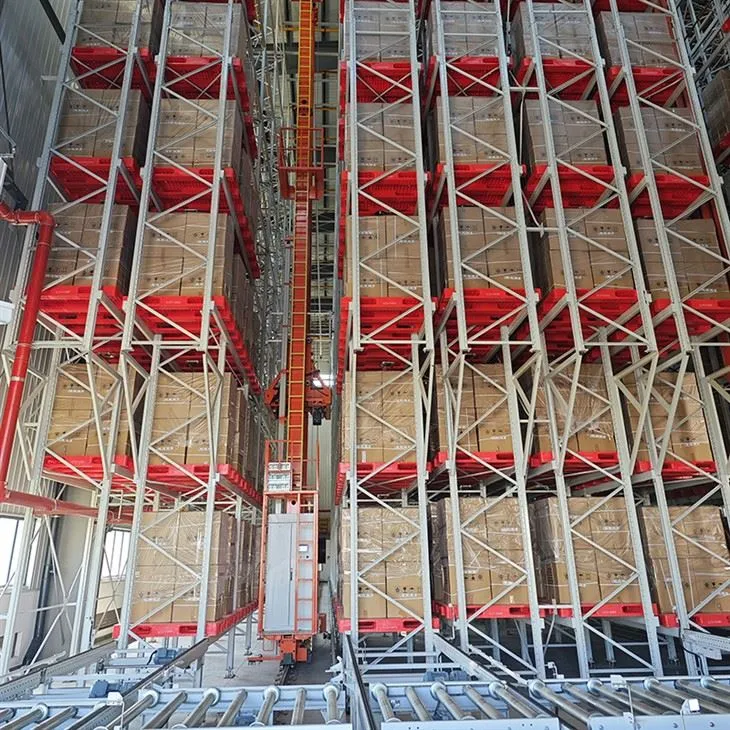
The most common technology is the Automated Storage and Retrieval System (AS/RS), which uses robotic cranes, shuttles, lifts, and conveyors to move inventory into designated storage locations. AS/RS systems maximize storage density while improving retrieval speed.
Advantages include:
Higher storage capacity
Better space utilization
Improved inventory accuracy
Faster retrieval times
Order picking is traditionally one of the most labor-intensive warehouse activities.
Modern automated warehouses use:
Goods-to-Person systems
Autonomous Mobile Robots (AMRs)
Automated Guided Vehicles (AGVs)
Robotic picking arms
Instead of employees walking throughout the warehouse, products are automatically delivered to picking stations. This significantly improves productivity and reduces picking errors. Community discussions among warehouse operators consistently report that goods-to-person systems eliminate unnecessary travel time and improve picking consistency.
After items are picked, automated systems handle packing and sorting.
These systems can:
Measure package dimensions
Apply shipping labels
Verify order accuracy
Sort parcels by destination
Prepare shipments for dispatch
Automated sortation systems maintain consistent throughput during peak order volumes when properly integrated into the overall warehouse workflow.
Conveyor systems, robotic arms, and sorting equipment move completed orders to shipping docks.
Warehouse software integrates with ERP, TMS, and carrier systems to automate shipment scheduling and tracking, ensuring faster order fulfillment and delivery accuracy.
One of the biggest advantages of warehouse automation is data collection.
Every movement inside the warehouse generates valuable operational data, including:
Picking efficiency
Inventory turnover
Storage utilization
Equipment performance
Labor productivity
Order fulfillment speed
Warehouse managers can use this information to continuously optimize workflows and improve operational performance.
Core Technologies Behind Warehouse Automation
A WMS acts as the central brain of the warehouse, coordinating inventory, orders, labor, and equipment.
AS/RS solutions automate storage and retrieval activities while maximizing warehouse density.
Autonomous vehicles transport materials throughout the warehouse while reducing dependence on forklifts and manual transportation. Real-world warehouse operators report that intelligent traffic management and scheduling are critical to AGV success.
Conveyors automate material movement and support high-volume order fulfillment operations.
AI-driven analytics and IoT sensors provide predictive insights, inventory visibility, and process optimization.
Benefits of Automated Warehouses
Automation dramatically increases order processing speed and throughput.
Automated systems reduce human errors in inventory management, picking, and shipping.
Businesses can significantly reduce labor expenses while increasing output.
High-density storage systems maximize available warehouse space.
Automated warehouses can easily adapt to growing business demands and seasonal fluctuations.
Automation minimizes manual handling and reduces workplace accidents.
Why Choose Riches for Automated Warehouse Solutions?
Founded in 2008, Riches Warehousing and Logistics Engineering specializes in intelligent warehousing and digital logistics solutions. The company provides comprehensive warehouse automation services, including:
Warehouse Management Systems (WMS)
Automated Storage and Retrieval Systems (AS/RS)
AGV and AMR robotics
Intelligent sorting systems
Data visualization platforms
Customized warehouse automation solutions
Riches supports customers across manufacturing, e-commerce, pharmaceuticals, automotive, FMCG, and logistics industries. With extensive experience in consulting, design, integration, and implementation, Riches helps enterprises build efficient, scalable, and intelligent warehouse operations.
Riches Automation Advantages
End-to-end project implementation
Customized automation design
Advanced WMS integration
Global technical support
Industry-specific solutions
Proven project experience
Scalable warehouse systems

Future Trends in Warehouse Automation
The future of warehouse automation is driven by:
Artificial Intelligence
Machine Learning
Collaborative Robots (Cobots)
Digital Twins
Predictive Analytics
Autonomous Fulfillment Centers
Smart Supply Chain Integration
As technology advances, automated warehouses will become more intelligent, flexible, and cost-effective for businesses of all sizes.
Conclusion
Automated warehouses are transforming modern logistics by improving efficiency, accuracy, and scalability. Through technologies such as AS/RS, WMS, AGVs, AMRs, AI, and intelligent sortation systems, businesses can optimize operations while reducing costs and enhancing customer satisfaction.
Whether you operate a manufacturing facility, e-commerce fulfillment center, pharmaceutical warehouse, or distribution hub, investing in warehouse automation can deliver long-term operational and competitive advantages.
FAQ
Traditional warehouses rely heavily on manual labor for storage, picking, and inventory management, while automated warehouses use software, robotics, and automated equipment to perform these tasks with greater speed and accuracy.
The improvement varies by operation, but many businesses experience significant gains in productivity, inventory accuracy, order fulfillment speed, and space utilization after implementing warehouse automation systems.
Manufacturing, e-commerce, retail, pharmaceuticals, automotive, food and beverage, and third-party logistics providers are among the industries that benefit most from automated warehouse solutions.
Yes. Modern modular automation solutions allow small and medium-sized businesses to implement automation gradually based on their operational requirements and budget.
Common technologies include Warehouse Management Systems (WMS), Automated Storage and Retrieval Systems (AS/RS), AGVs, AMRs, RFID, IoT sensors, AI analytics, and automated sortation equipment.
Look for a provider with strong industry experience, system integration capabilities, customization expertise, reliable technical support, and successful project references. A comprehensive solution provider such as Riches can help ensure long-term project success.


