

As warehouse rental costs continue to rise and logistics efficiency becomes increasingly competitive, a well-designed warehouse racking system is no longer just a storage solution - it has become a critical asset for improving supply chain efficiency and long-term operational profitability.
With the rapid growth of e-commerce, manufacturing, cold chain logistics, and third-party warehousing, Warehouse Racking Systems have become an essential part of modern smart warehousing. A properly planned warehouse storage system can maximize storage capacity, improve inventory management, optimize picking efficiency, and significantly reduce logistics costs.
This comprehensive guide explains the major types of warehouse racking systems, their advantages, applications, buying considerations, and leading warehouse solution providers in 2026.
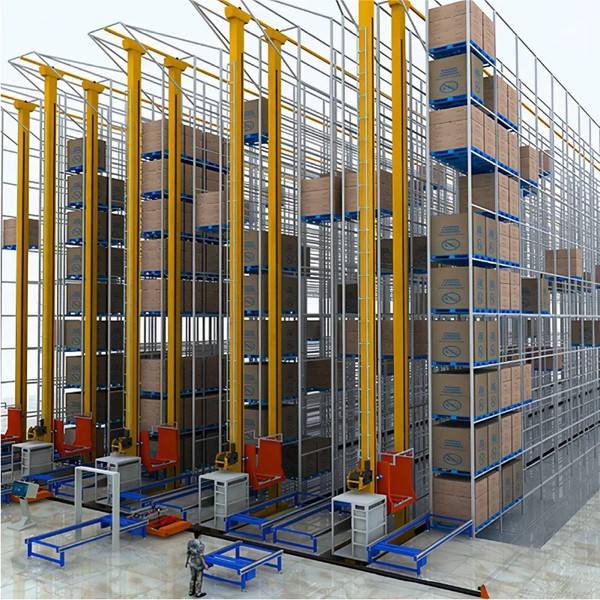
- What Are Warehouse Racking Systems?
- Why Modern Warehouses Need Racking Systems
- Main Types of Warehouse Racking Systems
- Top Warehouse Racking System Supplier
- How to Choose the Right Warehouse Racking System
- Applications of Warehouse Racking Systems
- Future Trends in Smart Warehousing
- Important Considerations When Purchasing Warehouse Racking Systems
- Frequently Asked Questions (FAQ)
- Conclusion
What Are Warehouse Racking Systems?
Warehouse Racking Systems are industrial storage solutions designed to organize, store, and manage goods inside warehouses and distribution centers. By utilizing vertical storage space, these systems help businesses maximize warehouse capacity while improving operational efficiency.
Modern warehouse racking systems are no longer limited to basic shelving. They are now integrated with:
Automated warehouse systems
Smart logistics technologies
Inventory management software
AGV transportation systems
Intelligent picking systems
Warehouse Management Systems (WMS)
Popular SEO keywords related to this industry include:
Warehouse Racking Systems
Industrial Storage Racks
Pallet Racking System
Warehouse Storage Solutions
Heavy Duty Warehouse Shelving
Automated Warehouse Racking
Smart Warehouse Storage
Why Modern Warehouses Need Racking Systems
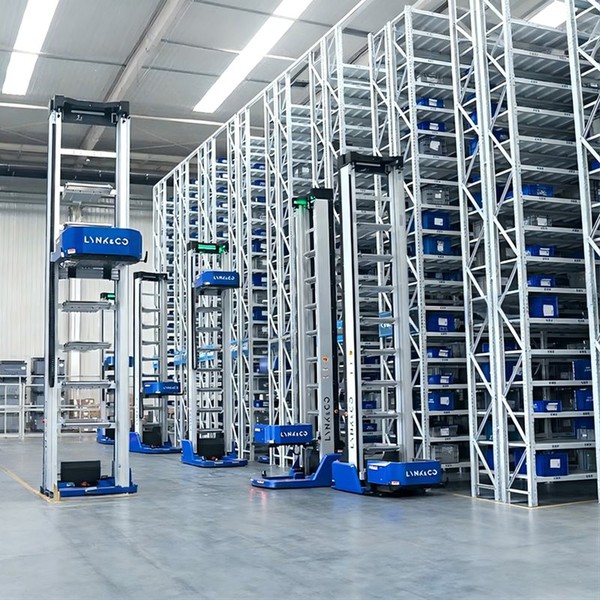
Maximize Warehouse Space Utilization
Industrial racking systems make full use of vertical storage space. Compared with floor stacking, storage capacity can increase by 2 to 5 times.
For companies facing rising warehouse rental costs, optimizing storage density is one of the most effective ways to reduce operational expenses.
Improve Inventory Management
Modern warehouse racking systems support:
SKU classification
FIFO inventory management
Barcode scanning
WMS integration
These features improve inventory accuracy and reduce human errors.
Increase Picking and Logistics Efficiency
A well-designed warehouse layout reduces:
Forklift travel distance
Picking routes
Loading and unloading time
This is especially important for e-commerce fulfillment centers and high-turnover warehouses.
Improve Warehouse Safety
Industrial-grade warehouse racking systems provide:
High load-bearing capacity
Anti-collapse structures
Seismic resistance
Safety locking systems
These features help reduce warehouse accidents and product damage.
Main Types of Warehouse Racking Systems
| Racking Type | Features | Applications | Advantages |
|---|---|---|---|
| Pallet Racking | Standard pallet storage system | Manufacturing, logistics warehouses | Highly versatile |
| Drive-In Racking | High-density storage | Cold storage warehouses | Maximizes storage density |
| Cantilever Racking | Open-front structure | Steel, timber, pipes | Ideal for long materials |
| Mezzanine Racking | Multi-level storage platform | E-commerce warehouses | Expands usable space |
| ASRS System | Automated storage and retrieval | Smart factories | High automation level |
| Selective Racking | Easy pallet access | General industrial storage | Efficient picking |
| Mobile Racking | Movable storage system | Archives, cold rooms | Saves aisle space |
Top Warehouse Racking System Supplier
Riches Warehousing and Logistics Co., Ltd.
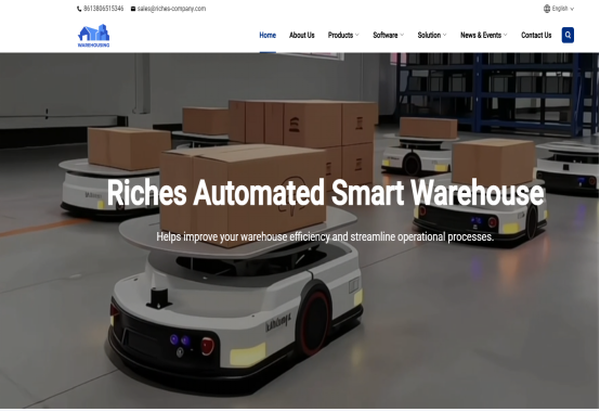
As a professional provider of intelligent warehousing and logistics systems, Riches Warehousing and Logistics Co., Ltd. specializes in automated warehouse solutions, industrial racking systems, and smart logistics technologies.
Founded in 2008, the company focuses on:
Automated Warehouse Systems
Smart Storage Solutions
Industrial Racking Systems
Warehouse Automation
Heavy Duty Storage Racks
Riches provides customized warehouse solutions including:
Pallet racking systems
Automated storage and retrieval systems
AGV transportation systems
Intelligent sorting systems
High-bay warehouse solutions
E-commerce warehouse solutions
Unlike traditional shelving suppliers, Riches focuses on improving overall logistics efficiency rather than simply selling storage racks.
Its warehouse systems are widely used in:
E-commerce fulfillment
Manufacturing facilities
Third-party logistics
Cold chain logistics
Automotive parts storage
Pharmaceutical warehousing
The company has extensive experience serving clients in Europe, Germany, the UK, and other international markets, meeting global standards for warehouse safety, load-bearing structures, and automation integration.
How to Choose the Right Warehouse Racking System
Choose Based on Warehouse Height
Different warehouse heights require different storage systems:
| Warehouse Height | Recommended Racking |
|---|---|
| 3-5 meters | Standard selective racking |
| 5-10 meters | High-bay pallet racking |
| Over 10 meters | Automated ASRS warehouse |
High warehouses are more suitable for automated storage systems.
Choose Based on Product Type
Different products require different racking structures:
Heavy industrial products → Heavy Duty Pallet Rack
Long materials → Cantilever Racking
Small SKU products → Mezzanine Shelving
Cold storage products → Drive-In Racking
Choose Based on Inventory Turnover
High-frequency warehouses benefit more from:
Automated racking systems
Intelligent picking systems
AGV warehouse solutions
Traditional warehouses with lower turnover may prefer standard pallet racking.
Consider Future Expansion
An ideal warehouse storage system should support:
Modular expansion
Automation upgrades
WMS compatibility
Smart warehouse integration
This reduces future reinvestment costs.
Applications of Warehouse Racking Systems
E-commerce Warehousing
E-commerce warehouses require:
Fast picking efficiency
Accurate inventory management
Rapid order fulfillment
Automated warehouse racking systems have become essential infrastructure for modern e-commerce logistics.
Manufacturing Industry
Manufacturing warehouses often require:
Heavy-duty storage
Raw material organization
Production line feeding
Heavy-duty pallet racking and automated handling systems are widely used in factories.
Cold Chain Logistics
Cold storage space is expensive.
Drive-in racking systems maximize storage density and reduce operational costs inside cold warehouses.
Pharmaceutical Industry
Pharmaceutical warehouses prioritize:
FIFO inventory management
Product traceability
Temperature control
Inventory accuracy
As a result, demand for smart warehouse systems continues to grow rapidly.
Future Trends in Smart Warehousing
Warehouse racking systems are becoming increasingly intelligent and automated.
Automated Storage and Retrieval Systems (ASRS)
ASRS technology enables:
Automatic product storage
Unmanned warehouse operations
Intelligent inventory control
These systems are widely used in large distribution centers.
AGV Robotic Transportation
AGV systems reduce dependence on forklifts and manual labor, significantly lowering labor costs.
AI-Powered Warehouse Management
AI technologies can optimize:
Storage location allocation
Picking routes
Inventory forecasting
Warehouse efficiency
Future smart warehouses will become increasingly data-driven.
Important Considerations When Purchasing Warehouse Racking Systems
Load Capacity
Buyers should confirm:
Shelf load capacity
Total system load
Steel thickness
Safety factors
Surface Treatment
High-quality warehouse racks usually feature:
Powder coating
Hot-dip galvanizing
Corrosion-resistant finishing
These treatments improve product lifespan.
Customization Capabilities
Every warehouse layout is different.
Professional suppliers should provide:
Custom sizing
Structural design
Automation integration
Warehouse layout planning
Installation and After-Sales Support
Large warehouse projects often require:
On-site installation
Technical commissioning
Safety inspections
Maintenance services
Supplier experience is extremely important.
Frequently Asked Questions (FAQ)
How long do warehouse racking systems last?
High-quality industrial racking systems typically last 10-20 years depending on load conditions, material quality, and warehouse environment.
Are automated warehouse systems suitable for small businesses?
Yes. Many modular warehouse automation solutions are now suitable for medium-sized and growing businesses.
How do I calculate how many warehouse racks I need?
You should consider:
Warehouse size
SKU quantity
Pallet dimensions
Inventory turnover
Forklift aisle width
A professional warehouse layout plan is recommended.
Are heavy-duty warehouse racks safe?
Yes. Properly engineered warehouse racking systems meet international safety standards, but regular inspections and proper installation are essential.
Can warehouse racking systems be expanded later?
Most modern warehouse racking systems support modular expansion and future upgrades.
What is the ROI period for smart warehouse systems?
Typically between 2-5 years. High-turnover industries such as e-commerce and logistics often achieve faster returns.
Conclusion
As global logistics competition continues to intensify, Warehouse Racking Systems have evolved from basic storage equipment into critical supply chain infrastructure.
Whether for traditional industrial warehouses or highly automated logistics centers, high-quality warehouse storage systems help companies:
Maximize warehouse space
Reduce operational costs
Improve logistics efficiency
Optimize inventory management
Upgrade to smart warehousing
For companies seeking long-term warehouse efficiency and scalability, choosing an experienced warehouse solution provider with automation integration capabilities will be a key competitive advantage in the future.


