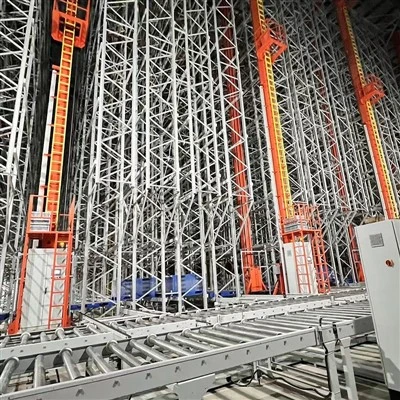
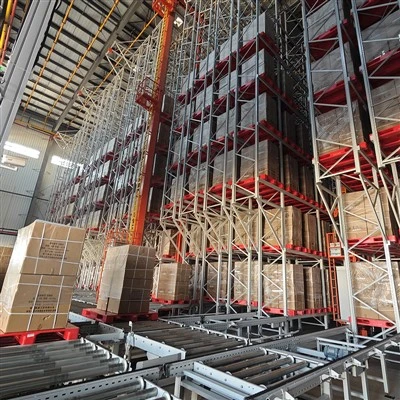
The right time to automate is not when technology becomes available, but when your current operation can no longer support the way your business needs to grow.
Warehouse operations are under increasing pressure to move more products, shorten fulfillment times, control labor costs, and maintain inventory accuracy. For many manufacturers, distributors, retailers, and 3PL providers, traditional manual processes can eventually become a constraint rather than a solution.
But warehouse automation is not simply a matter of purchasing robots or installing an automated storage system. The more important question is whether your warehouse has a clear operational problem that automation can solve.
From rising order volumes and limited storage space to picking errors and labor shortages, several practical signals can indicate that it is time to evaluate an automated warehouse solution.
What Is Warehouse Automation?
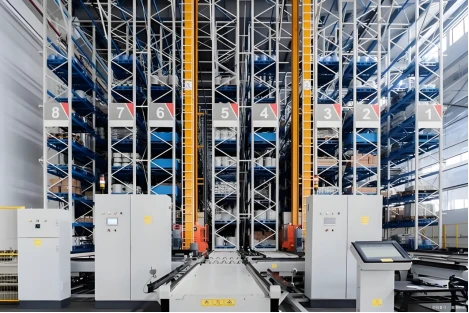
Warehouse automation refers to the use of equipment, software, robotics, and integrated material-handling technologies to reduce or eliminate repetitive manual activities in storage, retrieval, picking, sorting, and transportation.
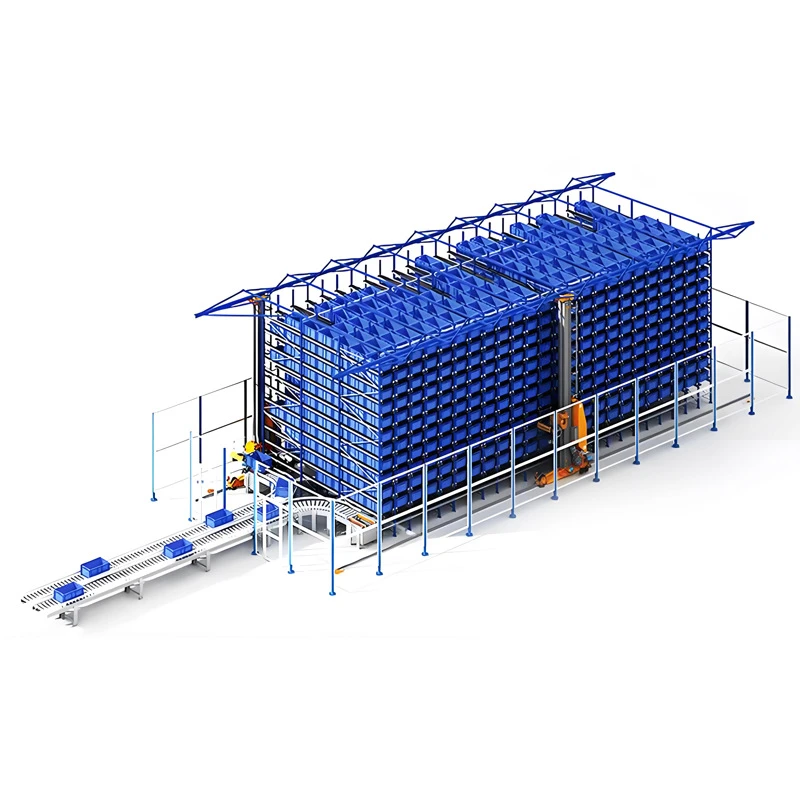
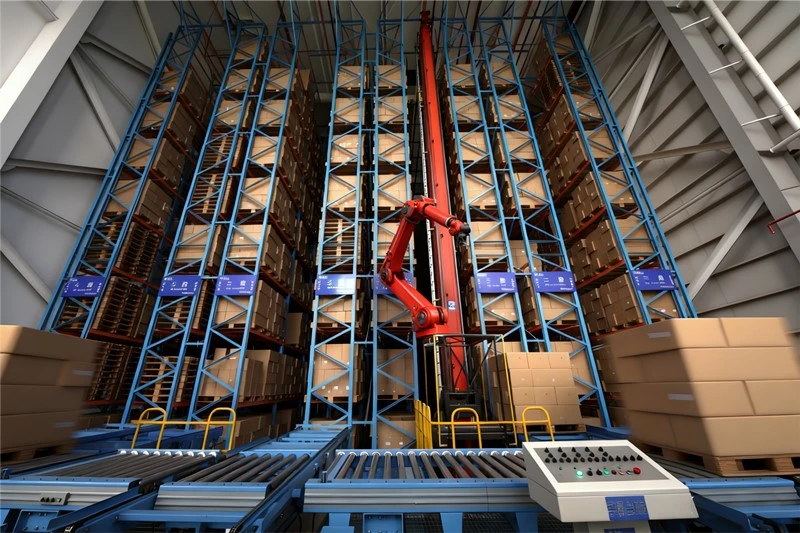
Modern warehouse automation can include an automated storage and retrieval system (ASRS), automated picking systems, conveyor systems, pallet shuttle ASRS, AGVs, AMRs, robotic stations, goods-to-person solutions, and warehouse management software.
The objective is not necessarily to remove people from warehouse operations. Instead, automation can move repetitive transportation and retrieval work to machines while allowing employees to focus on supervision, exception handling, quality control, and other higher-value activities.
An effective automated warehouse therefore combines physical equipment with software and process design. WMS and warehouse control technologies can connect inventory information with the movement of products, creating a more coordinated flow from receiving to storage, picking, packing, and shipping.
7 Signs Your Warehouse May Be Ready for Automation
There is no universal order volume or warehouse size that automatically makes automation necessary. The decision should be based on the specific constraints affecting your operation.
The following indicators can help warehouse managers determine whether it is time to evaluate warehouse automation.
A growing business usually means more orders, more SKUs, more replenishment activity, and more warehouse movements.
If order volume continues increasing while adding warehouse employees becomes increasingly difficult or expensive, manual processes may eventually limit throughput.
Warehouse robotics, automated picking systems, and goods-to-person solutions can reduce unnecessary walking and repetitive material movement. Instead of having operators travel throughout the warehouse searching for products, automated systems can bring inventory closer to the picking or packing station.
This can help warehouses handle higher workloads without increasing labor at the same rate.
Order picking is one of the most labor-intensive warehouse activities. Research cited by Hy-Tek notes that picking can represent a substantial portion of warehouse operating costs, which is why improving this stage can have a direct effect on overall efficiency.
A warehouse may need to consider warehouse picking automation when employees spend a large percentage of their shifts walking, searching for SKUs, waiting for replenishment, or transporting picked orders.
Depending on the product profile, possible solutions include:
Goods-to-person systems
Automated storage and retrieval systems
AMRs and AGVs
Pick-to-light systems
Robotic picking stations
Automated conveyors
Automated sorting systems
The appropriate technology depends on SKU characteristics, order profiles, throughput requirements, and the existing warehouse layout.
When warehouse locations remain close to full capacity, adding more floor space is not always the most practical response.
An ASRS warehouse can use vertical space and computer-controlled storage locations to increase storage density. Pallet ASRS, mini-load ASRS, shuttle systems, and other automated storage technologies can be designed around different load types and operational requirements.
For warehouses with high pallet volumes, a pallet shuttle ASRS can provide a different approach to high-density storage and retrieval. For smaller items and totes, goods-to-person or mini-load solutions may be more suitable.
The key question is not simply how much floor space is available. It is how efficiently the existing building volume is being used.
Inventory discrepancies become increasingly costly as SKU counts and transaction volumes increase.
Manual receiving, put-away, picking, and replenishment processes create opportunities for incorrect locations, missed transactions, duplicate movements, and picking errors.
An automated warehouse can connect physical storage movements with warehouse software so that inventory transactions are recorded as products move through the system.
This does not mean automation automatically eliminates every inventory problem. Data quality, barcode standards, product identification, and WMS configuration still need to be properly managed.
However, automated storage and retrieval can create a more controlled environment for inventory tracking and location management.
Customers increasingly expect accurate orders and predictable delivery schedules. When warehouse processes cannot keep pace with order cut-off times, delays can occur even when transportation capacity is available.
Automation can reduce unnecessary travel, improve order release, coordinate replenishment, and accelerate movement between storage and picking areas.
For example, a goods-to-person system can deliver inventory directly to an operator rather than requiring the operator to travel through multiple warehouse aisles.
The result is a workflow designed around product movement rather than employee walking distance.
Labor remains a major consideration for many warehouse operators. The issue is not only hourly wages but also recruitment, training, turnover, overtime, safety, and the difficulty of scaling a workforce during peak periods.
Warehouse automation can reduce dependence on repetitive manual tasks while allowing existing employees to work alongside automated equipment.
This is particularly relevant for operations where the same movements are repeated thousands of times each day.
Rather than asking whether automation can replace workers, warehouse managers should evaluate which tasks are repetitive, predictable, physically demanding, or difficult to staff consistently.
Repeated lifting, long walking distances, pallet movement, and high-frequency handling can place physical demands on warehouse employees.
Automated handling systems, conveyors, AGVs, AMRs, and robotic stations can take over selected transportation or handling activities.
This can reduce the amount of repetitive physical work performed manually and allow employees to focus on monitoring and exception management.
Warehouse Automation Readiness Checklist
Before investing in an automated warehouse system, buyers should evaluate their current operation from several angles.
| Warehouse Factor | Questions to Evaluate | Potential Automation Direction |
|---|---|---|
| Order volume | Is daily demand increasing consistently? | Automated picking, goods-to-person |
| SKU count | Are more SKUs increasing travel and complexity? | ASRS, WMS, automated storage |
| Storage density | Is available space becoming limited? | High-density ASRS, pallet shuttle ASRS |
| Picking | Are operators spending too much time walking? | AMR, goods-to-person, robotic picking |
| Inventory | Are stock discrepancies frequent? | ASRS + WMS integration |
| Labor | Is hiring or retaining warehouse labor difficult? | Warehouse robotics, automated handling |
| Throughput | Are shipping cut-off times difficult to achieve? | Conveyors, sorting, picking automation |
| Safety | Are repetitive tasks creating ergonomic concerns? | Automated handling and robotic stations |
This assessment helps identify the actual bottleneck before selecting equipment.
How to Choose the Right Warehouse Automation System
Automation should start with the process rather than the machine.
First, map the current material flow from receiving to storage, replenishment, picking, packing, and shipping. Identify where products wait, where employees travel the most, and where errors occur.
Next, analyze your SKU profile. Product dimensions, weight, packaging, pallet type, order frequency, and storage requirements all influence technology selection.
For example, palletized products may require pallet racking, pallet shuttle systems, or pallet ASRS. Smaller cartons and totes may be better suited to automated storage and retrieval systems designed for unit loads. High-frequency picking operations may benefit from goods-to-person systems or robotic picking stations.
The software layer should also be considered early. WMS, WES, and WCS integration can determine how inventory information and automated equipment communicate with one another. Riches, for example, provides WMS, WES, and WCS-related software capabilities alongside automated warehousing solutions.
Should You Automate the Entire Warehouse at Once?
Not necessarily.
A phased approach can reduce implementation complexity and allow operators to evaluate performance before expanding the automation footprint.
A warehouse might begin with automated storage, then add goods-to-person picking, conveyors, robotic stations, or automated sorting as operational requirements develop.
This approach also allows the company to identify whether the expected improvements are actually being achieved.
Before implementation, management should establish measurable targets such as:
Storage capacity
Picking rate
Order accuracy
Inventory accuracy
Labor hours per order
Order processing time
Replenishment time
Equipment availability
Return or error rate
The objective is to measure operational improvement rather than simply measure how much automation has been installed.
Why Work With an Integrated Warehouse Automation Provider?
Warehouse automation involves more than individual equipment.
A successful project may require warehouse layout planning, racking, automated storage, picking technology, conveyors, robotics, WMS integration, control systems, installation, testing, and ongoing optimization.
Riches Warehousing and Logistics Engineering Co., Ltd. describes itself as a professional warehousing solutions provider with more than 15 years of digital logistics experience. Its capabilities cover WMS, automated warehouse design, AGV, intelligent sorting, data visualization, automated storage and retrieval systems, warehouse robotics, picking, handling, and warehouse revamping.
Its solution portfolio covers storage, goods-to-person, picking, handling, robotic stations, software, and warehouse modernization, allowing automation projects to be developed around a customer's operational requirements rather than a single piece of equipment.
Riches also reports project results including a 40% improvement in inventory turnover efficiency and a 92% reduction in warehouse operation error rate in specific customer cases. These figures are company-reported case results rather than universal performance guarantees, so buyers should evaluate expected results against their own operational data.
Frequently Asked Questions About Warehouse Automation
Look for measurable operational problems such as increasing order volume, limited storage capacity, excessive picking travel, inventory inaccuracies, rising labor requirements, delayed fulfillment, or repetitive handling tasks. A process and ROI assessment should be completed before selecting equipment.
ASRS, or an automated storage and retrieval system, primarily automates the storage and retrieval of inventory. Warehouse robotics is a broader category that can include AMRs, AGVs, robotic picking arms, palletizing robots, and other automated material-handling technologies. A warehouse can use ASRS and robotics together.
It can be, depending on the operation. Warehouse size alone does not determine whether automation is appropriate. SKU count, order frequency, labor requirements, storage density, product characteristics, and future growth should all be considered.
There is no single standard price. The investment depends on warehouse size, storage capacity, throughput, equipment type, software integration, building conditions, installation, and customization. Buyers should compare the total project cost with measurable operational benefits rather than comparing equipment prices alone.
Many automated warehouse solutions are designed to communicate with WMS and other warehouse control software. However, compatibility depends on the existing system, communication interfaces, data structure, and project requirements. Integration should be assessed before equipment is selected.
Prepare SKU dimensions and weights, pallet or tote specifications, inventory levels, daily order volume, order-line data, peak demand, current storage capacity, picking methods, warehouse dimensions, operating hours, and existing WMS information. Accurate operational data allows suppliers to develop a more realistic automation plan.
Conclusion
Knowing when to automate your warehouse is less about following a fixed benchmark and more about identifying the point where manual processes begin to restrict efficiency, capacity, accuracy, or growth.
If your warehouse is facing increasing order volumes, rising labor pressure, limited storage space, picking inefficiencies, inventory discrepancies, or fulfillment delays, it may be time to evaluate warehouse automation.
The right solution could involve an ASRS, pallet shuttle ASRS, automated picking system, goods-to-person technology, warehouse robotics, automated handling, or a combination of several technologies.
The most important step is to begin with your operational requirements. Analyze the bottlenecks, define measurable objectives, evaluate system compatibility, and calculate the expected return on investment before selecting equipment.
With the right planning and system integration, warehouse automation can become more than a technology upgrade. It can provide a structured foundation for higher throughput, better inventory control, improved space utilization, and scalable warehouse operations.