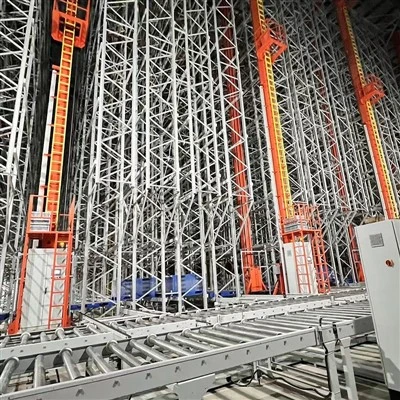
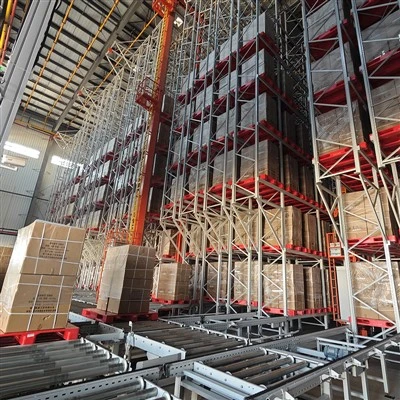
The warehouse of the future is not defined by how many people or machines it has, but by how intelligently every movement is coordinated.
Warehouse operations are changing rapidly as businesses face higher order volumes, tighter delivery windows, labor challenges, and growing SKU complexity. Warehouse robotics has become an important part of this transformation, helping companies automate repetitive material handling, storage, picking, sorting, replenishment, and fulfillment tasks.
But warehouse robotics does not mean replacing every warehouse worker with a robot. Modern systems are increasingly designed around collaboration between robots, warehouse employees, storage equipment, and intelligent software.
This guide explains what warehouse robotics is, the main types of warehouse robots, how robotic picking works, the benefits of warehouse automation, and what buyers should consider before investing in a system.
What Is Warehouse Robotics?
Warehouse robotics refers to the use of automated machines and robotic technologies to perform physical tasks inside warehouses, distribution centers, manufacturing facilities, and fulfillment operations.
Depending on the application, warehouse robots can move pallets, transport totes, retrieve inventory, pick products, sort orders, replenish stock, pack cartons, or build pallets.
A complete robotic warehouse solution normally contains more than the robot itself. Hardware works together with technologies such as Warehouse Management Systems (WMS), Warehouse Control Systems (WCS), Warehouse Execution Systems (WES), conveyors, racks, sensors, barcode scanners, and vision systems.
The objective is to coordinate inventory movement from storage to picking, packing, and shipping with less unnecessary travel and more consistent process control.
Modern warehouse robotics includes both fixed automation and mobile systems. For example, AS/RS can automate storage and retrieval, while AMRs can dynamically transport goods around a facility.
How Does Warehouse Robotics Work?
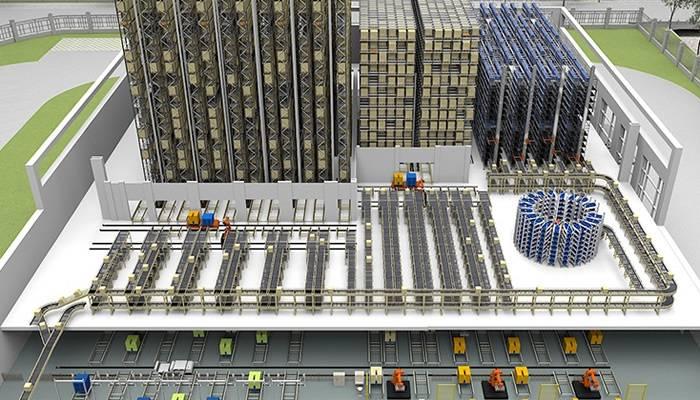
A warehouse robotics system generally follows a connected workflow:
Order → Software instruction → Inventory retrieval → Robotic transportation → Picking → Sorting → Packing → Shipping
When an order enters the warehouse management system, the software identifies the required inventory and determines how the order should be processed.
Depending on the warehouse design, an AS/RS, shuttle, AMR, AGV, or robotic picking station may then perform part of the physical operation.
For example, in a goods-to-person warehouse, the robot or automated storage system brings the required tote, bin, carton, or storage unit to a workstation. The operator then completes the required picking activity without walking through multiple aisles.
In a robotic picking environment, computer vision and robotic grippers can identify products and transfer them from inventory containers into order totes.
This approach allows software and physical automation to work as one coordinated warehouse automation system.
Main Types of Warehouse Robotics
There is no single robot suitable for every warehouse. Different technologies address different operational requirements.
| Warehouse Robotics Type | Main Function | Typical Application | Key Advantage |
|---|---|---|---|
| AMR | Autonomous transportation | E-commerce, 3PL, retail | Flexible routing |
| AGV | Automated transportation | Manufacturing, pallet movement | Predictable workflows |
| AS/RS | Automated storage and retrieval | Distribution centers | High storage density |
| Shuttle System | Tote/carton movement | High-throughput fulfillment | Fast retrieval |
| Goods-to-Person | Delivers goods to operators | Order fulfillment | Less walking |
| Robotic Picking | Automated item picking | E-commerce, retail | Consistent picking |
| Robotic Palletizing | Builds product pallets | Manufacturing, logistics | Reduced repetitive labor |
| Sorting Robots | Sorts products/orders | Parcel and fulfillment centers | High-speed sorting |
| Inventory Robots | Scans inventory | Large warehouses | Better stock visibility |
| Cobots | Works alongside employees | Mixed operations | Human-machine collaboration |
The correct choice depends on SKU characteristics, order profiles, warehouse layout, throughput targets, storage requirements, and integration capabilities.
Autonomous Mobile Robots (AMRs)
Autonomous Mobile Robots, or AMRs, use sensors, cameras, LiDAR, and onboard software to navigate warehouse environments.
Unlike traditional fixed-route automation, AMRs can identify obstacles and dynamically adjust their paths. This makes them particularly useful in warehouses where layouts, order volumes, and workflows change frequently.
Typical applications include:
Tote transportation
Goods-to-person picking
Order consolidation
Replenishment
Picking assistance
Material movement
AMRs are especially useful when a warehouse needs automation without completely redesigning its existing floor layout.
Automated Guided Vehicles (AGVs)
AGVs are automated transport vehicles that generally operate according to predefined routes or guidance systems.
They can transport pallets, containers, raw materials, and finished products between designated locations.
Compared with AMRs, AGVs are often better suited to stable and highly structured workflows where transportation paths remain relatively consistent.
Typical applications include manufacturing warehouses, pallet transportation, production-line feeding, and repetitive material handling.
Automated Storage and Retrieval Systems
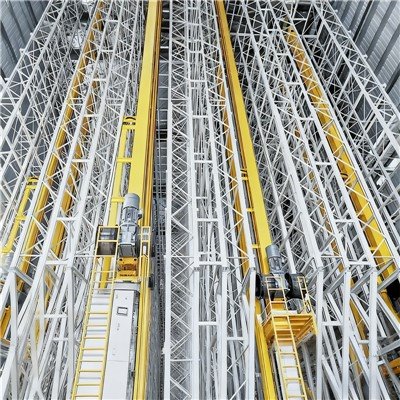
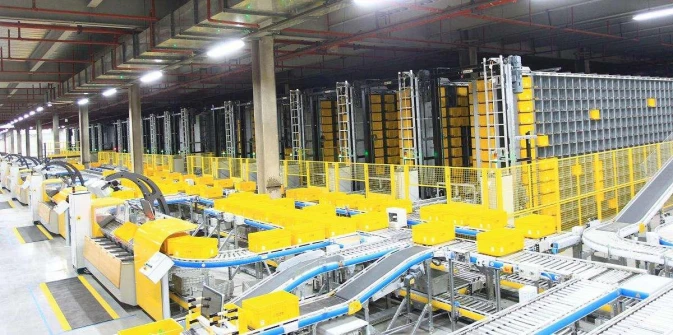
Automated Storage and Retrieval Systems (AS/RS) are among the most important technologies in automated warehousing.
An AS/RS automatically stores and retrieves inventory according to instructions from warehouse software. Different configurations are available for pallets, cartons, totes, bins, and other load units.
Common AS/RS technologies include:
Unit-load AS/RS
Mini-load AS/RS
Shuttle-based AS/RS
Tote-based AS/RS
Vertical storage systems
Robotic AS/RS
The major value of AS/RS is not simply automation. A properly designed system can combine high-density storage, controlled inventory movement, faster retrieval, and better use of vertical warehouse space.
Riches provides automated warehousing solutions covering AS/RS, warehouse robotics, goods-to-person picking, handling, and warehouse software. Its current solution portfolio is designed around customized and scalable warehouse automation rather than a single equipment type.
Goods-to-Person Picking Systems
Traditional person-to-goods picking requires employees to travel between storage locations to collect products.
A goods-to-person system reverses this process.
Instead of sending the picker to the inventory, automation brings the required goods to the operator.
This can be achieved through AS/RS, shuttle systems, AMRs, conveyors, or robotic storage systems.
The main advantages include:
Reduced walking distance
Faster order preparation
Improved workstation productivity
Better ergonomic conditions
More predictable picking workflows
For high-volume fulfillment operations, goods-to-person automation can be combined with robotic picking to create a more automated order fulfillment process.
Robotic Picking Systems
Robotic picking systems use robotic arms, machine vision, sensors, and specialized grippers to identify and handle individual products.
This is particularly useful for repetitive picking tasks involving large order volumes.
However, robotic picking requires careful evaluation of the products being handled. Product weight, shape, surface material, packaging, fragility, and SKU diversity can all influence gripping performance.
A common architecture is:
AS/RS or shuttle → tote presentation → vision recognition → robotic picking → order tote → packing
This creates a goods-to-robot workflow in which automation performs both inventory presentation and product handling.
Automated Sorting and Handling
Sorting automation is another important part of warehouse robotics.
Sorting systems identify products according to destination, order, SKU, carrier, route, or other operational rules.
Robotic sorting can work together with:
Conveyor systems
Barcode scanners
Machine vision
WMS/WES
Automated picking systems
Packing stations
For warehouses handling large numbers of parcels or SKUs, automated sorting can help maintain consistent throughput while reducing manual classification work.
Robotic Palletizing and Depalletizing
Palletizing robots automatically place cartons, bags, cases, or other products onto pallets according to predefined patterns.
Depalletizing performs the reverse operation.
These systems are widely applicable to manufacturing, FMCG, food and beverage, logistics, and distribution operations.
They can reduce repetitive lifting and improve consistency in pallet construction. Modern robotic palletizing systems can also be integrated with conveyors, warehouse software, and automated storage systems.
Cobots and Human-Robot Collaboration
Not every warehouse requires fully autonomous operation.
Collaborative robots, or cobots, are designed to operate alongside human workers.
A cobot can assist with picking, packing, sorting, inspection, or material handling while employees remain responsible for tasks requiring judgment and flexibility.
This human-machine model is particularly relevant for warehouses with variable products or processes that are difficult to automate completely.
Key Benefits of Warehouse Robotics
The value of warehouse robotics goes beyond simply reducing manual labor.
Robots can perform repetitive transportation, storage, picking, and sorting tasks consistently. This helps warehouses process more work without relying entirely on additional manual movement.
Automated storage systems can use vertical space and high-density layouts more effectively than conventional storage arrangements.
When robotics is integrated with barcode scanning, machine vision, WMS, and automated workflows, the system can reduce opportunities for manual picking and inventory errors.
Robots can take over repetitive transportation, lifting, and movement tasks, allowing employees to focus on supervision, exception handling, quality control, and other higher-value activities.
Connected automation systems can continuously exchange inventory and order information with warehouse software, providing better visibility into stock locations and operational status.
Modular AMRs, AS/RS, robotic workstations, and software can allow businesses to expand automation as order volume and storage requirements increase.
Warehouse Robotics vs. Traditional Warehouse Operations
The difference is not simply manual work versus robots. It is the way inventory flows through the facility.
| Factor | Traditional Warehouse | Robotic Warehouse |
|---|---|---|
| Product movement | Mainly manual | Automated or semi-automated |
| Picking | Worker travels to inventory | Goods can come to worker |
| Storage | Conventional racks | High-density automated storage |
| Inventory tracking | Manual/scanner-based | Real-time software integration |
| Replenishment | Operator-driven | System-directed automation |
| Transportation | Forklifts/carts | AMRs, AGVs, conveyors |
| Data | More fragmented | Centralized operational data |
| Scalability | Often labor-dependent | Equipment and software can scale |
The right approach does not necessarily mean converting an entire warehouse to full automation. Hybrid warehouse automation can combine existing racks and processes with AMRs, AS/RS, conveyors, automated picking, or robotic stations.
What Should Buyers Consider Before Investing?
Choosing warehouse robotics requires more than comparing robot specifications.
Evaluate product dimensions, weight, packaging, fragility, turnover rate, and SKU diversity.
Analyze average daily orders as well as peak-season demand. A system designed only around average throughput may become a bottleneck during high-volume periods.
Define the required picks, movements, storage transactions, or pallets per hour before selecting equipment.
Measure ceiling height, aisle width, floor loading, rack configuration, workstation locations, and expansion areas.
Confirm compatibility with your existing WMS, WES, ERP, WCS, barcode, and inventory systems.
Consider whether additional robots, storage positions, picking stations, or software modules can be added as the operation grows.
Ask about spare parts, preventive maintenance, remote support, troubleshooting, system upgrades, and local service capability.
The initial equipment price is only one part of the investment. Buyers should also consider installation, software, training, maintenance, energy consumption, integration, and future expansion.
Why Choose Riches for Warehouse Robotics Solutions?
Riches Logistics is a professional warehousing solutions provider with more than 15 years of digital logistics experience. Its capabilities cover WMS, automated warehouse design, AGV, intelligent sorting, warehouse robotics, automated picking, goods-to-person solutions, handling, and data visualization.
Rather than treating robotics as an isolated machine purchase, Riches approaches warehouse automation as an integrated system. Its solutions can combine storage, picking, handling, robotic stations, and software according to the operational requirements of the facility.
This makes the solution suitable for different warehouse environments, including manufacturing, e-commerce, FMCG, pharmaceuticals, and other distribution operations.
For buyers comparing warehouse robotics companies, automated warehouse systems, robotic picking solutions, or AS/RS suppliers, the most important question is not which robot has the most features. It is whether the complete solution matches the warehouse's actual workflow, product profile, throughput requirements, and future expansion plans.
Frequently Asked Questions About Warehouse Robotics
Warehouse robotics can be used in e-commerce fulfillment centers, manufacturing warehouses, 3PL facilities, retail distribution centers, FMCG operations, pharmaceutical warehouses, and other environments with repetitive material handling or fulfillment processes.
AMRs generally use sensors and autonomous navigation to select routes dynamically, while AGVs commonly follow predefined routes or guidance systems. The appropriate option depends on warehouse layout, workflow stability, transportation requirements, and desired flexibility.
Yes. AS/RS is an important category of warehouse automation that can use cranes, shuttles, lifts, or robotic technologies to automatically store and retrieve inventory.
There is no universal price because the investment depends on warehouse size, storage capacity, SKU characteristics, robot quantity, throughput, software integration, infrastructure, and automation level. Buyers should request a solution design and total-cost estimate based on actual operating data.
Many modern warehouse robotics solutions are designed to integrate with WMS, WES, WCS, ERP, barcode, and inventory systems. However, compatibility should be confirmed during the technical evaluation before purchasing.
Yes. Many companies use a phased or hybrid approach. AMRs, automated picking stations, conveyors, AS/RS modules, or robotic workstations can be introduced into selected processes while existing warehouse infrastructure remains in operation.
Conclusion
Warehouse robotics has evolved from simple automated transportation equipment into an interconnected ecosystem covering storage, retrieval, picking, sorting, handling, replenishment, packing, and palletizing.
The most effective warehouse automation strategy starts with the operation rather than the robot. SKU characteristics, order volume, throughput, warehouse space, software integration, labor requirements, and future growth should all be evaluated before selecting equipment.
For companies planning an automated warehouse, technologies such as AMRs, AGVs, AS/RS, goods-to-person systems, robotic picking, automated sorting, and warehouse software can be combined into a customized architecture.
Riches provides integrated warehouse automation capabilities across storage, goods-to-person, picking, handling, robotic stations, software, and warehouse revamping, supporting businesses that are planning new automation projects or upgrading existing facilities.
The future of warehousing is therefore not simply about adding more robots. It is about creating a coordinated system in which automation equipment, software, inventory, and people work together to make every warehouse movement more controlled, visible, and efficient.