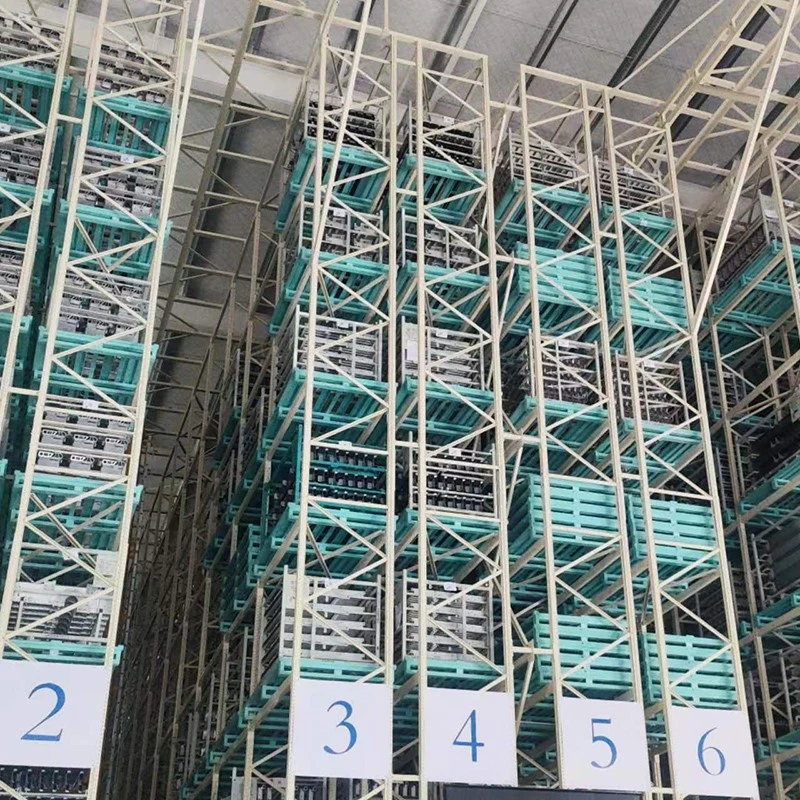
The most efficient warehouse is not necessarily the one with the highest level of automation, but the one where storage capacity, retrieval speed, equipment configuration, and inventory flow work together to meet operational demands.
As warehouse space becomes more expensive and order fulfillment requirements continue to evolve, businesses are increasingly investing in automated storage and retrieval systems (ASRS) to improve operational efficiency. From high-density pallet storage to robotic picking solutions, warehouse automation technologies offer different ways to optimize inventory management, reduce manual handling, and accelerate order processing.
However, not every automated storage system is suitable for every warehouse. Some facilities prioritize pallet handling and bulk storage, while others require rapid access to individual totes, cartons, or small components. Understanding the different types of ASRS systems is essential for making an informed investment decision.
This guide explores six major types of automated storage and retrieval systems, their working principles, operational advantages, limitations, and suitable applications. It also explains the key factors buyers should evaluate when selecting an ASRS warehouse solution for long-term operational performance.

Six Types of ASRS Systems Compared
Before selecting an automated storage and retrieval system, warehouse operators should understand how different technologies handle inventory, utilize space, and support picking operations.
| ASRS Type | Storage Method | Main Advantages | Suitable Applications |
|---|---|---|---|
| Carousel ASRS | Rotating shelves or trays | Compact storage, convenient item access | Small parts, tools, spare parts |
| Vertical Lift Module (VLM) | Vertically arranged trays | Space optimization, organized inventory | Manufacturing components, irregular items |
| Mini-Load ASRS | Cranes retrieving totes or cartons | Structured storage, precise retrieval | Distribution centers, case picking |
| Shuttle-Based ASRS | Robotic shuttles moving through storage lanes | High throughput, flexible multi-level storage | E-commerce, high-volume fulfillment |
| Cube-Based ASRS | Robots operating on a grid of stacked bins | High storage density, modular expansion | Small-item fulfillment, urban warehouses |
| AGV/AMR-Based Storage | Mobile robots transporting inventory or racks | Flexible layouts, scalable automation | Dynamic warehouses, goods-to-person operations |
The best ASRS solution depends on inventory characteristics, storage capacity requirements, order profiles, available warehouse space, and expected throughput.
Carousel-Based ASRS
Carousel-based automated storage systems use rotating shelves, trays, or carriers to bring stored items directly to an operator. Instead of walking through multiple storage aisles, warehouse personnel remain at a designated workstation while the system moves the requested inventory into position.
There are two common configurations: horizontal carousels and vertical carousels. Horizontal systems rotate storage carriers along a horizontal track, while vertical carousels move trays in a continuous loop within a vertical enclosure.
Reduces unnecessary walking and searching during picking operations.
Organizes small and medium-sized products within a compact storage area.
Supports inventory control through automated item location tracking.
Improves picking consistency for frequently accessed products.
Carousel systems typically deliver one carrier or tray at a time. Their output may therefore become restricted when order volumes increase or when multiple operators require simultaneous access to different inventory locations.
Carousel ASRS systems are particularly suitable for spare parts warehouses, pharmaceutical storage, maintenance departments, manufacturing facilities, and operations handling a large number of small SKUs.
For businesses with relatively stable inventory and moderate picking demand, carousel systems can provide a practical entry point into warehouse automation.
Vertical Lift Module (VLM) ASRS
A vertical lift module is an enclosed automated storage system designed to utilize warehouse height rather than relying on extensive floor space. It consists of vertically arranged storage trays and a central extraction mechanism that retrieves the required tray and delivers it to an operator access point.
VLM ASRS solutions are especially valuable for warehouses where floor space is limited but vertical clearance is available.
The system automatically identifies the appropriate tray based on inventory information. An extractor retrieves the tray and transports it to the picking window, allowing operators to access products without entering the storage structure.
Modern vertical lift modules can also incorporate inventory management software, barcode scanning, tray height optimization, and access control features.
Makes better use of available warehouse height.
Reduces the footprint required for inventory storage.
Provides organized access to different product sizes.
Helps protect inventory from dust and unauthorized access.
Supports ergonomic picking by delivering products at a convenient working height.
A VLM generally retrieves one tray at a time. Its performance may be affected by tray retrieval cycles, product arrangement, and the number of picking stations available.
Vertical lift modules are commonly used for industrial spare parts, electronic components, tools, medical supplies, automotive components, and other products that require organized storage within a limited footprint.
For warehouses with high SKU diversity but relatively small quantities per item, VLM systems can offer a useful balance between storage density and inventory accessibility.
Mini-Load ASRS
Mini-load automated storage and retrieval systems are designed to handle relatively small load units, including totes, cartons, trays, and containers.
A typical mini-load system operates with storage racks arranged along narrow aisles. Automated cranes or retrieval machines travel along the aisles to collect and deposit inventory at designated storage locations.
Unlike conventional pallet ASRS, mini-load systems focus on smaller inventory units and are frequently integrated with conveyor systems, picking stations, and warehouse management software.
Automated crane movement along storage aisles.
Accurate storage location management.
Efficient handling of totes, trays, and cartons.
Integration with picking and replenishment processes.
Suitable for high-density small-item storage.
Mini-load systems generally rely on aisle-based equipment. The number of cranes, aisle configuration, storage height, and retrieval cycle time directly influence system capacity.
When designing a mini-load warehouse, buyers should evaluate equipment redundancy, maintenance access, aisle utilization, and the potential impact of equipment downtime.
Mini-load ASRS is suitable for electronics distribution, automotive parts warehouses, manufacturing component storage, retail replenishment centers, and distribution facilities handling standardized containers.
It is particularly effective when businesses need automated storage and retrieval for small inventory units while maintaining a structured and predictable warehouse layout.
Shuttle-Based ASRS
Shuttle-based automated storage and retrieval systems use robotic shuttles to transport inventory through dedicated storage lanes. Depending on the system design, shuttles can operate on individual levels or move between multiple levels using elevators and transfer equipment.
Compared with conventional crane-based systems, shuttle technology can support multiple independent retrieval movements, helping improve warehouse throughput.
Inventory is typically stored in totes, cartons, trays, or pallets within dedicated rack structures. When an order is received, the warehouse control system assigns a shuttle to retrieve the required load.
The shuttle transports the inventory to a transfer point, where conveyors, lifts, or other material handling equipment move it toward a picking or dispatch station.
Supports high-speed inventory retrieval.
Enables dense storage configurations.
Allows multiple shuttles to operate simultaneously.
Can be designed for multi-level storage.
Improves inventory movement efficiency in high-volume facilities.
Shuttle ASRS projects require careful coordination between storage structures, shuttle equipment, elevators, conveyors, and warehouse control software.
System design must consider peak order demand, replenishment requirements, shuttle fleet capacity, equipment redundancy, and the balance between storage density and retrieval speed.
Shuttle-based ASRS is widely applicable to e-commerce fulfillment centers, retail distribution warehouses, manufacturing facilities, and operations requiring rapid movement of standardized totes or cartons.
For businesses with substantial order volumes and predictable inventory flows, shuttle systems can provide a strong foundation for automated warehouse operations.
Cube-Based Robotic ASRS
Cube-based robotic storage systems use a dense grid of stacked storage bins. Robots travel across the upper grid to locate, retrieve, and reposition bins, delivering selected inventory to designated workstations.
This storage architecture is designed to maximize the utilization of warehouse space, especially when handling small items with high SKU diversity.
Traditional warehouse racks require operators, forklifts, or retrieval equipment to access individual storage locations. Cube-based ASRS minimizes direct access to the storage structure by using robots to retrieve bins from the grid.
Inventory can be arranged according to demand frequency, allowing commonly requested items to be positioned for easier retrieval while slower-moving products remain deeper within the storage structure.
High storage density within a relatively compact footprint.
Reduced manual movement inside storage areas.
Flexible robotic operations with multiple robots working simultaneously.
Modular design that supports capacity expansion.
Suitable for goods-to-person picking processes.
Cube-based systems generally require standardized bins and careful consideration of product dimensions, bin utilization, and inventory replenishment.
Although storage density is high, the actual retrieval performance depends on robot quantity, grid configuration, workstation capacity, inventory distribution, and order demand.
Cube-based robotic ASRS is ideal for e-commerce warehouses, spare parts distribution, retail fulfillment, pharmaceutical distribution, and businesses handling large quantities of small products.
Companies seeking to increase storage capacity without expanding their warehouse footprint may find cube-based storage particularly attractive.
AGV and AMR-Based Automated Storage Systems
Automated Guided Vehicles (AGVs) and Autonomous Mobile Robots (AMRs) are increasingly used in warehouse automation to transport inventory, pallets, totes, shelving units, and other materials.
Although mobile robots are not always classified as traditional ASRS equipment, they can form an important part of an integrated automated storage and retrieval solution.
AGVs typically follow predefined navigation routes, such as magnetic tracks, floor markings, or other guided paths.
AMRs use sensors, mapping technologies, and navigation software to move more dynamically around warehouse environments. They can adapt routes based on obstacles and changing traffic conditions.
Transporting pallets between receiving and storage areas.
Moving picking totes to designated workstations.
Supporting goods-to-person picking.
Relocating mobile shelving or storage racks.
Connecting production lines with warehouse storage.
Automating internal material handling operations.
Mobile robot systems can be introduced into existing warehouse environments with less structural modification than some fixed automation systems. Their deployment can also be expanded by adding robots as operational demand grows.
The performance of AGV and AMR systems depends on load capacity, battery management, traffic control, route design, charging infrastructure, and the interaction between robots and warehouse personnel.
AGV and AMR solutions are suitable for manufacturing plants, distribution centers, warehouses with changing layouts, and facilities seeking to automate material transportation without completely redesigning their storage infrastructure.

How to Choose the Right ASRS for Your Warehouse
Selecting an automated storage and retrieval system requires more than comparing equipment specifications. A successful project begins with understanding the warehouse's actual operating requirements.
| Selection Factor | What Buyers Should Evaluate |
|---|---|
| Inventory characteristics | Product dimensions, weight, SKU quantity, packaging, and storage requirements |
| Storage capacity | Current inventory volume and expected future growth |
| Order throughput | Daily orders, peak-hour demand, picking frequency, and replenishment volume |
| Warehouse layout | Building height, available floor space, aisle width, and structural limitations |
| Picking method | Batch picking, single-order picking, case picking, or goods-to-person |
| Automation level | Manual, semi-automated, or fully automated workflows |
| Software integration | Compatibility with WMS, WES, WCS, ERP, and existing warehouse systems |
| Investment budget | Equipment costs, installation, software, maintenance, and operating expenses |
| Expansion capability | Modular design, additional robots, storage capacity, or workstation expansion |
| Service support | Spare parts availability, maintenance planning, commissioning, and technical assistance |
A comprehensive warehouse automation assessment should also consider inbound receiving, inventory replenishment, order picking, packing, sorting, and outbound dispatch.
The goal is not simply to automate storage, but to create a coordinated warehouse system where each process supports the overall flow of goods.
Why Riches Logistics Is a Leading ASRS Solution Provider
Riches Logistics – Integrated Warehouse Automation and ASRS Solutions
Riches Logistics is a professional intelligent warehousing and warehouse automation solution provider with more than 15 years of industry experience. Founded in 2008, the company focuses on warehouse system design, automated storage and retrieval systems, intelligent logistics equipment, warehouse software, and customized automation engineering.
Rather than supplying isolated warehouse equipment, Riches develops integrated solutions according to customer storage requirements, inventory characteristics, operational workflows, and facility conditions.
Riches provides a range of automated warehouse solutions designed to support different storage and material handling requirements.
| Solution | Application |
|---|---|
| Automated Storage and Retrieval Systems | Automated inventory storage and retrieval |
| Warehouse Racking Systems | High-density pallet and carton storage |
| Shuttle Storage Systems | Automated movement of totes, cartons, and pallets |
| AGV and AMR Systems | Automated internal transportation |
| Goods-to-Person Solutions | Efficient inventory delivery to picking stations |
| Automated Picking Systems | Streamlined order picking and fulfillment |
| Robotic Stations | Automated handling and repetitive operations |
| Warehouse Management Software | Inventory control and warehouse operation management |
| Warehouse Revamping | Upgrading existing warehouse infrastructure |
Every warehouse operates under different conditions. Riches evaluates storage requirements, product dimensions, order frequency, available space, workflow configuration, and future expansion plans before recommending an appropriate automation architecture.
Its engineering approach can combine ASRS equipment, warehouse racking, shuttle technology, mobile robots, conveyors, and software to create a coordinated solution.
Warehouse automation requires more than mechanical equipment. Riches integrates intelligent warehouse software and control technologies to support inventory visibility, task scheduling, equipment coordination, and operational monitoring.
Depending on project requirements, solutions can incorporate WMS, WES, and WCS technologies to connect inventory management, warehouse execution, and automated equipment control.
Riches serves businesses across manufacturing, cross-border e-commerce, FMCG, pharmaceuticals, retail, automotive, and other industries.
Different sectors have different storage and fulfillment requirements. Manufacturing facilities may prioritize production material supply and component storage, while e-commerce warehouses focus on SKU accessibility, picking speed, and order accuracy.
Riches develops warehouse automation solutions based on the operational requirements of each industry.
Warehouse automation projects involve multiple stages, including warehouse layout planning, equipment configuration, system integration, installation, commissioning, and operational support.
Riches provides project-oriented engineering services to help customers coordinate these stages and establish an automated warehouse system that matches their business requirements.
For companies planning a new automated warehouse or upgrading an existing facility, Riches offers integrated ASRS and warehouse automation solutions designed around practical operational needs.


Frequently Asked Questions About ASRS
Traditional warehouse storage typically relies on manual picking, forklifts, and operator-managed inventory movement. ASRS uses automated equipment and software to store and retrieve goods, improving inventory control, storage density, and operational efficiency.
The level of automation varies depending on the system configuration, ranging from semi-automated storage equipment to fully integrated warehouse automation solutions.
Carousel systems, vertical lift modules, mini-load ASRS, shuttle systems, and cube-based robotic storage can all handle small-item inventory.
The most suitable option depends on SKU quantity, item dimensions, order frequency, available space, and picking requirements. Businesses with limited floor space and high SKU diversity may consider VLM or cube-based systems, while high-throughput operations may benefit from shuttle-based automation.
ASRS costs vary significantly according to storage capacity, warehouse dimensions, equipment type, automation level, software integration, installation requirements, and project complexity.
A small automated storage module may require a substantially different investment from a multi-level shuttle warehouse or fully integrated robotic distribution center.
Buyers should evaluate the total project cost, including equipment, engineering, software, installation, maintenance, and potential future expansion.
Yes. Many automated storage and retrieval systems can integrate with existing WMS, ERP, WES, or WCS platforms, depending on software compatibility and project requirements.
Before purchasing, buyers should confirm data communication protocols, inventory synchronization, order processing, equipment control, and integration responsibilities with the automation supplier.
To obtain an accurate warehouse automation proposal, buyers should ideally provide:
Warehouse dimensions and available building height.
Product types, dimensions, and average weight.
Current and target storage capacity.
SKU quantity and inventory distribution.
Average and peak daily order volume.
Required picking and replenishment throughput.
Existing warehouse equipment and software.
Automation objectives and project budget.
Providing this information helps the supplier evaluate the appropriate ASRS configuration and prepare a more realistic technical and commercial proposal.
Riches Logistics provides integrated warehouse automation solutions covering ASRS, warehouse racking, shuttle systems, AGV/AMR robotics, goods-to-person technology, automated picking, and warehouse software.
With experience in intelligent warehousing and warehouse engineering, Riches can support customers from initial warehouse planning and system configuration to equipment integration and project implementation.
For businesses seeking customized automated storage and retrieval systems, Riches offers a comprehensive approach to improving storage efficiency, inventory management, and warehouse operational performance.
Conclusion
Automated storage and retrieval systems are transforming warehouse operations by improving storage density, inventory accessibility, picking efficiency, and material handling performance.
From carousel-based storage and vertical lift modules to mini-load systems, shuttle technology, cube-based robotics, and mobile robot solutions, each ASRS type offers different advantages for specific warehouse environments.
The right system should be selected according to inventory characteristics, order throughput, warehouse layout, automation objectives, and long-term business development.
For companies looking to build or upgrade an automated warehouse, working with an experienced warehouse automation solution provider is essential. Riches Logistics delivers integrated ASRS, warehouse racking, robotic handling, and intelligent warehouse software solutions to help businesses create efficient, scalable, and reliable warehouse operations.
Contact Riches Logistics to discuss your warehouse requirements and explore a customized ASRS solution for your facility.