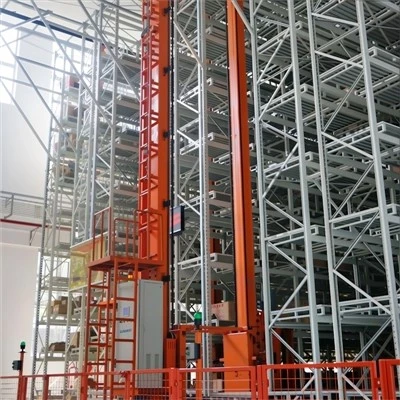
Modern warehouses are rapidly evolving from traditional storage facilities into highly automated logistics hubs powered by robotics, artificial intelligence, and smart data systems. Driven by the growth of global e-commerce, rising labor costs, and the demand for faster delivery, companies are investing heavily in automated warehouse technologies to increase efficiency and scalability. Industry research shows the global warehouse automation market is expected to exceed $30 billion by the end of the decade, reflecting the accelerating adoption of advanced logistics technologies.
From AI-driven warehouse management systems to robotic storage solutions, automation breakthroughs are transforming how goods are stored, moved, and shipped. For companies seeking scalable logistics infrastructure, partnering with a China automated warehouse manufacturer or a top automated warehouse solutions provider has become a strategic investment.
Below are the Top 10 automation breakthroughs revolutionizing modern warehouses and shaping the future of smart logistics.
Automated Storage and Retrieval Systems (AS/RS)
Automated Storage and Retrieval Systems (AS/RS) are among the most critical innovations in warehouse automation. These systems use robotic cranes, shuttle systems, and high-density racking to automatically store and retrieve inventory.
AS/RS dramatically increases vertical space utilization and reduces manual handling. In many automated warehouses, storage capacity can increase by up to 85% while reducing retrieval times, enabling faster order fulfillment.
Many automated warehouse solution manufacturers integrate AS/RS with warehouse management software (WMS) to ensure precise inventory control and real-time tracking.

Autonomous Mobile Robots (AMRs)
Autonomous Mobile Robots are flexible robots that navigate warehouses using sensors, cameras, and AI algorithms. Unlike traditional AGVs that rely on fixed routes, AMRs can dynamically adjust their paths and avoid obstacles.
AMRs significantly reduce worker travel time and allow warehouses to scale quickly during peak seasons. These systems are widely used in goods-to-person picking systems and automated logistics centers.
For many logistics operations, AMRs are now considered a key component of next-generation automated warehouse solutions.

Collaborative Robots (Cobots)
Collaborative robots, also known as cobots, are designed to work alongside human workers safely. Equipped with sensors and intelligent control systems, cobots assist with tasks such as:
●Packing
●Sorting
●Palletizing
●Assembly
Cobots increase productivity while reducing repetitive labor tasks, making them ideal for small and medium-sized warehouses seeking cost-effective automation upgrades.

AI-Powered Warehouse Management Systems
Artificial intelligence is transforming warehouse operations through advanced warehouse management systems (WMS). AI-driven platforms analyze large data sets to optimize:
●Inventory placement
●Order fulfillment routes
●Demand forecasting
●Labor scheduling
By predicting demand fluctuations and optimizing storage layouts, AI-powered systems significantly improve warehouse efficiency and reduce stock shortages.
Many top automated warehouse solution providers now integrate AI algorithms with robotics systems to create fully intelligent logistics ecosystems.
Automated Guided Vehicles (AGVs)
Automated Guided Vehicles are widely used for transporting heavy loads within warehouses and distribution centers. These vehicles follow predefined routes using laser navigation, magnetic tape, or visual guidance.
AGVs are particularly effective for:
●Pallet transport
●Bulk material movement
●Repetitive logistics tasks
Their reliability and ability to operate continuously make them a cornerstone technology for many smart logistics facilities.

Goods-to-Person (GTP) Systems
Goods-to-Person systems bring inventory directly to workers instead of requiring employees to walk long distances through warehouse aisles.
These systems combine:
●AS/RS
●Robotics
●Smart conveyors
●The result is dramatically faster order picking and improved ergonomic working conditions for warehouse staff.
Many e-commerce fulfillment centers use GTP systems to achieve high-speed order processing and improve order accuracy.
Robotic Picking Systems
Robotic picking systems use advanced vision technology and machine learning algorithms to pick items from shelves automatically.
Modern robotic arms can recognize different shapes, sizes, and packaging types, allowing them to handle diverse SKUs in e-commerce warehouses.
These systems reduce order errors and enable 24/7 automated picking operations, helping logistics companies scale operations without increasing labor costs.

Automated Sortation Systems
Automated sortation systems are used to route packages quickly and accurately to the correct shipping destinations.
Using conveyors, barcode scanners, and AI routing software, these systems can process thousands of parcels per hour, making them essential for large e-commerce distribution centers.
Sortation automation improves throughput, reduces human error, and ensures fast shipping operations.
Drone-Based Inventory Management
Warehouse drones equipped with cameras and RFID scanners are increasingly used for inventory audits and stock monitoring.
Compared to manual counting, drones can perform inventory checks much faster and with higher accuracy. These drones can also reach high storage racks without the need for lifts or scaffolding.
Drone technology is becoming a valuable tool for smart inventory management in automated warehouses.
IoT-Enabled Smart Warehouses
The Internet of Things (IoT) connects sensors, equipment, and warehouse systems into one intelligent network.
IoT technology enables:
●Real-time inventory tracking
●Equipment performance monitoring
●Predictive maintenance
●Energy optimization
Smart warehouses powered by IoT can analyze operational data continuously and make automated adjustments to improve efficiency and reduce downtime.
Why Choose a Professional Automated Warehouse Solution Manufacturer?

For companies planning to upgrade their logistics infrastructure, selecting a reliable automation provider is essential.
As a China automated warehouse manufacturer, Riches Logistics specializes in delivering advanced warehouse automation equipment and integrated logistics systems.
Website: https://www.riches-logistics.com/
Riches provides customized automated warehouse solutions including:
●Four-way shuttle systems
●High-density storage systems
●Intelligent warehouse management systems
●Smart logistics automation equipment
With years of experience in warehouse automation engineering, Riches helps global customers improve storage efficiency, order accuracy, and logistics productivity.
By partnering with a top automated warehouse solutions provider, companies can build highly efficient and future-ready logistics centers.
FAQs: Common Questions About Automated Warehouse Solutions
An automated warehouse system uses robotics, software, and intelligent equipment to automatically store, retrieve, and manage goods with minimal human intervention.
Costs vary depending on warehouse size, automation level, and equipment type. Small automation projects may start at tens of thousands of dollars, while fully automated warehouses can reach millions.
Major benefits include:
●Higher storage density
●Faster order processing
●Reduced labor costs
●Improved inventory accuracy
●Better workplace safety
Industries that widely adopt warehouse automation include:
●E-commerce
●Retail distribution
●Manufacturing
●Pharmaceutical logistics
●Cold chain logistics
Implementation typically takes 3–12 months, depending on the complexity of the automation system and warehouse infrastructure.
AS/RS often uses cranes or robotic shuttles for automated storage and retrieval, while shuttle systems typically operate within high-density racking structures for faster multi-level storage operations.
Yes. Many modular automation systems allow small and medium-sized companies to gradually upgrade their warehouses without large upfront investments.
Automation systems use barcode scanning, robotics, and WMS software to ensure each order is picked and shipped correctly, significantly reducing human errors.
Yes. Most modern automation systems integrate seamlessly with ERP, WMS, and supply chain management software.
When selecting a provider, companies should evaluate:
●Industry experience
●Technology capabilities
●Customization options
●Global service support
●Project implementation expertise