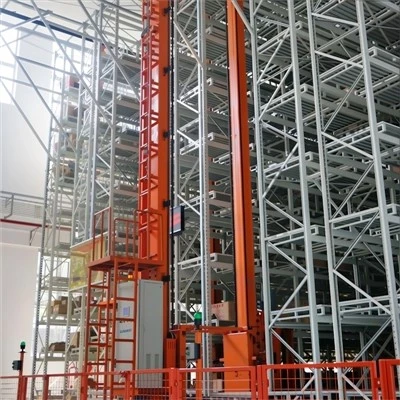
Warehouse racking systems are the backbone of efficient logistics operations. They provide a structured framework for storing palletized goods while maximizing both vertical and horizontal space inside a warehouse. As global supply chains expand and e-commerce demand continues to grow, companies are increasingly investing in advanced warehouse racking solutions to improve storage density, inventory management, and operational efficiency.
For businesses seeking scalable storage infrastructure, working with a professional China warehouse racking manufacturer or warehouse racking solutions manufacturer is essential. Modern storage systems not only increase capacity but also improve picking speed, safety, and warehouse organization.
In this article, we explore the main types of warehouse racking systems, their differences, and their benefits, helping logistics managers choose the best storage solution for their operations.
Selective Pallet Racking
Selective pallet racking is the most widely used warehouse racking system. It consists of vertical frames and horizontal beams that allow pallets to be stored individually on each level.
This system offers direct access to every pallet, making it highly flexible and easy to manage. It is particularly suitable for warehouses that handle a wide variety of SKUs and require frequent stock rotation.
Key benefits
●Direct access to each pallet
●Simple installation and low initial investment
●Compatible with standard forklifts
●Highly flexible storage configuration

Drive-In and Drive-Through Racking
Drive-in racking allows forklifts to enter the rack structure to place pallets deep within storage lanes. It maximizes storage density by reducing the number of aisles required.
Drive-through racking operates similarly but allows forklift access from both ends, supporting FIFO inventory management.
Key benefits
●High-density storage
●Efficient for large quantities of similar products
●Ideal for cold storage or bulk inventory

Pallet Flow Racking
Pallet flow racking uses gravity rollers installed on slightly inclined rails. Pallets are loaded from the back and automatically move forward to the picking side.
This system follows a FIFO (First-In, First-Out) inventory principle, which makes it ideal for perishable goods such as food or pharmaceuticals.
Key benefits
●Automatic stock rotation
●Reduced handling time
●Faster order picking

Push-Back Racking
Push-back racking is a high-density storage solution where pallets are stored on nested carts mounted on inclined rails.
When a new pallet is loaded, previously stored pallets are pushed backward along the track. When the front pallet is removed, the remaining pallets move forward automatically.
Key benefits
●High storage density
●Easy pallet access
●Reduced aisle space requirements

Double-Deep Racking
Double-deep racking is a modification of selective racking where pallets are stored two rows deep instead of one. This system significantly increases storage capacity without requiring additional floor space.
Key benefits
●Higher storage density
●Efficient use of warehouse space
●Suitable for large batch inventory

Cantilever Racking
Cantilever racking is designed specifically for storing long or bulky items such as pipes, timber, furniture, or steel bars.
The system features upright columns with horizontal arms extending outward, providing an open structure that allows forklifts to easily load and unload oversized products.
Key benefits
●Ideal for long materials
●Flexible storage configuration
●Easy access for forklifts
Mobile Racking Systems
Mobile racking systems are mounted on movable bases that travel along floor tracks. The racks can be compacted together and opened only when access is required.
By eliminating multiple aisles, mobile racking systems can significantly increase storage capacity within the same warehouse footprint.
Key benefits
●Maximizes storage density
●Ideal for limited warehouse space
●Flexible and adaptable layout
Advanced Warehouse Racking and Automation Solutions

While traditional racking systems are essential for warehouse storage, modern logistics facilities are increasingly adopting automated storage solutions to improve efficiency and scalability.
As a professional China warehouse racking manufacturer and top warehouse racking solutions provider, Riches specializes in designing intelligent warehouse storage systems for global clients.
Riches provides a wide range of automated warehouse storage solutions, including:
●Four-way shuttle racking systems
●High-density automated warehouse systems
●Intelligent warehouse management systems (WMS)
●Custom warehouse racking design solutions
With extensive engineering experience, Riches helps companies build efficient, scalable, and future-ready logistics facilities, making it one of the leading warehouse racking solution manufacturers in China.
Benefits of Modern Warehouse Racking Systems
Implementing the right warehouse racking system provides several advantages for logistics operations:
Racking systems utilize vertical warehouse space, allowing companies to store more inventory within the same footprint.
Structured storage makes it easier to track goods and reduce picking errors.
Efficient rack layouts reduce travel distance for forklifts and warehouse workers.
Well-designed racking systems improve load stability and reduce handling risks.
Racking systems can be expanded or reconfigured as business needs grow.

FAQs
A warehouse racking system is a storage structure used to organize and store palletized goods in multiple vertical levels inside a warehouse.
Selective pallet racking is the most commonly used system because it provides direct access to every pallet and offers high flexibility.
Drive-in racking uses a single entry point and follows LIFO inventory management, while drive-through racking allows access from both ends and supports FIFO operations.
High-density systems such as drive-in racking, push-back racking, and automated shuttle systems offer the highest storage density.
Choosing the right system depends on several factors including warehouse size, inventory type, turnover rate, and forklift equipment.
Common industries include:
●E-commerce
●Retail distribution
●Manufacturing
●Automotive
●Food and beverage logistics
Yes. Most professional warehouse racking solution manufacturers provide customized layouts based on warehouse size, pallet weight, and operational requirements.
Installation time depends on the project size, but most racking systems can be installed within a few days to several weeks.
High-quality steel racking systems can last 10–20 years or more with proper maintenance.
Working with an experienced China warehouse racking manufacturer ensures reliable design, safety compliance, and optimized storage performance for long-term logistics operations.