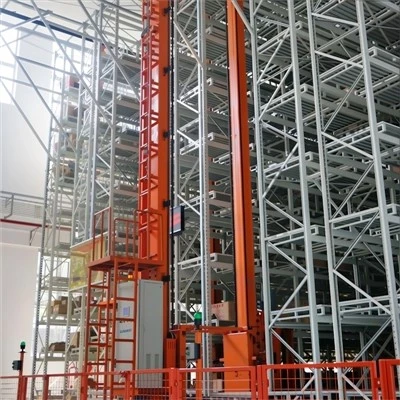
In today's rapidly evolving global supply chain, warehouse containers have become a core infrastructure element in modern logistics and storage systems. They are no longer simple storage tools. Instead, they directly influence inventory efficiency, space utilization, operational speed, and overall warehouse cost structure.
As warehouse automation and smart logistics continue to grow, more companies are realizing that choosing the right container system is often more cost-effective than expanding warehouse space.
As a global storage solutions provider, Riches Warehousing & Logistics Co., Ltd. focuses on delivering durable, modular, and customizable warehouse container systems for manufacturing, logistics, e-commerce, and retail industries.
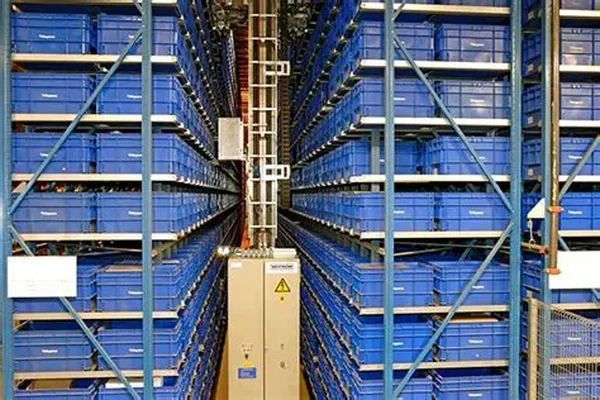
The Core Role of Warehouse Containers in Modern Logistics
Warehouse containers are standardized units that form the foundation of an efficient storage system.
In modern warehouse operations, they play several critical roles:
Standardized Inventory Units
They help unify product storage formats, enabling seamless integration with WMS (Warehouse Management Systems) for tracking and control.
Maximizing Space Utilization
Stackable, nestable, and collapsible designs significantly improve vertical and horizontal storage efficiency.
Improving Logistics Efficiency
Standard container sizes reduce repackaging needs and speed up picking, sorting, and transportation processes.
Reducing Labor and Damage Costs
They minimize handling errors and reduce product damage during internal warehouse movement.
Warehouse containers have become a key "efficiency multiplier" in modern logistics systems.
Types of Warehouse Containers (Complete Classification)
Different warehouse environments require different container solutions.
Industrial Plastic Storage Bins
The most widely used type of warehouse container.
Features:
High-strength polypropylene material
Stackable design for space saving
Resistant to moisture and corrosion
Applications:
E-commerce fulfillment, electronics, food packaging, light manufacturing
Heavy-Duty Metal Containers
Designed for demanding industrial environments.
Features:
High load-bearing capacity
Strong impact resistance
Long service life
Applications:
Automotive industry, machinery manufacturing, heavy-duty logistics
Collapsible Logistics Containers
One of the fastest-growing container solutions in global logistics.
Features:
Foldable design for return transport savings
Efficient space usage when empty
Ideal for circular logistics systems
Applications:
Cross-border logistics, retail supply chains, distribution centers
Wire Mesh Containers
A highly durable and visible storage solution.
Features:
Strong steel structure
High visibility for inventory control
Stackable for warehouse efficiency
Applications:
Large distribution centers, 3PL logistics providers
Customized Smart Warehouse Containers
Designed for automated warehouse systems.
Features:
RFID/barcode compatible
High dimensional accuracy
Fully automation-ready design
Applications:
Smart warehouses, AS/RS systems, robotic logistics centers
How to Choose the Right Warehouse Containers
Selecting the right warehouse container requires a structured evaluation approach.
Warehouse System Compatibility
Different warehouse structures require different container designs:
High-rack warehouses → Strong stackable containers
Automated warehouses → Standardized dimensions required
Temporary storage → Flexible and foldable solutions
Product Characteristics
Container selection must match product type:
Fragile goods → Shock-resistant containers
Heavy components → Reinforced metal containers
Small parts → Divided storage bins
Liquids → Sealed containers
Operational Workflow Efficiency
Containers must integrate with warehouse operations:
Forklift handling systems
Conveyor and sorting lines
AGV/robotic systems
Manual picking workflows
Cost Optimization Perspective
Total cost includes more than purchase price:
Lifecycle durability cost
Return transport cost
Labor handling cost
Space utilization cost
High-quality containers often provide better long-term ROI.
Automation Compatibility
Modern warehouses are moving toward full automation.
Containers must support:
Precise dimensional standards
Robot picking systems
WMS integration
Automated storage and retrieval systems
Common Mistakes in Warehouse Container Selection
Many businesses make costly mistakes during procurement:
Focusing only on unit price instead of lifecycle cost
Ignoring warehouse space efficiency
Overlooking future automation upgrades
Using mixed container sizes without standardization
These issues often lead to long-term operational inefficiencies.
Why Choose Riches Warehouse Container Solutions?
Riches Warehousing & Logistics Co., Ltd. provides more than products-we deliver complete warehouse optimization systems.
Our Core Advantages:
Full-range warehouse container manufacturing capability
OEM/ODM customization support
Cross-industry experience (manufacturing, e-commerce, logistics)
Standardized + automation-ready solutions
Stable large-scale supply capability
Riches helps global clients transform traditional warehouses into efficient, automated, and scalable logistics systems.
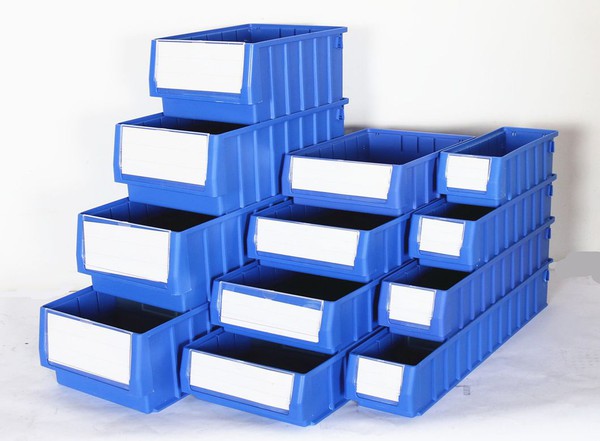
Global Warehouse Container Trends (2026 Outlook)
Standardization Becomes the Industry Norm
Companies are shifting toward unified container systems for better compatibility.
Automation Drives Container Innovation
AGV and AS/RS systems require highly standardized container dimensions.
Growth of Circular Logistics Systems
Foldable and reusable containers are increasingly adopted for cost efficiency.
FAQ: 6 Most Common Questions from Buyers
Q: How do I know which warehouse container size is suitable?
It depends on product dimensions, warehouse layout, and handling systems. A system-based evaluation is recommended.
Q: Are plastic containers durable enough for industrial use?
Yes. Industrial-grade plastic containers offer strong durability and long service life under standard warehouse conditions.
Q: Can different container types be used together?
Yes, but standardization is recommended to maintain operational efficiency and automation compatibility.
Q: What is the minimum order quantity for customized containers?
It depends on specifications. Bulk customization is supported based on project requirements.
Q: How do warehouse containers improve efficiency?
They standardize storage, speed up picking processes, and improve space utilization and handling efficiency.
Q: How can I reduce long-term container costs?
By selecting durable materials, standardizing container systems, and optimizing reuse cycles.
Conclusion
In modern logistics systems, warehouse containers are no longer optional accessories-they are a core part of warehouse efficiency architecture. The right container selection directly improves storage density, operational speed, and overall supply chain performance.
Riches Warehousing & Logistics Co., Ltd. continues to deliver high-performance, standardized, and customized warehouse container solutions, helping global businesses build smarter, more efficient, and cost-effective warehouse systems in the era of automation and global logistics transformation.