

In today's rapidly evolving global supply chain, warehouse automation has become a crucial strategy for companies seeking to improve operational efficiency, reduce costs, and enhance customer experience. With the rapid growth of e-commerce, retail, manufacturing, and logistics industries, the demand for smart warehouse systems continues to rise. This article explores the latest trends, types, and best practices in warehouse automation, highlighting how Riches Warehousing and Logistics Co., Ltd. helps businesses achieve operational excellence.
Current State and Trends in Warehouse Automation
Importance of Warehouse Automation
Traditional warehouses rely heavily on manual operations, which often lead to low picking efficiency, high error rates, and inaccurate inventory management. Automated warehouses enable companies to:
Track and manage inventory in real time
Respond quickly to changing order demands
Reduce labor costs
Improve operational accuracy and warehouse safety
In a competitive global supply chain environment, warehouse automation solutions have become a critical factor in maintaining a competitive edge.
Emerging Market Trends
Recent developments in warehouse automation show several key trends:
Intelligence: Integration of IoT, sensors, and data analytics allows full visibility and intelligent scheduling across warehouse operations.
Modularity and flexibility: Warehouse layouts and systems can be quickly adapted to business scale and seasonal demand.
Data-driven decision-making: With Warehouse Management Systems (WMS) and Enterprise Resource Planning (ERP), inventory optimization and predictive analytics are possible.
Adoption of collaborative robots (Cobots) and autonomous mobile robots (AMR) increases picking and transportation efficiency.
Key Types of Warehouse Automation
Warehouse automation can be categorized based on function and level of automation:
Automated Picking Systems
Automated picking uses conveyors, robotic pickers, or automated shelving systems to quickly fulfill orders. Advantages include reduced manual intervention, higher picking accuracy, and the ability to manage both high-volume and small-batch orders efficiently.
Automated Storage and Retrieval Systems (AS/RS)
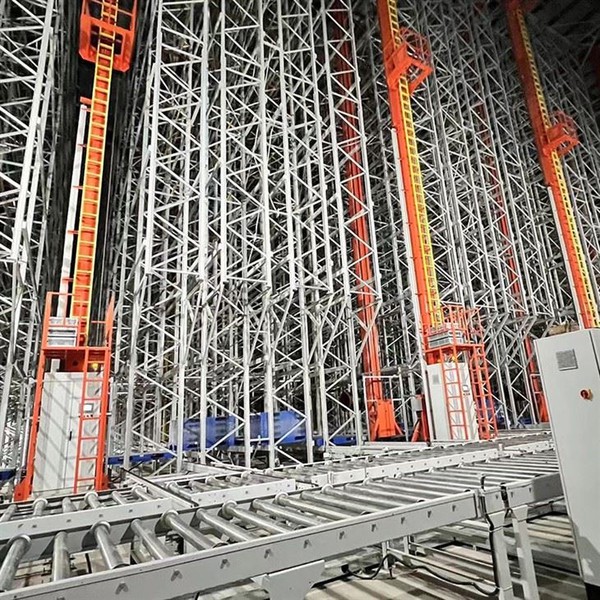
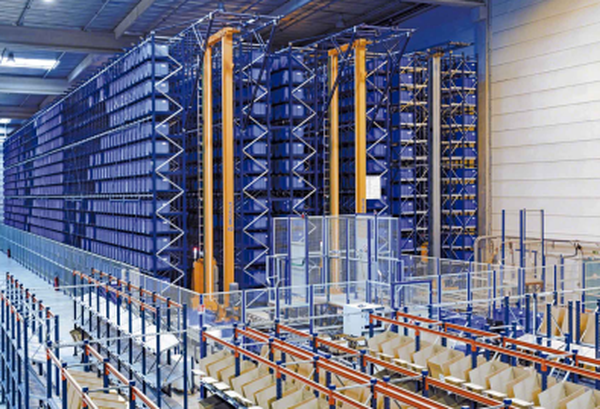
AS/RS systems use high-rise racks, stacker cranes, and robots to store and retrieve items automatically. Ideal for high-density warehouses, AS/RS optimizes space utilization and minimizes human error.
Autonomous Mobile Robots (AMR)
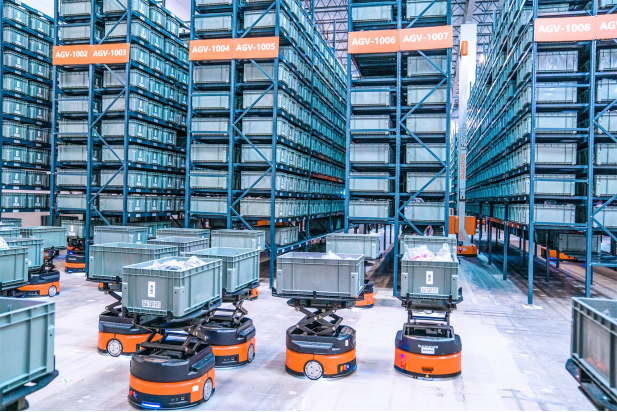
AMRs navigate independently within the warehouse, transporting goods to designated locations. They offer high flexibility and can be integrated seamlessly with existing warehouse layouts. Compared to forklifts and manual handling, AMRs enhance transport efficiency while reducing safety risks.
Automated Sorting Systems
Used extensively in e-commerce and courier industries, automated sorting systems route orders through conveyor networks to designated shipping channels. Benefits include faster order processing, fewer mistakes, and improved fulfillment efficiency.
Warehouse Management Systems (WMS)
WMS is the backbone of warehouse automation, offering real-time inventory tracking, task optimization, order monitoring, and analytics. WMS allows companies to automate and optimize processes from receiving and shelving to picking and shipping.
Riches' Warehouse Automation Solutions
As a leading provider of intelligent warehousing and logistics solutions, Riches Warehousing and Logistics Co., Ltd. offers comprehensive automation services tailored to diverse business needs. Riches' solutions include:
Modular Design: Custom warehouse layouts using racks, stacker cranes, and robots maximize space efficiency.
High-Level Automation: Combining AS/RS, AMR, and automated sorting systems to streamline goods movement from inbound to outbound.
Smart Software Integration: Riches' WMS integrates seamlessly with ERP and MES systems, enabling real-time inventory, order, and logistics analytics.
Efficiency and Accuracy: Automation increases operational speed by over 50% while significantly reducing picking errors.
Scalable Solutions: Equipment and systems can be expanded to accommodate seasonal spikes or business growth.
Comprehensive Support: From warehouse design consulting to system training and ongoing maintenance, Riches ensures customers achieve optimal results.
Riches has partnered with clients across manufacturing, retail, e-commerce, and third-party logistics sectors, helping them reduce operational costs, improve warehouse efficiency, and elevate customer satisfaction.
Best Practices for Warehouse Automation
Implementing warehouse automation requires careful planning. Key best practices include:
Precise Warehouse Layout Planning
Design rack layouts, picking paths, and transportation routes based on SKU characteristics and business needs to optimize equipment efficiency.
Phased Automation Implementation
Start with high-traffic areas or core processes and gradually introduce automation equipment and systems to reduce implementation risk.
Data-Driven Management
Collect inventory, picking, transportation, and order data through WMS and IoT devices, analyze bottlenecks, and continuously optimize warehouse operations.
Employee Training and Change Management
Automation complements human labor by freeing employees from repetitive tasks. Training ensures staff can effectively operate and manage smart warehouse systems.
Supply Chain Collaboration
Warehouse automation should align with upstream and downstream systems for seamless order, inventory, and transportation integration, improving overall supply chain efficiency.
Safety and Maintenance
Establish regular maintenance schedules and safety protocols to ensure long-term, stable operation of automation systems.
Advantages of Warehouse Automation
Implementing an automated warehouse system brings multiple benefits:
Improved inventory accuracy
Reduced labor costs and error rates
Faster order processing
Optimized warehouse space utilization
Enhanced supply chain flexibility
Increased customer satisfaction and business competitiveness
By partnering with Riches, companies can accelerate their transition to intelligent warehousing and fully leverage automation technologies to boost overall operational efficiency.
Frequently Asked Questions (FAQs)
1. Is warehouse automation suitable for all types of warehouses?
Yes, it is ideal for medium to large warehouses, especially those with high SKU variety and frequent order volume. Smaller warehouses can adopt modular or partial automation solutions and gradually scale up.
2. What is the typical ROI for automation equipment?
The payback period usually ranges from 2 to 4 years, depending on warehouse size, order volume, and automation configuration. Efficiency gains and labor savings contribute to a clear return on investment.
3. Can the system integrate with existing ERP or WMS software?
Riches provides highly compatible WMS solutions that integrate seamlessly with existing ERP or MES systems for unified inventory, order, and transportation management.
4. Are maintenance costs high for automated systems?
Maintenance costs are generally lower than traditional labor costs. Riches also provides scheduled maintenance and remote support to ensure long-term system stability.
5. Can automation handle seasonal business peaks?
Yes, Riches' automated warehouse solutions are scalable, allowing businesses to add equipment or adjust processes during peak periods for smooth operations.
6. How long does it take to implement warehouse automation?
Implementation typically takes 3–9 months, depending on warehouse size and automation complexity. A phased rollout is recommended to optimize key operations before expanding.


