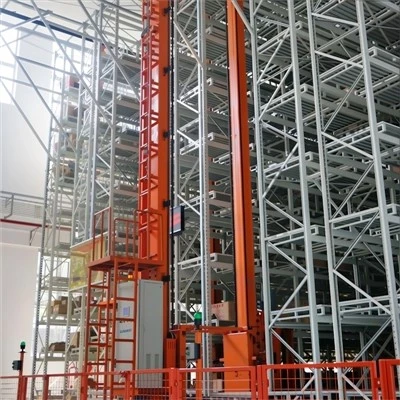
In modern warehousing and supply chain operations, Warehouse Storage Containers and storage boxes are no longer simple storage tools. They play a critical role in inventory organization, space optimization, operational efficiency, and compatibility with automated systems. Choosing the right warehouse container solution can significantly reduce handling costs, improve picking accuracy, and support long-term warehouse scalability.
This guide provides a structured overview of warehouse container types, selection criteria, and real-world applications. At the end, we introduce Riches Warehousing & Logistics Co., Ltd., a professional supplier offering integrated storage container and warehousing solutions.
What Are Warehouse Containers?
Warehouse containers (also referred to as storage boxes or storage bins) are standardized containers used for storing, organizing, transporting, and handling goods within warehouses, distribution centers, and production facilities.
Key functions include:
Organized and classified storage
Improved space utilization
Safer material handling
Compatibility with manual and automated warehouse systems
Well-designed storage containers form the foundation of efficient warehouse operations.
Main Types of Warehouse Containers

Warehouse containers can be classified based on material, structure, load capacity, and application scenarios.
Plastic Storage Boxes
Designed for light to medium-duty storage:
●Advantages: Lightweight, corrosion-resistant, easy to clean
●Applications: Electronics, apparel, spare parts, general warehouse use
Heavy-Duty Storage Containers
Built for industrial and high-load environments:
●Advantages: High load capacity, strong structural stability
●Applications: Machinery parts, automotive components, manufacturing warehouses
Collapsible Storage Containers
Foldable design for return logistics and space-saving storage:
●Advantages: Reduced empty-container storage and transportation costs
●Applications: Multi-site warehousing and circulation logistics
Label-Ready Storage Bins
Designed for fast identification and inventory visibility:
●Advantages: Improved picking accuracy and efficiency
●Applications: Order fulfillment centers, distribution hubs, fast-moving warehouses
Automation-Compatible Containers
Engineered for integration with automated systems:
●Advantages: Compatible with AS/RS, AGV, AMR, and shuttle systems
●Applications: Automated warehouses, smart logistics centers
How to Choose the Right Warehouse Container Solution
Selecting the right warehouse container requires aligning operational needs with long-term warehouse strategy.
Containers must safely support the maximum product weight without deformation or safety risks.
Warehouse Layout and Space Constraints
Container dimensions should match racking systems, aisle widths, and storage density requirements.
Material Handling Methods
If forklifts, conveyors, or automated vehicles are used, containers must be structurally compatible.
Operational Frequency
High-frequency picking and replenishment operations require durable containers with ergonomic designs.
Digitalization and Visibility
Modern warehouses benefit from containers that support labels, barcodes, RFID, or QR codes for WMS integration.
Typical Application Scenarios
| Application Scenario | Recommended Container Type | Key Value |
|---|---|---|
| High-speed fulfillment centers | Automation-compatible containers | Faster picking & accuracy |
| Multi-warehouse circulation | Collapsible containers | Lower return logistics costs |
| Heavy industrial storage | Heavy-duty containers | Load stability & safety |
| Small-parts storage | Plastic storage bins | Efficient classification |
| Manufacturing material flow | Standardized containers | Smooth production supply |
What to Look for in a Warehouse Container Manufacturer
When selecting a supplier, buyers should consider more than just the container itself.
Warehouse containers are high-usage assets and must withstand long-term operational stress.
A customized warehouse container solution ensures compatibility with specific products, racks, and automation systems.
Professional suppliers can align container design with WMS, automation equipment, and warehouse layouts.
Reliable manufacturers provide technical support, documentation, and scalable solutions.
Riches Warehousing & Logistics Co., Ltd.

Riches Warehousing & Logistics Co., Ltd. is a professional China warehouse container manufacturer and storage solution provider, offering both standardized and customized storage containers as part of integrated warehousing solutions.
🔗 Website: https://www.riches-logistics.com/
Company Strength & Business Scope
Riches specializes in end-to-end warehousing solutions, covering:
Warehouse Containers & Storage Boxes
Plastic storage bins, heavy-duty containers, collapsible containers, and automation-compatible storage boxes.
Customized Warehouse Container Solutions
Tailored container dimensions, materials, and structures based on customer warehouse layouts and operational needs.
Automated Warehousing System Integration
Containers designed to work seamlessly with AS/RS, AGV, AMR, and shuttle systems.
Warehouse Planning & Project Delivery
From solution design and engineering to installation and system commissioning.
Functional Advantages
✔ Improved Inventory Control
Standardized containers enhance inventory accuracy and traceability when integrated with WMS systems.
✔ Optimized Space Utilization
Well-designed containers enable higher storage density and better rack utilization.
✔ Enhanced Operational Safety
Durable container structures reduce product damage and handling risks.
✔ Future-Proof Automation Compatibility
Containers engineered for automated handling support long-term warehouse upgrades.
Core Competitiveness
●Strong customization and engineering capabilities
●Deep experience in automated warehousing integration
●One-stop solution from container manufacturing to system deployment
●Proven performance across multiple industries
Riches helps customers address common warehouse challenges such as limited storage capacity, inefficient picking, poor inventory visibility, and automation integration barriers-positioning itself as a professional storage container manufacturer for modern logistics operations.
FAQ
1. What is the difference between warehouse containers and pallets?
Warehouse containers are designed for organized storage and handling of goods, while pallets primarily support bulk transportation and forklift operations.
2. Are all storage containers suitable for automated warehouses?
No. Automated warehouses require containers with specific dimensions, tolerances, and bottom structures designed for conveyors and robots.
3. How do I determine the right container size for my warehouse?
Container size should be selected based on product dimensions, rack specifications, handling equipment, and picking frequency.
4. Does Riches offer customized warehouse container solutions?
Yes. Riches provides customized container solutions tailored to warehouse layouts, automation systems, and operational workflows.
5. What is the typical lead time for customized storage containers?
Depending on specifications and order volume, lead times typically range from 3 to 8 weeks.