

The most valuable warehouse space is not always the space you can see on the floor, but the capacity you can unlock through smarter storage, faster retrieval, and better inventory control.
As warehouse operations expand, businesses must handle more inventory without allowing storage costs, labor requirements, and order processing times to rise at the same rate. Traditional warehouse layouts can struggle to meet these demands, particularly when floor space is limited and stock movements become increasingly frequent. An Automated Storage and Retrieval System (ASRS) offers a structured approach to improving storage density, inventory visibility, and material handling efficiency.
For manufacturers, distribution centers, e-commerce businesses, and third-party logistics providers, understanding how an ASRS warehouse system works is an important step toward making informed warehouse automation decisions. This guide explains ASRS technology, its main system types, operational benefits, and key purchasing considerations.
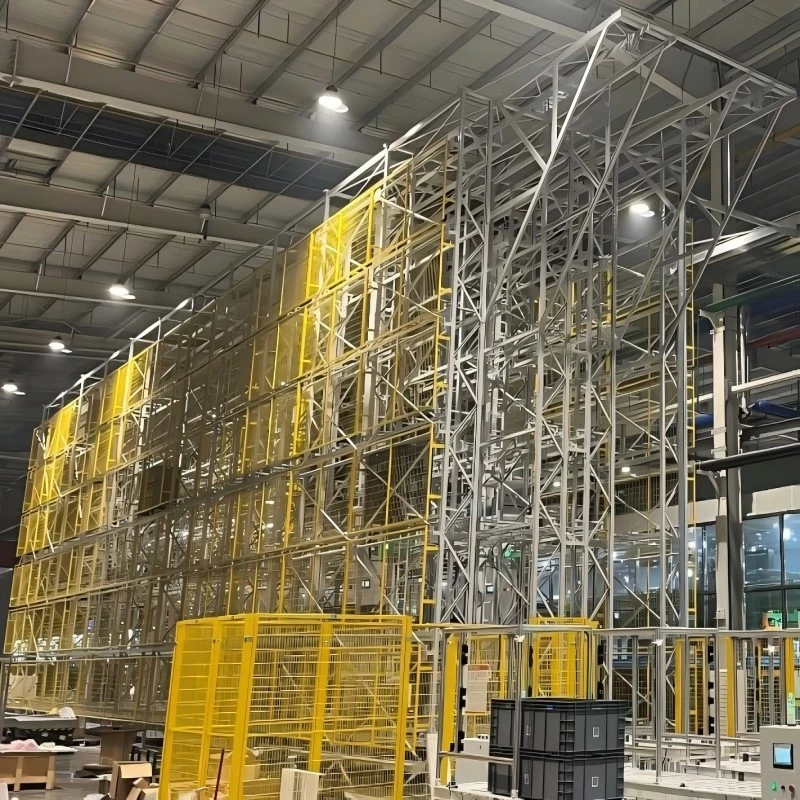
What Is an Automated Storage and Retrieval System (ASRS)?
An Automated Storage and Retrieval System (ASRS) is a computer-controlled warehouse solution that automatically stores and retrieves goods from designated locations. By combining storage structures, automated handling equipment, sensors, and warehouse control software, an ASRS reduces the need for operators to locate and move every item manually.
Depending on the application, an ASRS warehouse system may handle full pallets, cartons, totes, bins, trays, or small components. Equipment configurations vary according to load dimensions, storage capacity, building height, inventory turnover, and required throughput.
A complete automated storage solution may include:
Storage racks: High-density racking structures designed around the required load capacity and available building space.
Automated handling equipment: Stacker cranes, shuttle robots, lifts, conveyors, and other devices that transport goods between locations.
Control software: Warehouse management systems (WMS), warehouse execution systems (WES), and warehouse control systems (WCS) that coordinate inventory and equipment movements.
Identification and sensing technology: Barcode scanners, RFID where appropriate, position sensors, and safety devices that support accurate tracking and controlled operation.
Unlike conventional shelving, an automated storage and retrieval system connects physical storage with digital inventory management. This allows warehouse operators to manage stock locations and equipment tasks through a coordinated workflow.
How Does an ASRS Warehouse System Work?
The operating process begins when a warehouse receives goods and records their information in the inventory management system. Based on storage rules, available locations, product characteristics, and operational priorities, the software assigns a suitable storage position.
The automated equipment then transports the goods to the designated location. When an order or production request requires the inventory, the system retrieves the relevant load and transfers it to a picking station, conveyor, staging area, or outbound handling point.
A typical ASRS workflow involves five stages:
Inbound identification: Goods are checked, identified, and registered in the warehouse system.
Storage assignment: Software determines an appropriate location according to inventory rules and system availability.
Automated putaway: Cranes, shuttles, or other handling equipment move the goods into storage.
Order-based retrieval: The system receives a retrieval task and dispatches the required equipment.
Outbound coordination: Retrieved goods move to picking, packing, production, or shipping operations, with inventory records updated accordingly.
The exact process depends on the system architecture. For example, a pallet ASRS may use stacker cranes operating in fixed aisles, while a multi-level shuttle system may distribute storage and retrieval tasks among mobile robots. Software integration is essential because equipment speed alone cannot ensure efficient warehouse performance if inventory records and order priorities are poorly coordinated.
What Are the Main Types of ASRS?
Choosing the right automated storage system requires matching the technology to the warehouse's actual operating requirements. Not every facility needs the same storage density, load capacity, or retrieval flexibility.
| ASRS type | Main characteristics | Suitable applications |
|---|---|---|
| Unit-load ASRS | Handles full pallets using stacker cranes and high-bay racks | Manufacturing, pallet distribution, bulk storage |
| Mini-load ASRS | Handles smaller containers, totes, or trays | Spare parts, electronics, small-item fulfillment |
| Shuttle-based ASRS | Uses automated shuttle vehicles to move loads through storage lanes or levels | High-density storage and frequent inventory movements |
| Four-way shuttle system | Allows shuttle vehicles to travel in multiple horizontal directions within a compatible rack grid | Flexible, high-density storage and mixed operational demands |
| Vertical lift module | Stores trays vertically and presents selected trays to an access opening | Small components, tools, and controlled-access inventory |
| Cube-based storage system | Uses a compact storage grid with robotic access to containers | High-density tote storage and goods-to-person picking |
These categories are not mutually exclusive in every warehouse design. Some projects combine multiple technologies to accommodate different load types or operational zones.
For example, a facility may use a unit-load ASRS for bulk pallet storage and a shuttle-based system for smaller containers or order-picking operations. The most appropriate configuration depends on the relationship between inventory volume, SKU variety, order profiles, and peak-hour throughput.
ASRS vs. Pallet Shuttle vs. Four-Way Shuttle
ASRS is a broad category of automated storage technology, whereas pallet shuttles and four-way shuttles describe particular equipment or system approaches. Buyers should compare complete system configurations rather than assume that one technology is always superior.
| Comparison factor | Crane-based pallet ASRS | Pallet shuttle system | Four-way shuttle system |
|---|---|---|---|
| Primary movement | Crane travels along a fixed aisle and accesses rack positions | Shuttle moves pallets within designated storage lanes | Shuttle travels in multiple directions across a compatible rack grid |
| Storage approach | High-bay, aisle-based storage | Deep-lane, high-density pallet storage | Grid-based storage with flexible movement paths |
| Space utilization | High, especially in tall buildings | Very high for suitable pallet profiles | Depends on grid design, equipment, and load mix |
| Retrieval flexibility | Constrained by aisle and crane configuration | Influenced by lane layout and shuttle allocation | Can offer greater routing flexibility |
| Best-fit inventory | High volumes of standardized pallet loads | Multiple pallets of suitable products stored in deep lanes | Warehouses requiring flexible movement across storage levels |
| Key design consideration | Aisle layout, crane capacity, and equipment redundancy | Lane depth, inventory rotation, and access requirements | Grid configuration, robot scheduling, and system coordination |
Actual performance depends on engineering design, load specifications, equipment quantities, software, and operating conditions. A detailed warehouse simulation or throughput assessment can help determine which option best meets the required performance targets.
What Are the Key Benefits of an Automated Storage and Retrieval System?
Higher Warehouse Storage Density
An ASRS warehouse system can make better use of vertical space and reduce the floor area consumed by conventional access aisles. This is especially valuable when land costs are high or expanding an existing building is impractical.
High-density storage must still account for structural requirements, fire protection, maintenance access, building conditions, and the characteristics of stored goods. Effective warehouse planning balances storage capacity with safe and reliable operation.
Faster and More Consistent Material Handling
Automated equipment follows programmed routes and task instructions, reducing the time workers spend searching for stock or driving forklifts between storage locations. When integrated with conveyors and picking stations, ASRS can support a more consistent flow of inbound and outbound materials.
The actual throughput improvement depends on travel distances, equipment capacity, retrieval frequency, order batching, and the performance of connected processes.
Improved Inventory Accuracy
An automated storage and retrieval system links physical movements with digital inventory records. When scanning, location confirmation, and software integration are correctly implemented, businesses can improve stock visibility, reduce misplaced inventory, and make replenishment decisions using more reliable data.
Reduced Dependence on Manual Handling
Automation can reduce repetitive lifting, forklift travel, and manual movement in storage areas. It can also help limit personnel exposure to high-bay equipment and certain demanding warehouse environments.
However, automated facilities still require trained personnel for supervision, maintenance, exception handling, and safety management.
Better Operational Consistency
Computer-controlled storage and retrieval tasks follow predefined rules and can operate across multiple shifts. This supports standardized processes and makes it easier to monitor equipment performance, inventory movement, and order fulfillment.
Automation does not eliminate every operational bottleneck. Receiving, picking, packing, and shipping must be designed to keep pace with the automated storage equipment.
Where Are ASRS Systems Commonly Used?
The flexibility of automated storage technology makes it suitable for several industries, although each application has different priorities.
Manufacturing: Stores raw materials, components, work-in-progress inventory, and finished products while coordinating material supply with production schedules.
E-commerce and retail distribution: Supports inventory storage, replenishment, and order fulfillment where SKU variety and daily order fluctuations create operational pressure.
Food and beverage: Organizes palletized goods and supports inventory rotation, subject to product handling and environmental requirements.
Cold-chain logistics: Reduces the need for personnel to perform routine movements in low-temperature storage areas.
Pharmaceutical and healthcare supply chains: Supports controlled inventory locations, traceability, and accurate stock management where appropriate validation and compliance procedures are in place.
Third-party logistics (3PL): Helps logistics providers improve space utilization and manage multiple customer inventory profiles through coordinated warehouse processes.
Before selecting a system, buyers should evaluate load dimensions, weight, temperature requirements, inventory turnover, order frequency, and any industry-specific safety or traceability obligations.
How to Choose the Right ASRS Solution for Your Warehouse
Selecting an ASRS supplier involves more than comparing equipment prices. The system must satisfy current operating requirements while allowing for realistic future growth.
Assess the existing warehouse. Review usable building height, floor loading, column positions, aisle arrangements, fire protection, and available space for inbound and outbound operations.
Analyze inventory and order data. Document SKU counts, pallet or tote dimensions, maximum load weights, inventory turnover, seasonal peaks, order lines per hour, and required storage capacity.
Define throughput requirements. Specify inbound and outbound loads per hour, peak retrieval demand, order profiles, and acceptable waiting times. Ask suppliers to explain their assumptions and demonstrate how the proposed configuration meets the targets.
Check software compatibility. Confirm how the proposed ASRS will exchange data with existing ERP and WMS platforms. Determine whether WES or WCS software is required for equipment coordination and task scheduling.
Review reliability and maintenance. Ask about equipment redundancy, fault recovery, spare-parts availability, preventive maintenance, technical support, and service response arrangements.
Calculate total cost of ownership. Compare equipment and installation costs with software, integration, building modifications, energy consumption, maintenance, labor requirements, and expected operating life. A lower initial quotation does not necessarily deliver the lowest long-term cost.
Plan for future expansion. Consider whether storage capacity, robot quantities, rack configurations, or software functions can be expanded without disrupting the entire facility.
A supplier should provide a solution based on documented operating data rather than relying on generic capacity or efficiency claims.
Why Choose Riches for Automated Storage and Retrieval Systems?
Riches Warehousing and Logistics Co., Ltd. provides intelligent warehousing and intralogistics solutions for businesses seeking to improve storage utilization, inventory control, and material handling efficiency. With more than 15 years of digital logistics expertise, Riches offers customized automated storage and retrieval system solutions for manufacturing, e-commerce, FMCG, pharmaceutical, and other warehousing applications.
Its solutions can integrate stacker cranes, shuttle robots, automated guided vehicles (AGVs), autonomous mobile robots (AMRs), conveyors, and warehouse management and control software according to project requirements.
Key capabilities include:
Customized warehouse planning: System configurations are developed around facility dimensions, cargo specifications, inventory characteristics, and throughput requirements.
Integrated automation: Storage equipment, material handling systems, and software are coordinated to support connected warehouse workflows.
Software integration: Solutions can connect with ERP, WMS, and WCS platforms to improve inventory visibility and information exchange.
Project implementation support: Services can cover consultation, system design, equipment supply, integration, installation, commissioning, and ongoing technical support.
Multi-industry experience: Solutions are designed for different warehouse environments, including manufacturing, distribution, e-commerce, and low-temperature storage applications.
For businesses evaluating an ASRS warehouse system, Riches can help assess the operational requirements and identify a suitable combination of automated storage, retrieval, and material handling technologies.
Explore the Riches Automated Storage and Retrieval System solutions to learn more about available configurations and discuss project requirements.

Frequently Asked Questions About ASRS
ASRS stands for Automated Storage and Retrieval System. It refers to computer-controlled equipment and storage infrastructure that automatically place goods into storage locations and retrieve them when required. Depending on the design, an ASRS may handle pallets, totes, trays, cartons, or small components.
The cost of an ASRS depends on storage capacity, building height, load specifications, equipment type, throughput requirements, software integration, installation, and site conditions. Buyers should request a project-specific quotation that separates equipment, software, implementation, and ongoing maintenance costs.
Start with current inventory records, the number of SKUs, average and peak stock levels, load dimensions, inventory rotation, and expected business growth. Capacity planning should also account for replenishment, inbound and outbound staging, and the number of storage positions needed during seasonal peaks.
Yes, many ASRS solutions can integrate with existing warehouse management and enterprise resource planning systems. Compatibility depends on available interfaces, data structures, communication protocols, and workflow requirements. Confirm integration scope, testing procedures, and responsibility for software changes before placing an order.
A conventional crane-based ASRS typically uses stacker cranes to access pallet positions along fixed aisles. A pallet shuttle system uses powered shuttle vehicles to move pallets through designated storage lanes. The better option depends on building height, storage density, SKU distribution, access requirements, throughput, and budget.
Ask the supplier to confirm storage capacity, rated load limits, expected throughput, equipment availability, software compatibility, safety provisions, maintenance requirements, spare-parts support, installation scope, commissioning procedures, and warranty terms. Request performance calculations based on your actual inventory and order data, along with a clear implementation schedule and total cost breakdown.
Conclusion
An Automated Storage and Retrieval System can help warehouses improve storage density, reduce unnecessary manual handling, strengthen inventory visibility, and establish more consistent material flow. However, successful implementation depends on selecting the right technology, accurately assessing operational requirements, and integrating equipment with warehouse processes and software.
Crane-based ASRS, pallet shuttles, and four-way shuttle systems each serve different operating needs. Businesses should compare their storage profiles, throughput targets, facility constraints, and long-term investment plans before making a decision.
With customized system design, equipment integration, and project implementation support, Riches helps businesses evaluate automated storage and retrieval solutions that align with their warehouse operations and future growth objectives. A detailed assessment of inventory data, building conditions, and expected throughput is the best starting point for developing a practical, cost-effective warehouse automation strategy.


