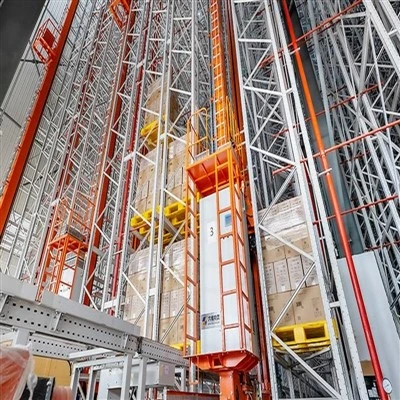
What Is Warehouse Storage Containers And How To Choose Them?

Jul 07, 2026

Leave a message

In today's fast-changing supply chain environment, warehouse efficiency has become a key factor determining business competitiveness. As companies handle increasing product volumes and more complex inventory requirements, traditional storage methods are no longer sufficient to meet modern logistics demands.

Poor warehouse organization can lead to wasted space, longer picking times, damaged products, and higher operating costs. To solve these challenges, more businesses are adopting professional warehouse storage solutions that improve inventory management, optimize space utilization, and support efficient material handling.

Among these solutions, warehouse storage containers have become an essential tool for manufacturing facilities, distribution centers, logistics companies, and automated warehouses. Designed for durability, flexibility, and repeated use, these containers help companies build a more organized and efficient storage system.

Choosing the right warehouse storage containers is not only about selecting a suitable box size. Factors such as material, load capacity, application environment, compatibility with warehouse equipment, and customization options all influence long-term performance.
 

What is Warehouse Storage Containers and How to Choose Them?


What Are Warehouse Storage Containers?

Warehouse storage containers are specially designed containers used for storing, organizing, transporting, and managing products, components, and materials in warehouses and industrial facilities.

Unlike ordinary storage boxes, industrial storage containers are manufactured for professional applications where durability, reliability, and repeated handling are required. They are commonly used in manufacturing plants, logistics centers, automotive factories, retail warehouses, and intelligent warehouse systems.

Depending on different applications, warehouse storage containers can be made from various materials, including:

Industrial-grade plastic

Polypropylene (PP)

Recycled plastic materials

Metal structures

High-quality containers are designed to withstand frequent movement, stacking pressure, temperature changes, and industrial working conditions.

Common types of warehouse storage containers include:

Plastic storage containers

Stackable storage bins

Heavy-duty industrial containers

Foldable logistics containers

Attached lid containers

Customized storage containers

Compared with disposable packaging solutions, reusable storage containers provide longer service life, better protection, and lower overall operating costs.


What is Warehouse Storage Containers and How to Choose Them?


Why Are Warehouse Storage Containers Important for Modern Warehouses?

Modern warehouses are moving toward higher efficiency, automation, and intelligent management. Storage containers play an important role in improving warehouse performance.

1. Maximize Warehouse Space Utilization

Warehouse space is one of the most valuable resources for any company. Poor storage planning can significantly reduce operational efficiency.

Warehouse storage containers are designed with standardized dimensions and stackable structures, allowing companies to make better use of vertical storage space.

Benefits include:

Higher storage density

Better rack utilization

Reduced warehouse congestion

Improved storage planning

For companies operating large warehouses, optimized container selection can create significant improvements in space efficiency.

2. Improve Inventory Management Efficiency

A well-organized warehouse allows employees to quickly identify, access, and move products.

Warehouse storage bins help businesses classify different products, spare parts, and materials, reducing unnecessary searching time.

They are especially useful for industries with:

Large SKU quantities

Frequent inventory movement

Small component management

Production line supply requirements

Clear product classification improves picking accuracy and supports smoother warehouse operations.

3. Reduce Long-Term Packaging Costs

Traditional disposable packaging often requires frequent replacement, creating additional costs and waste.

Reusable storage containers provide a more economical alternative because they can be used repeatedly throughout internal transportation and supply chain processes.

Advantages include:

Longer service life

Reduced packaging replacement costs

Lower maintenance requirements

Better product protection

For companies with continuous logistics operations, reusable containers offer better long-term value.

4. Support Warehouse Automation Systems

As more companies adopt automated warehouses, storage containers must meet higher technical requirements.

Modern warehouse storage containers are designed to work with:

Automated storage and retrieval systems (AS/RS)

Conveyor systems

Robotic picking equipment

Smart sorting systems

Proper container selection ensures smooth operation and improves the efficiency of warehouse automation solutions.


Main Types of Warehouse Storage Containers

Different industries require different storage solutions. Selecting the correct container type depends on product characteristics, warehouse environment, and handling methods.

Type of Warehouse Storage Container Features Common Applications
Plastic Storage Containers Lightweight, durable, corrosion-resistant, reusable Manufacturing, logistics, spare parts storage
Stackable Storage Bins Space-saving design and easy classification Workshops, warehouses, inventory management
Heavy-Duty Storage Containers High load capacity and impact resistance Automotive, machinery, industrial applications
Foldable Containers Reduce return transportation volume Distribution centers, logistics circulation
Attached Lid Containers Provide additional product protection Transportation and supply chain management
Customized Storage Containers Designed according to specific requirements Special industries and automated warehouses


Plastic Storage Containers vs Traditional Packaging

For many industrial applications, plastic storage containers have replaced traditional packaging methods because of their superior durability and efficiency.

Comparison Plastic Storage Containers Traditional Packaging
Service Life Designed for repeated use Usually disposable
Durability High impact resistance Easily damaged
Protection Better protection against moisture and impact Limited protection
Storage Efficiency Stackable and standardized Difficult to organize
Cost Efficiency Lower long-term operating cost Higher replacement cost
Sustainability Supports reusable logistics Creates more waste

Plastic storage containers are particularly suitable for companies looking to improve warehouse organization while supporting sustainable supply chain management. 


Applications of Warehouse Storage Containers

Warehouse storage containers are widely used across multiple industries because of their flexibility, durability, and efficiency.

1. Manufacturing Industry

Manufacturing facilities use industrial storage containers for organizing:

Raw materials

Machine components

Production parts

Assembly accessories

Finished products

By improving material organization, containers help reduce production downtime and increase workflow efficiency.

2. Automotive Industry

Automotive manufacturing requires precise management of thousands of components.

Reusable storage containers are commonly used for:

Engine parts

Electronic components

Mechanical accessories

Fasteners

Maintenance parts

Their strong structure protects valuable components during internal transportation.

3. Logistics and Distribution Centers

For logistics companies, efficient material movement is essential.

Warehouse storage containers support:

Product sorting

Order picking

Warehouse circulation

Return logistics

Compared with disposable cartons, reusable containers provide better protection and reduce long-term packaging expenses.

4. E-commerce Warehouses

The rapid growth of online shopping has increased demand for efficient warehouse organization solutions.

Storage bins help e-commerce warehouses:

Manage large numbers of SKUs

Improve picking speed

Reduce inventory errors

Increase order processing efficiency

5. Intelligent Warehousing

With the development of smart logistics, more companies are adopting intelligent warehouse solutions.

Warehouse storage containers are an important component of automated systems, supporting:

Automated storage

Robotic handling

Smart inventory management

Digital warehouse operations


Why Choose Riches as Your Warehouse Storage Containers Supplier?

When selecting a warehouse storage solution provider, companies need more than standard storage products. They need a partner that understands warehouse planning, logistics optimization, and long-term operational requirements.

Riches Warehousing and Logistics Co., Ltd. specializes in providing professional warehouse and logistics solutions, helping customers improve storage efficiency and optimize supply chain management.

With experience in intelligent warehousing systems and logistics solutions, Riches focuses on creating efficient, flexible, and customized warehouse solutions for different industries.

1. Professional Warehouse Solution Experience

Every warehouse has different requirements depending on product types, storage capacity, and operation processes.

Riches provides solutions based on actual customer needs, including:

Warehouse planning

Storage optimization

Logistics process improvement

Intelligent warehouse integration

This approach ensures that storage systems are aligned with real business operations.

2. Customized Storage and Logistics Solutions

Standard products may not always meet specific industrial requirements.

Riches supports customized solutions according to:

Warehouse layout

Product characteristics

Handling methods

Industry applications

Customized warehouse solutions help companies improve efficiency and achieve better space utilization.

3. Focus on Intelligent Warehouse Development

Modern logistics requires smarter storage systems.

Riches integrates intelligent warehouse concepts to support businesses in improving:

Storage efficiency

Material flow management

Warehouse automation capability

Operational visibility

These solutions help companies prepare for future warehouse development.

4. One-Stop Warehouse Optimization Service

Instead of managing multiple suppliers, customers can work with a professional partner for integrated warehouse solutions.

Riches provides support in:

Warehouse solution design

Logistics optimization

Project implementation

System improvement

This helps customers simplify project management and improve implementation efficiency.


What is Warehouse Storage Containers and How to Choose Them?


Key Advantages of Professional Warehouse Storage Containers

Advantage Description
Durable Performance Designed for repeated industrial use and long service life
Space Optimization Helps maximize warehouse storage capacity
Easy Management Improves inventory classification and accessibility
Reusable Design Reduces packaging waste and replacement costs
Flexible Application Suitable for various industries and logistics systems
Automation Compatibility Supports modern warehouse automation solutions


Frequently Asked Questions About Warehouse Storage Containers

1. What are warehouse storage containers used for?

Warehouse storage containers are used for organizing, storing, transporting, and protecting products, materials, and components in warehouses, factories, and logistics centers.

They help companies improve inventory management, reduce handling time, and optimize warehouse space utilization.

2. What materials are warehouse storage containers made from?

Most warehouse storage containers are made from industrial plastic materials such as polypropylene (PP), recycled plastic, or metal.

Plastic containers are widely used because they are lightweight, durable, corrosion-resistant, and suitable for repeated industrial use.

3. Can warehouse storage containers be customized?

Yes. Professional suppliers can customize warehouse storage containers according to customer requirements.

Customization options may include:

Dimensions

Colors

Logos

Dividers

Load capacity

Special structures

Customized containers are especially useful for industries with unique storage requirements.

4. How do I choose the right size warehouse storage container?

The correct size depends on:

Product dimensions

Storage quantity

Available warehouse space

Rack compatibility

Transportation requirements

A professional supplier can recommend suitable container sizes based on the actual application.

5. Are reusable storage containers better than cardboard boxes?

Yes. Reusable storage containers generally provide better durability, protection, and long-term cost efficiency.

Compared with cardboard boxes, they offer:

Longer service life

Better stacking ability

Higher impact resistance

Lower replacement frequency

Improved warehouse organization

6. Can warehouse storage containers be used in automated warehouses?

Yes. Many warehouse storage containers are designed for automated warehouse applications.

They can be integrated with:

Conveyor systems

Robotic equipment

AS/RS systems

Smart warehouse management systems

Proper container selection improves automation efficiency and supports modern logistics operations.


Conclusion

Warehouse storage containers are becoming an essential part of modern warehouse management. With advantages including durability, reusability, space optimization, and automation compatibility, they provide an effective solution for companies seeking higher operational efficiency.

When choosing warehouse storage containers, businesses should consider material quality, load capacity, customization options, and supplier experience. The right storage solution can improve inventory management, reduce operating costs, and support future warehouse development.

As global logistics continues moving toward automation and intelligent management, reliable industrial storage containers will play an increasingly important role in creating efficient, flexible, and sustainable warehouse systems.


Send Inquiry